What role does radical truth-telling occupy in the culture? What is “real life” in the culture of Ag?
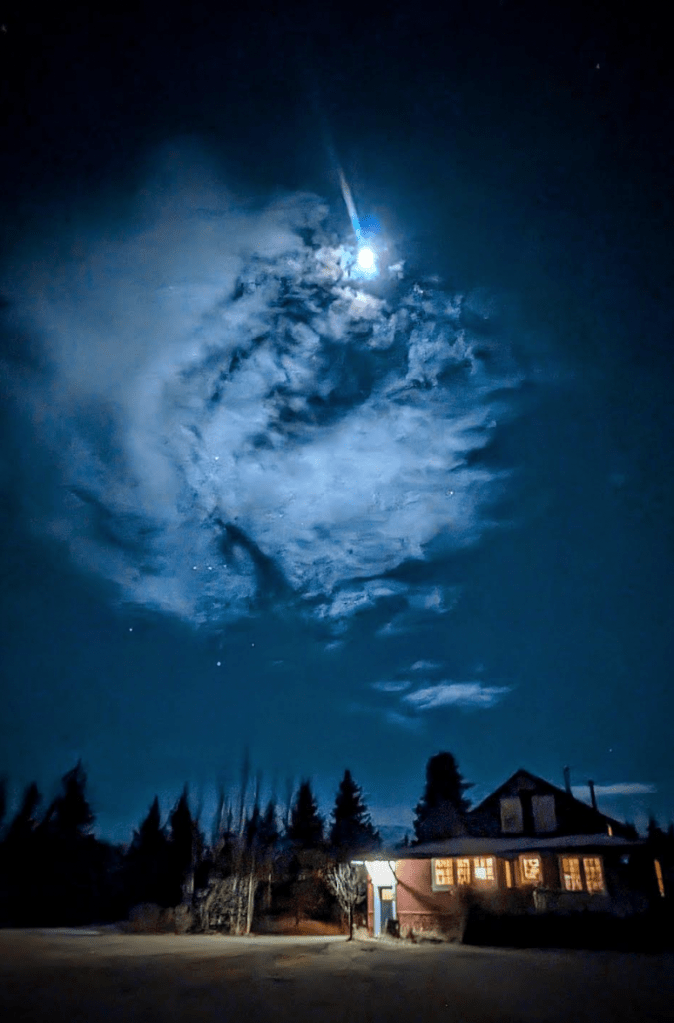
There’s a saying I’ve always loved:
“There are three things that don’t stay hidden for long — the sun, the moon, and the truth.”
I used to think that meant the truth has a way of forcing itself into the open, no matter how hard we try to bury it. Now though, I think it’s more that most of the world doesn’t know how to hide in the first place.
The sun rises whether we acknowledge it or not, the moon keeps its own schedule and land, animals, and the body have zero interest in capitulating to anyone’s illusions.
People, though? People are very good at avoiding the things they don’t want to deal with. If we have to, we will turn ourselves into pretzels to avoid messy, uncomfortable truth.
Uncovering Truth
People can pretend things are fine . . . when they aren’t. We can tell ourselves stories that make a situation easier to live with. We can avoid asking questions we suspect we don’t want the answers to. We can keep the peace, smooth the edges, compensate and carry on long past the point when something should have been said out loud where everyone could hear it.
I’m not speaking from the theoretical, I’ve done all of those things. I’ll bet you have, too.
Sometimes it comes from kindness. . . or pride. . . or fear. Or shame.
Sometimes, we pull our punches because putting words to The Thing (whatever it might be) hurts too much. Sometimes it happens because we are worried about what other people will say, we are constrained by cultures — micro, as in families and macro, as in societies — that reward convenience and efficiency above all else. Disruptive truth-telling, anything that could cause a wobble, is actively discouraged. The slick, the smooth, the friction-less, that’s what culture rewards.
Many of us were taught to keep things looking good before we were taught to make them right. We learn very quickly which truths are welcome at the table and which ones are better left unsaid.
Transparency, in that kind of world, does not come naturally. Honesty, fidelity, integrity — they don’t mean precisely the same things but they’re all related — are muscles that must be discovered.
And then practiced.
Practice Makes Perfect
I think it’s interesting that of all the beings and lives that I interact with on a daily basis, I am the only one who knows how to lie.
The natural world is transparent by default. Animals behave the way their bodies tell them to. Land responds to what is done to it. The kind of stewardship I want to practice doesn’t cooperate with pretending, it requires bone-scraping honesty. It demands the capacity to accept feedback (permaculture principle 4) and then the ability to incorporate those revealed truths into our future decisions. No daylight between what we know is true — however recently acquired — and how we live. No daylight between Living and Tending.
The Jury Is Watching
When something looks wrong, I’ve found that’s usually because it is.
When sheep start behaving in ways that don’t look very sheep-like, the problem is almost never that the sheep have decided to become difficult. They didn’t sit down and work out how to make life miserable for their shepherd. More often, it’s because the built system asks them to live in a way that doesn’t fit what they are. When we refuse to acknowledge the sheepness of sheep, we get into trouble.
Put animals in overcrowded barns, and they’ll fight or become depressed and anxious. Feed them the wrong diet, and eventually, they get sick. Handle them roughly, and they become nervous or aggressive. We could call that bad behaviour, but most of the time it’s just a sign that something about the system isn’t honest.
People aren’t so different.
We can live for a long time inside arrangements that demand we compromise our moral, ethical or values-based identities. We’ll tell ourselves everything is fine because admitting otherwise would mean we have to change something and the world suddenly gets more frightening. We can build lives that depend on not looking too closely, not asking certain questions and not saying certain things out loud.
And for a while, because humans are enormously adaptable, we can even seem to make it work.
But the cost shows up somewhere.
In the work.
In the land.
In the body.
In the way we talk to each other. . . and in the ways we stop talking to each other.
It’s Only A Flesh Wound
Sometimes I think of the Black Knight in Monty Python and the Holy Grail, standing there insisting, “It’s only a flesh wound,” while pieces of armour — and eventually of himself — are scattered all over the ground. The scene is funny because it’s absurd, but it’s also familiar. Most of us have done some version of that at one time or another, refusing to see what’s right in front of us because admitting it would mean we have to change course.
The trouble is that when we refuse to look at what’s happening, the damage doesn’t stop. It just turns inward. We get more tired, more rigid, more defensive, less able to do the work that’s actually in front of us. Instead of working toward a goal, we begin to protect our asses. Instead of looking forward to new learnings, experiences and observations, we fall back to pointing out past accomplishments or successes. Instead of expanding our horizons, we circle the wagons and defend our turf. What started as a small thing becomes something heavier, not because it had to, but because we wouldn’t let any light into the corner where it was sitting. We refused to examine it carefully. We wouldn’t name it, contend with it or bring it out where it could be examined by the people who love and support us. We refused to be transparent.
Radical Transparency
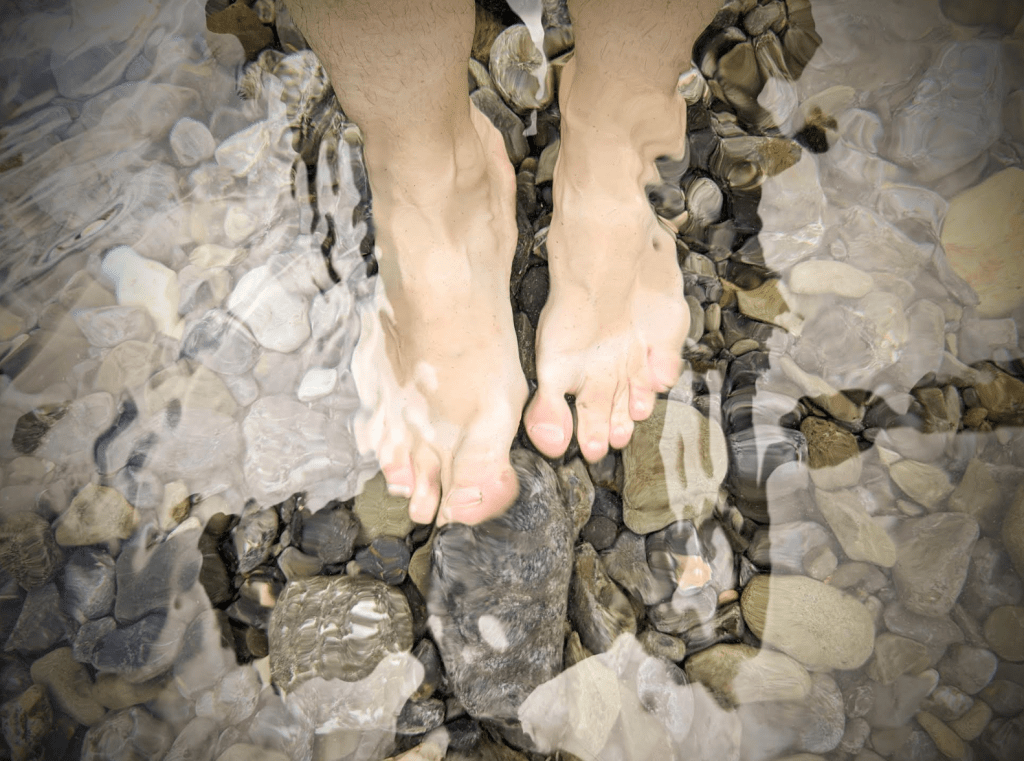
Over time, I’ve come to think of transparency not as a personality trait, but as a discipline. Transparency doesn’t mean saying everything that comes into your head — transparency isn’t a lack of discretion, it isn’t foolishness — and it’s certainly not living without boundaries. It’s simply refusing to build a life that is built on a foundation of artifice, a spun-sugar “let’s pretend” construct. Transparency is the antidote to all that, it is the discipline that informs the practice of fidelity.
In my context, fidelity to the land means paying attention to what it actually needs, not what would be more convenient. Fidelity to the animals means noticing what they’re telling you with their bodies and their behaviour, even when it would be easier not to. Fidelity to your work means being willing to see the places where you got it wrong, articulate the error, apologize, and try again. Fidelity to your own life means not drifting so far from what you know is right that you have to keep the lights low just to feel comfortable.
And fidelity, I think, also has something to do with community.
If you are going to live in a way that doesn’t depend on hiding, then sooner or later you have to make room for other people to claim their own right to fidelity. You must defend them if they find themselves alone. You must see them for who they are and help them protect the paths they walk.
Working Forward Together
On this homestead, the work comes first — the animals need feeding whether anyone agrees with you or not, the fences need fixing whether the world feels settled or not. The work has to be done.
But the people who show up to do it matter too.
Over the years I’ve welcomed visitors who were young and old, neighbours and strangers, people who grew up on farms and people who had never set foot in a barn before. I’ve done my best to extend greetings in Blackfoot, Ukrainian, French and — very unsuccessfully — Farsi. I’ve had newcomers to Canada, families who have been here for generations, friends from the city, friends from down the road, friends in recovery and those who still struggle, people who ask careful questions and people who don’t know what to ask yet.
I have friends and family who are straight and some cherished family and friends who are from every other flavour of the rainbow. I have people I care about who are Indigenous, people who are relatively recently arrived and people who are still finding their footing. I love the children who find their way to the homestead, just beginning to learn what the world is, and I am endlessly grateful to the elders who have seen far more of it than I have.
All of them are welcome here, as long as they come with respect for the land, the animals, and the work.
If radical transparency means not pretending to be something we’re not, it also means not pretending that this place belongs to just one kind of person.
Parting Words
The sun comes up whether we are ready for it or not and the moon keeps its own schedule. The world goes on being exactly what it is — left to itself, it can’t naturally be otherwise.
Living that way, for us, takes more effort.
In a culture that runs on appearances, to-the-bone transparency is a radical choice. In a world that rewards performance, this kind of fidelity is a counter-cultural act. It will cost you — the people who don’t understand will make themselves felt — but it will also bring incredible riches with it. You will find your people, you will find your place.
And if we’re all being honest, we might as well get good at it — like the sun and the moon, the truth always (eventually) comes out.
This is a Living post, a post to share my thought processes, my experience and the philosophy that underpins our activities here at the homestead. It is not a how-to, “expert advice” or meant to reflect a wider experience than just my own, on my farm, here with my sheep.

 Providence Lane Homestead
Leave a comment