Agriculture, like every sector, lives on incentives. If the system we’ve built isn’t delivering the outcomes we want, is it time to reconsider what we’re rewarding?
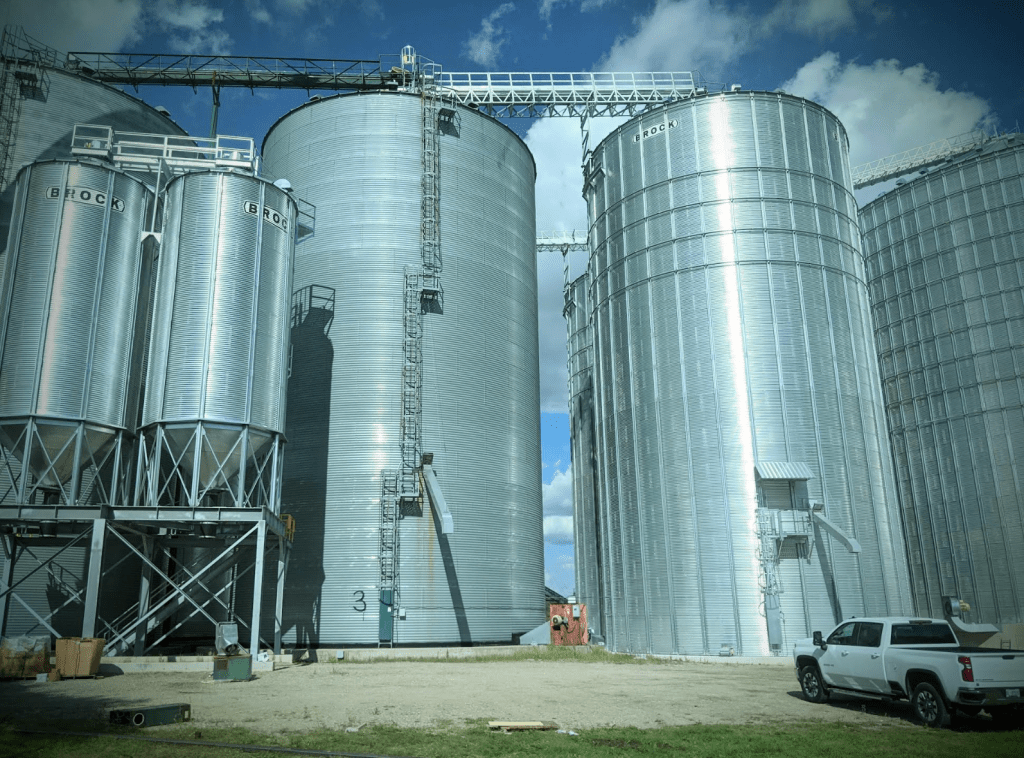
We spend a lot of time arguing about what agriculture is becoming. It’s too big, too consolidated. Agriculture is too industrialized, too far from the people it feeds. It’s too focused on export, too much monoculture, it’s not accountable or transparent.
Canadians argue about whether that’s good or bad, whether it’s inevitable and whether it’s reversible. Unfortunately we spend a lot less time asking a much different question: Why? How did we get here?
Agriculture does not drift by accident, you see. It follows incentives. Like water running down a hill chooses the least obstructed — the easiest — route, every economic sector does the same but in these cases, the path is smoothed and graded by one critical thing — policy. And policy, pigeons, is just another word for incentives. What’s incentivized gains steam and what isn’t, disappears.
Here’s the Situation
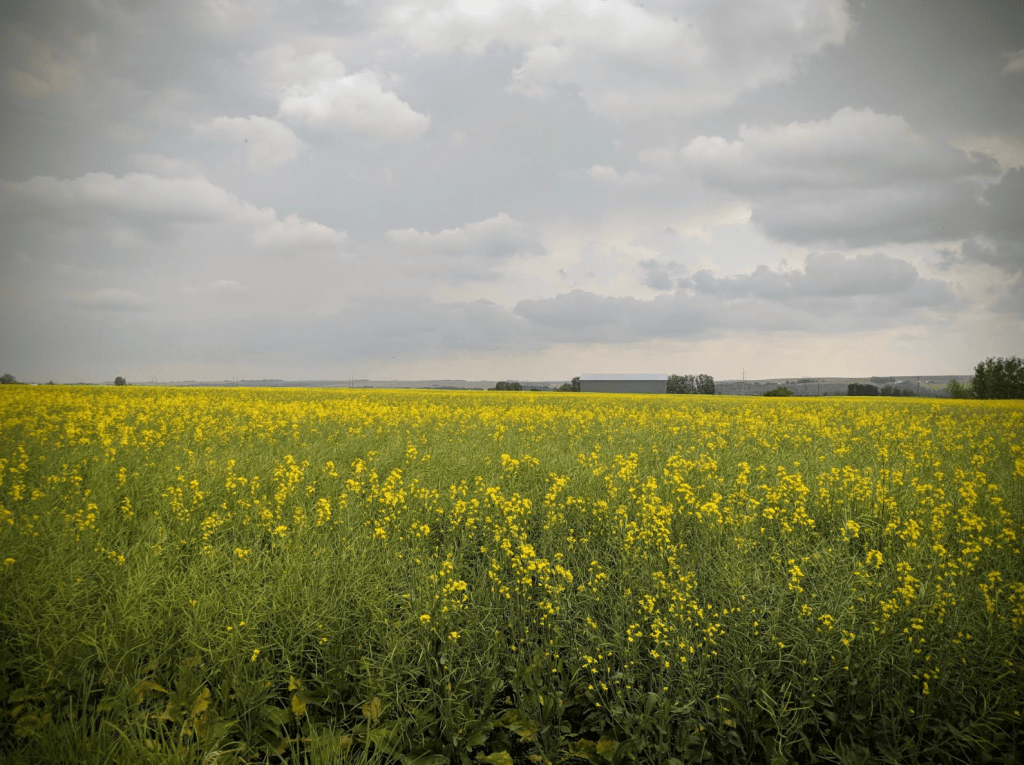
What we’ve built, works. That’s not the problem.
Canadian agriculture is not broken but it is becoming harder to enter, harder to pass on, and harder to reshape.
Land is expensive, and rarely available on terms that allow a new farmer to build something secure over time. Most transfers happen quietly, favouring those already inside the system. New entrants are not shut out entirely but they are asked to carry more risk, with less margin for error.
Land is expensive, and rarely available on terms that allow a new farmer to build something secure over time. Most transfers happen quietly, favouring those already inside the system. New entrants are not shut out entirely but they are asked to carry more risk, with less margin for error.
For those already farming, the pressure runs in the other direction. Growth becomes the safest path, even when it means more debt, more exposure, and operations that are harder to hand to the next generation. Succession gets harder to plan. Tenure becomes more fragile for those who rely on rented land. The system continues—but with fewer ways to step into it, and fewer ways to adapt it.
And all of this is happening in a context we do not control—commodity prices, input costs, weather extremes, sector processing consolidation and shifting trade relationships. In that kind of environment, resilience does not come from a single model done well. It comes from having enough people, enough access, and enough diversity in how land is used to respond when things change.
The risk is not failure. The greatest threat to Canadian agriculture is a narrowing of the sector until only a very thin slice of operators can afford to participate.
What we already do—and why it isn’t enough
So, what are we doing? Are there levers currently available that can help?
In many ways, yes. Canada has a lot of agricultural programs. For instance, we already stabilize farm incomes (that’s AgriStability), support beginning farmers (check out Farm Credit Canada’s Young Farmers loan program) and help fund better environmental practices (there are a bunch of programs here. You can visit the On-Farm Climate Action Fund, or the Sustainable Canadian Agricultural Partnership and the Resilient Agricultural Landscape Program here in Alberta). On paper, it looks like we’ve got it covered. In practice. . .
Well, let’s just say all this paperwork doth not a level playing field make.
So to speak.
We manage risk — but we scale it with size
Let’s start with the biggie. Crop insurance. Canada’s crop insurance system — delivered provincially through organizations like Agriculture Financial Services Corporation and coordinated federally under AgriInsurance—is designed to stabilize farm income against weather and production risk. It has a high level of participation and it’s in place from coast-to-coast-to-coast as a federal program. Payouts can reach into the billions of dollars and the prairie provinces — Alberta and Saskatchewan — are the overwhelming beneficiaries of this tax-payer provided support.
Intended to protect farms from weather disasters beyond their control, it began in the final years of the dustbowl but really took shape just four years after the end of WW2. It was a godsend for farming families and to this day, participation is high, and governments carry a substantial share of the cost.
But the farming landscape of today is a vastly different beastie than the one that birthed crop insurance. In an era of ever-growing farm consolidation, there’s one thing we haven’t addressed — and it may be time for an update.
Crop insurance support scales with acreage.
Farm more land, receive more total subsidized protection. And this is what tips crop insurance from a means-tested program to a universal benefit. If you farm, you qualify and if you farm more, you get more.
There is no upper boundary — no point at which support tapers because capacity has increased. The effect is essentially a subsidy that is granted from the Canadian taxpayer to the Canadian farmer without any consideration given for the size of the farm or that farmer’s ability to absorb risk on their own.
In matters of public policy, this is a design choice. It’s an incentive and as in all incentives in every sector, it has nudged the system — and the people in it — to make certain choices and behave in particular ways.
Let’s get just a little nerdy here for a second. Economists distinguish between universal benefits — these are things like the Canadian healthcare system, the military and public schools — because they apply broadly and simply. Everyone is protected by the CF, any Canadian can go to a public school and all Canadians are entitled to free healthcare. That’s what our tax dollars do. A targeted or a “means-tested” benefit directs support toward those with a reduced capacity. The Universal Child Care Benefit is universal payment made to any Canadian with a child. In Alberta, the program that used to be called welfare is now called Income Support and it is means-tested — only those who qualify can access it.
Each policy tool has its strengths, neither is right nor wrong. It would be appropriate to say though that each tool has better and worse fits and each tool absolutely does impact choices and behaviours. Universal systems are stable and easy to administer and generally require less in the way of personnel. Targeted systems aim to allocate resources more efficiently and due to the application and vetting process, usually takes a bit more work to implement.
In terms of Canadian agriculture and using crop insurance as our example, we have largely chosen universality. That choice matters. Deeply.
Risk is not evenly distributed across agriculture as a sector. Larger operations often have greater assets, more access to credit, more ability to absorb bad years and longer tenure with buyers and customers from across other industrialized sectors. They have the capacity to redirect their produce to other bulk-buying customers (in the Canadian wool sector in particular, this is huge. In our population of industrial wool processing factories, a minimum purchase can be tens of thousands of pounds of raw wool) if one customer backs out.
Without any recognition of these resources, crop insurance still treats these farms with their capacity the same way it treats a much smaller farm with far fewer levers to pull. A first-generation farmer may not have the same access to loans, may not have acquired the infrastructure that’s been passed down generationally and may be operating solely on land they don’t own — no collateral. They may not yet have the business relationships, the reputation or the connections in their farm world that allows them to pivot.
And so while the result is not intentional — it is predictable:
Public support scales with size.
And over time, that shapes what growth looks like.
We support new farmers — but we don’t change access to land
Canada also supports beginning farmers. As mentioned above, organizations like Farm Credit Canada provide targeted lending and financing programs. And these programs are critically important but they’re not islands, they operate within an ecosystem where farmland values have risen steadily and established operators have more capital and stronger balance sheets. When land does become available, a smaller or first-gen farmer is often out-bid by the bigger, older and richer farms. And that doesn’t take into account private equity’s deep pockets and growing farmland portfolios. In such a cutthroat environment, whats a smaller or newer farmer to do?
I’ve lived in rural places across this country. From Waterloo County, Ontario to the Sudbury District to Carleton County, New Brunswick to the Osgoode Ward in eastern Ontario to Rocky View County, Alberta, I have found that rural communities operate on a kind of telekinesis built on “from here.” If you know people, you know more. And when most land transfers through private channels, knowing more matters. If you’re looking for land, it happens through:
- Family succession
- Neighbour-to-neighbour sales
- Quiet, informal deals
Which means access is not just about money. It’s about who you know and, more importantly, what they know about you. We can be a clannish bunch, let me tell you.
So while we help new farmers borrow, Canada does very little to change who landowners choose to sell to.
We fund environmental practices — but they don’t compete with production
Canada invests in environmental programs and recognizes the value of things like perennial cover, pasture, and wetland conservation which are all Important And Good Things. Unfortunately, these programs are kinda like the heated steering wheel in your car — it’s not part of the structure of the car, it’s a trim package. It’s optional. It’s not considered on an equal footing, not thought of as part of the intrinsic structure.
They are add-ons, not alternatives.
As a result, the financial support that’s available is often short term, limited in scope (highly specific) and in no way designed to match cropping in terms of return. So producers who are looking at these programs have to decide whether to put the land back into grain production and reap (hopefully) a predictable revenue OR choose conservation and get only partial and temporary support.
That makes environmental choices economically secondary — even when they make agronomic and conservation sense. Farmers aren’t paragons of stewardship and they are just as interested in financial security as any white-collar office-tower inmate. Canadian policy structure is essentially asking farmers to consider becoming environmental martyrs, sacrificing their own financial well-being for the benefit of land conservation and letting their good feelings be payment enough. I don’t have to tell you, that’s a tough sell, that right there.
The Pattern
Taken together, these programs don’t pull in different directions — they all pull together — but I’m not sure it’s a good direction. What once served us may not be serving us anymore. We have a system that does work but it’s still trending toward large operations with higher capital requirements and progressively scant and more precarious entry options. Essentially, our system can look pretty hostile and scary to new entrants with limited resources.
So, Where To From Here? Introducing Three Small Levers
If agriculture follows incentives, then we don’t have to dismantle the whole system. We just need to give things a little nudge. I’m a girl who likes a plan, a nice, phased approach. Something that we can watch, measure, accept feedback and adjust as we go along. Other jurisdictions — New Zealand’s agricultural reforms in the 1980s comes to mind — have taken a scorched earth approach and while that can work, it can also cause a lot of damage. I’m suggesting we do things in that ever-so-Canadian way of bit-by-bit. So let’s get into it.
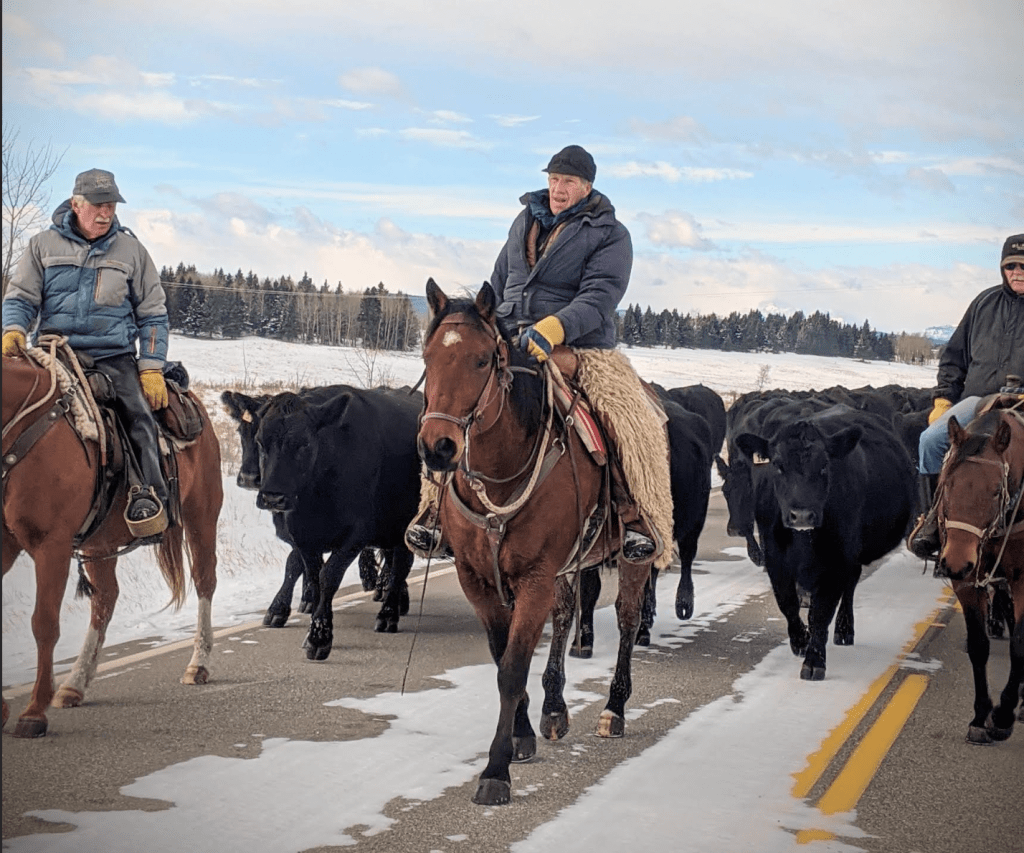
People in agriculture are not the problem, they’re just responding to a system they’ve inherited.
Where should we nudge first?
1. Change The Shape Of Risk
Keep crop insurance — it’s a good system and it does good things. But instead setting it up as a universal benefit. let’s restructure it as a means-tested support. We can use the same principle we already have in place in other programs, it’s not a foreign concept, namely:
Public support does not have to scale indefinitely with capacity.
Full support up to a threshold. Beyond that, it tapers. To make my point, let’s consider a hypothetical.
Case Study: The Johnson quarter
A 4,000-acre grain farm near Red Deer is considering buying a neighbouring 160-acre parcel. As of the policy landscape right now, it fits seamlessly into the system. However, under a tapered structure:
- Those acres carry less subsidized protection — only the first XX number of acres are fully covered by crop insurance so the remaining acres must be covered by the Johnsons themselves or by privately-purchased crop insurance which means that. . .
- The financial exposure is more real
Nothing has been imposed on them, they still retain full coverage on their base acres. However, with the graduated crop insurance change, the question has changed and the Johnsons must consider whether or not the land can stand on its own.
Sometimes, that’s all you have to do.
2. Change Who Gets Access To Land
If we want new farmers, we have to intervene — now before my fellow Albertans start another round of Exploding Noggins, no, not in ownership but rather at the flexion point, at the point of transfer. We need to intervene when land is changing hands. Hey look, another hypothetical for you!
Case Study: The Thompsons retire
A couple near Lacombe owns 640 acres and is ready to retire. Today, the simplest path is to sell to a neighbour but with targeted incentives:
- Tax benefits for sales (how about a really hefty capital gains exemption?) or long-term leases to qualified new entrants. With financing support already available through programs connected to Farm Credit Canada, why not just use their criteria to determine what qualified looks like? And for sellers, sure, maybe you don’t sell at a tippy-top premium but you get to keep more of the money you sold up for, tax free.
Now let’s move on to the next and final tweak in my proposed Nudge Policy.
3. Change What We Reward
We say we value resilience but if that’s true, we need to make it economically viable.
Case Study: The back 80
A farm near Olds has an 80-acre parcel that is marginal for cropping. Today, it stays in production because it “kind of works.” The farmer is trying to weigh the escalating costs of inputs that are needed to keep “kinda” working. The more he stares at those numbers, the less sense it makes but at the same time, it doesn’t feel right to let it sit idle. With a perennial forage and local production incentive, now he can convert it back to high-quality pasture and use it to grow up a lamb crop. That support has bloomed into a secondary enterprise and boosted local production and food security. The question has changed from “Enh, good enough” to. . .
“What can actually work best here?”
What happens next
Individually, none of these levers are dramatic but together, they begin to shift direction and encourages expansion to be more thoughtful and deliberate; encourages a diversity of land transition outcomes and broadens a local production system.
About Scale
Canada will remain an export-oriented agricultural nation; that isn’t in question. The question in front of us is whether that’s the only model we make possible. Resilience doesn’t come from single systems, it comes from many overlapping systems operating at once. Does that mean we have redundancy? You betcha. But redundancy is NOT inefficiency, or rather, it is but it’s for a good cause. When redundancy is intentional, right-sized and flexible, it can become resilience. For many years now, the system has been skewed overwhelmingly toward efficiency and look where we are? If we want different outcomes, we need to make different choices and it’s good stewardship to make those choices early enough that incremental change is still a worthwhile effort. Wait too long and we’ll be forced to consider extreme measures and while Canadians might be tolerant of certain kinds of extreme, I don’t think agriculture is a sector where “balls to the wall” would be acceptable.
Reality Check
None of this is absent because it is unthinkable — lots of people have been thinking it. I’ve spoken to academics, politicians, historians and farmers. Ideas like these have been in wide circulation for decades. Like all things, the world of policy making can be subject to trendy thinking but the policies that do the best work are the ones that never tip over into ideology. They don’t become doctrine, they stay adaptable. They flex and respond.
No, these things are absent because taken together, they would redistribute advantage.
Agriculture, like any sector, organizes itself around what it rewards. It’s time to consider redistributing advantage and building back some of that resilience. Large farms are not the problem — only large farms? Big problem. Old farmers are not the problem — only old farmers? Big problem. And yet, that’s the logical outcome of the current system.
The “Road To Hell” And All Those Good Intentions
My intent is not to unwind what exists, demonize any particular part of the sector or wag my finger under the noses of any specific community. I think farmers are smart, enterprising, hard-working and inventive. I think, when we put our minds to it, farmers can accomplish amazing things — especially when we work together for our collective greater good. Canadians can thank prairie farmers and their allies for things like medicare, workman’s compensation, employment insurance and the minimum wage. We are pretty damned spectacular on our own — in a group, we’re unstoppable.
And for the sake of our community, it is time to change what happens next.
The Final Word
Policies don’t tell farmers what to do, they don’t prohibit scale, they don’t mandate outcomes. Policies, at their best, simply change the conditions under which decisions are made. Farmers don’t need more theory. We already know what we need — we need opportunity, we need margins and we need ways to innovate while managing risk in enterprises that are right-sized for ourselves, our future, our sector and our communities.
All we need is a nudge and a few new levers. Just a nudge and the system will follow.
This is a Living post, a post to share my thought processes, my experience and the philosophy that underpins our activities here at the homestead. It is not a how-to, “expert advice” or meant to reflect a wider experience than just my own, on my farm, here with my sheep.

 Providence Lane Homestead
Leave a comment