Making wise choices so we can choose good consequences.
First, a quick disclaimer:
This is not a grazing template or prescription. This is a record of what we did in one specific pod, with our flock, on our soils, under our weather patterns in the Alberta foothills. Stocking rate, rest periods, timing, and even animal behavior are all shaped by local conditions. What follows is meant to show process and observation, not to position this approach as universally applicable.

I. The Pod In Context
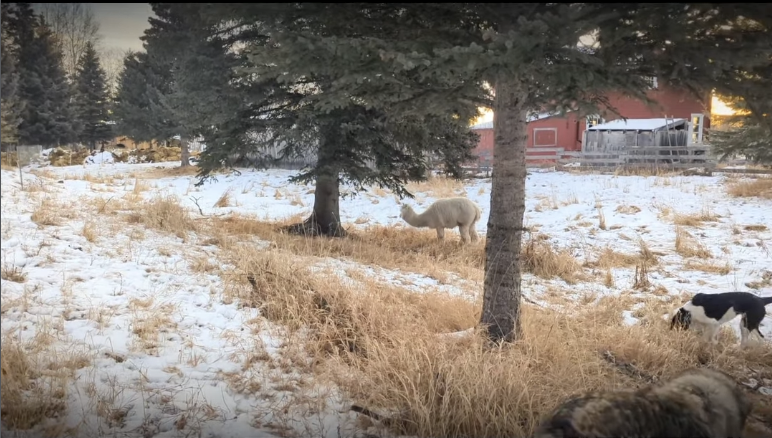
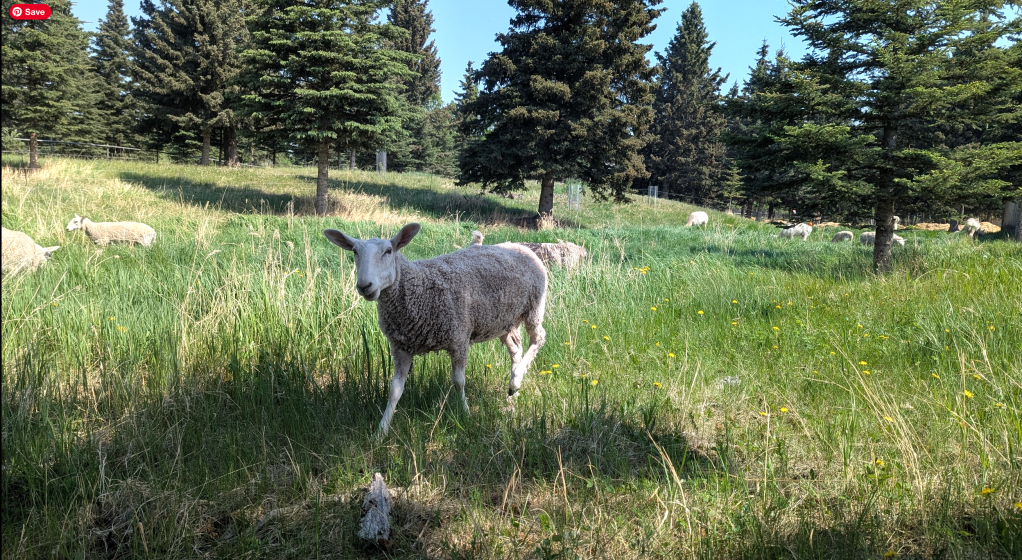
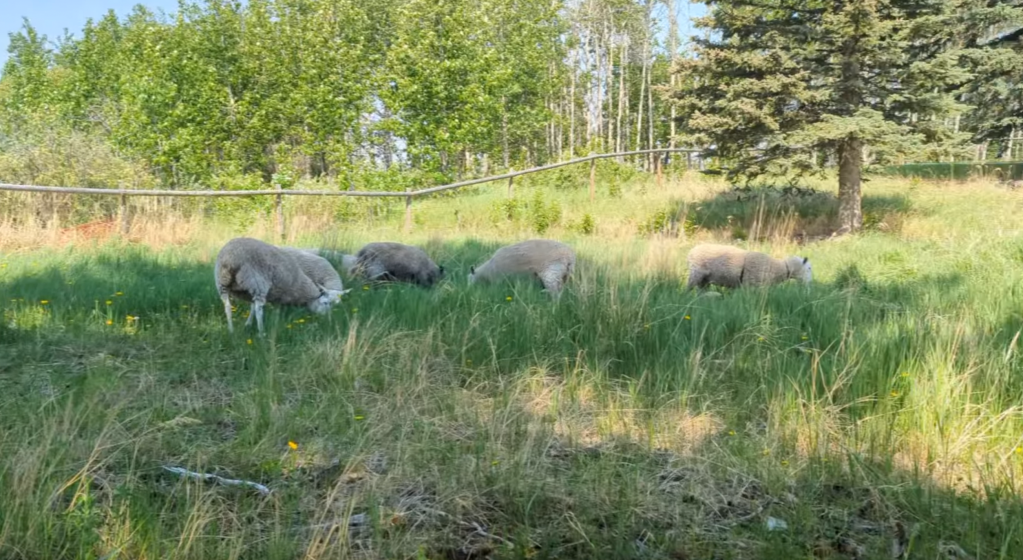
Context is everything. First, this pod is oriented along a seasonal wetland in the low portion. While this area can be very wet in the Spring thanks to run-off from both the slope to the north and the woodland region to the west, it is generally bone dry by August. Generally this area has a high proportion of tame grasses (Timothy, Brome, Kentucky Blue Grass) as well as wetland plants (horsetail, various sedges and rush plants) and forbs (vetch, alfalfa). This area can go rank very quickly. The flerd is excluded from this area until it is dry. In 2025, owing to late rains, it was dry by June but the flerd had to be excluded from it in July. Upper slopes dry out quickly and so it is often fenced to prevent grazing during lower-portion grazes. Grasses here are patchy, including both a mix of tame grasses as well as some shrubby plants (bog aspen, willow, wild roses) and forbs (yarrow, red and white clover are abundant on the lower portion of the slope). Prevailing winds are mostly westerly with some swing through the south and north, again often seasonal.
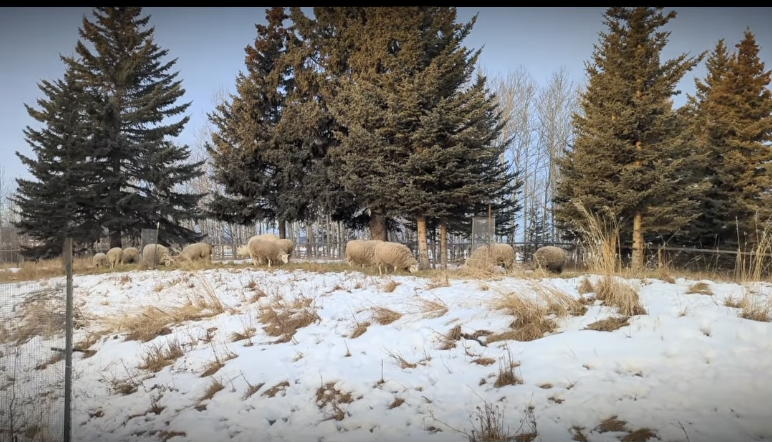
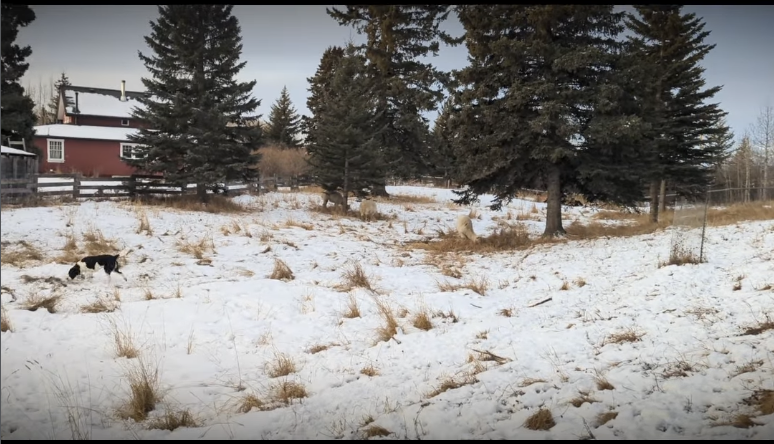
The West End Pod sits in a mixed zone of mature conifers, partial shade, and lighter, often drier soils. Compared to our more open paddocks, this area typically:
- Produces less dense grass growth
- Has a wide range of ground cover – the lower gully is often very lush when the upper reaches are very dry
- Experiences competition from trees for light and moisture
- Holds snow differently through winter due to wind shelter and shade
Because of this, the upper portion (where we are focused for this post) functions as a lower-production but ecologically important pod in our Adaptive Multi-Paddock (AMP) system.
Our grazing goals here are slightly different than in more vigorous pasture:
- Avoid repeated grazing pressure on already thin areas
- Protect and build ground cover
- Encourage deeper-rooted grasses and forbs
- Use animal impact carefully to cycle litter without overgrazing.
II. Early Spring Assessment – and a Caution
In early spring, before the main growing season, we assessed:
- Residual litter from the previous year
- Bare ground vs. protected soil
- Early plant emergence patterns under the trees
(For more on the particulars of our assessment practice, you can check out the AMP grazing page) We noted that this pod entered the season with moderate residue but thin live cover in several shaded zones on the upper portion. That told us two things:
- This area would need longer rest periods than our more productive paddocks.
- When we did graze it, we would aim for short-duration, light-to-moderate impact rather than heavy utilization.
This set the tone for the year: use, then get out, then wait.
III. Summer Grazing and Rest
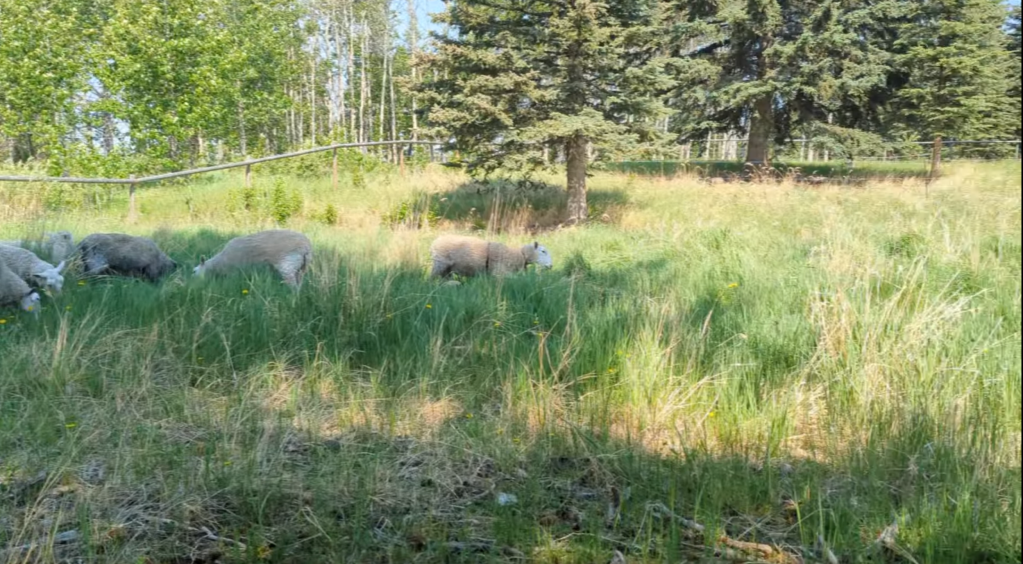
After an initial early-Spring graze (mid-May for four days) on the slope, the West End Pod was rested through much of the main growing season while we rotated the flock through higher-production areas. This allowed:
- Grasses to extend leaf area and root reserves
- Forbs like dandelion and alfalfa to contribute to soil cover
- Litter to accumulate in protected patches
We monitored from outside the fence line and during water/mineral checks, watching for:
- Whether shade-tolerant grasses were filling in
- If litter was protecting soil or beginning to mat excessively
By mid-summer, we had enough standing material to support another controlled late-season graze.
VI. August Public-Facing Graze: Open Farm Days
In August, we deliberately grazed this pod during Open Farm Days. One practical goal: keep the sheep visible to visitors. But management-wise, this was still a planned AMP move. The sheep were excluded from the upper, delicate and dry portion of the pod. (This is the area we earmarked for Winter management.)
Key features of that graze:
- Short duration grazing
- Animals entered with appetite but were not held long enough to re-graze regrowth
- Preferential grazing focused on:
- Dandelion
- Alfalfa
- More palatable grasses in sunnier pockets
- Canada Thistle (yes! Sheep will eat this as will alpacas, particularly the delicate flower heads)
Because plant growth was slowing by late summer, we aimed for:
- Utilization without overexposure of soil
- Leaving enough residual height and litter to protect crowns and roots going into fall
After that graze, this pod was removed from the rotation and allowed to rest into dormancy.
V. Fall to Early Winter: Rest and Residue
Through fall, the West End Pod stood with:
- Visible standing residue
- Patchy but present grass cover
- Litter accumulating especially under trees and in drift-prone areas
This residue is not “waste” in our system. It functions as:
- Soil armor
- Moisture retention
- A carbon source for soil life
- Physical protection for plant crowns through freeze-thaw cycles
VI. Winter: Targeted Bale Grazing for Soil Building
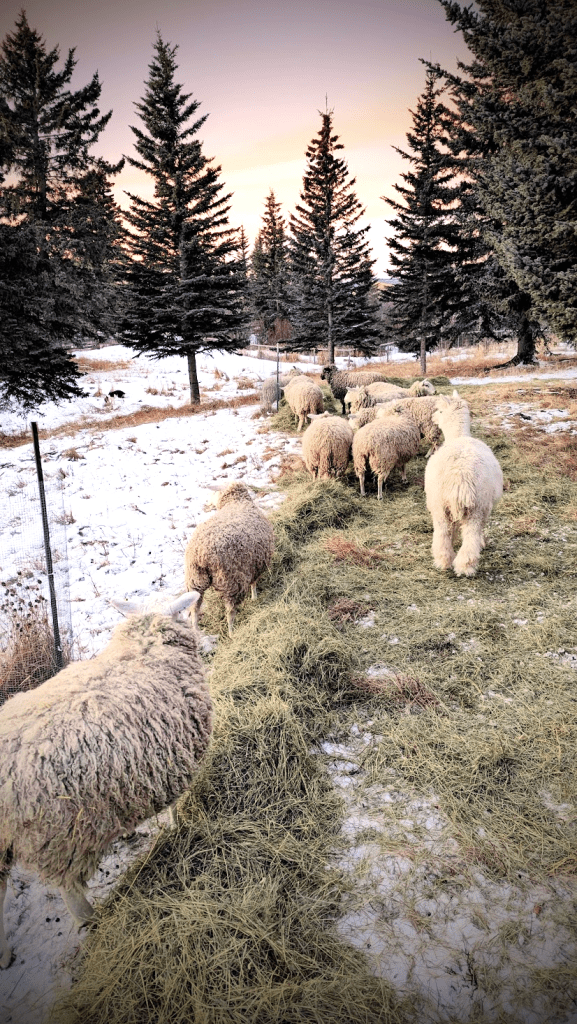
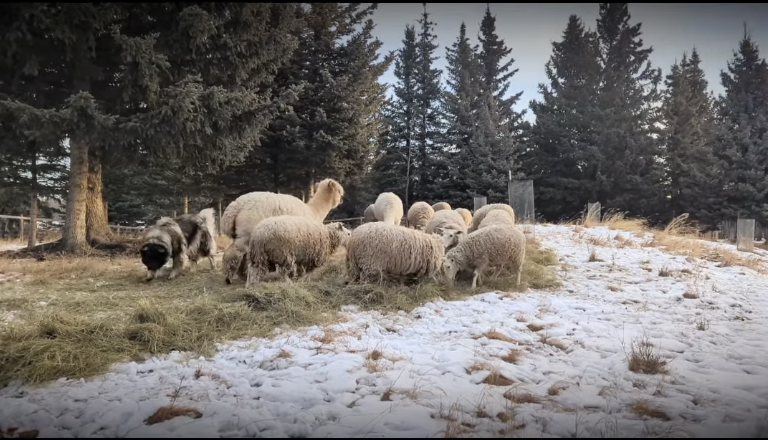
By mid-winter, with snow cover and dormant plants, we used the West End Pod for a controlled winter feeding event.
What we did:
We brought in a core from one of our K-string bales and:
- Unrolled hay on the upper, flatter portion of the pod
- Allowed the flock access for a limited period
- Pulled them off before they began searching too aggressively for remaining forage
- Raked hay downslope to redistribute nutrients
- Repeated access in stages as conditions allowed
Why here?
This area tends to be:
- Sparse in grass
- Limited by shade and tree competition
- Slower to build organic matter
Winter bale grazing here serves several purposes:
- Adds organic matter to thin soils
- Distributes manure and urine across a low-productivity zone
- Increases litter and mulch cover for spring moisture retention
- Stimulates biological activity when thaw begins
Was there enough standing residue?
By mid-winter, with snow cover and dormant plants, we used the West End Pod for a controlled winter feeding event.
So, What Did We Do?
We brought in a core from our K-string and:
- Unrolled hay on the upper, flatter portion of the pod
- Allowed the flock access for a limited period
- Pulled them off before they began searching too aggressively for remaining forage
- Raked hay downslope to redistribute nutrients
- Repeated access in stages as conditions allowed
Why did we do that here?
This area tends to be:
- Sparse in grass, especially around the conifer drip lines
- Limited by shade and tree competition – conifer needles change soil pH
- Slower to build organic matter
Winter bale grazing here serves several purposes:
- Stimulates biological activity when thaw begins.
- Adds organic matter to thin soils
- Distributes manure and urine across a low-productivity zone
- Increases litter and mulch cover for Spring moisture retention and reduces potential for erosion in the event of extreme rainfall
- reduce the risk of sheep overgrazing live crowns
- keeps most winter nibbling focused on hay and dormant residue
- reduced potential for erosion in the Spring in the event of any extreme rainfall events
- provides sheltered areas for small mammal and insect habitat
VII. Key Management Principles Used in This Pod
Throughout the year, our decisions here followed a few consistent rules:
- Short grazing periods rather than extended occupancy
- Longer rest than in more productive paddocks
- Grazing timed to:
- Remove some plant material
- Leave protective residue
- Winter feeding used as a soil tool, not just a feeding strategy
- Animal movement influenced by:
- Where we stood
- Where hay was placed
- How long access was allowed
VIII. What We’re Watching Next
As snow recedes, we’ll be looking for:
- Increased litter cover and soil protection in former thin spots
- Signs of improved grass density in previously sparse zones
- Whether nutrient concentration from hay feeding creates:
- Stronger spring growth
- More even ground cover
Those observations will shape how (and how lightly) we graze this pod in the coming growing season.
This is a Tending post — a practical look at our methods, routines, and on-the-ground decision-making with the flock. It’s not a one-size-fits-all how-to, and it isn’t meant to substitute for local knowledge or professional guidance. It’s just what we’re doing here on our farm, in our conditions, with our sheep (and alpacas), written down plainly in case it helps. For more about why we do things the way we do them, the philosophy that informs our process, you’ll find those posts in Living.

 Providence Lane Homestead
Leave a comment