Counter-cultural opinion!! Spring Sucks. When the temperatures are bouncing all over the thermometer and the snow is pounding, how to keep all the newly-naked sheep comfortable? What exactly am I managing here?
Don’t you think that there’s something about crossing that time change line — losing the hour, God help us — that, once you’ve adjusted at any rate, brings a sniff of optimism? Like Spring may be, if we don’t look at it too hard, right around the corner?
Before your disbelieving eyes, the snow retreats from the south-facing slopes and the the buds on the trees get a little fatter, like they’re sucking your optimism up right through the roots. On good days, I even begin to think about grass and lambs.
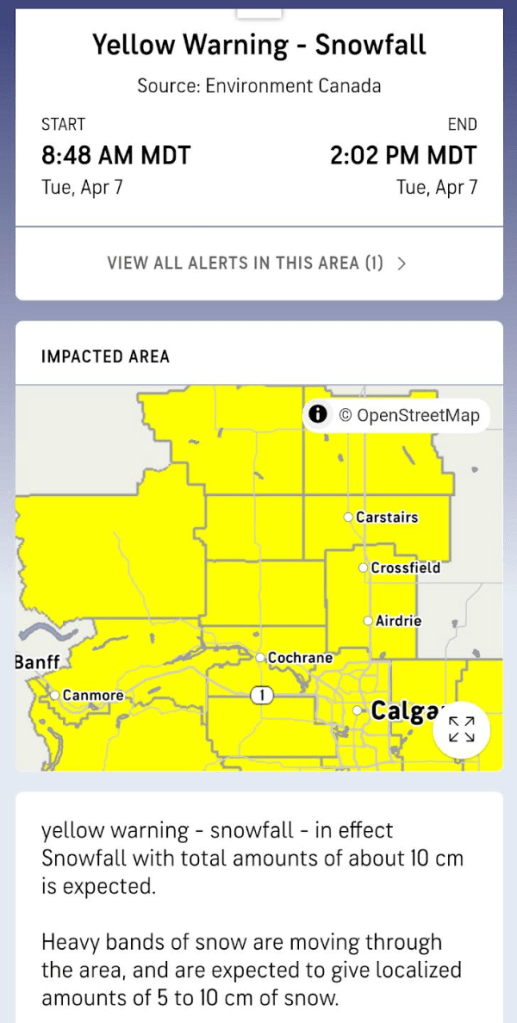
And then it snows. It’s crazy making for this Southwestern Ontario swamp girl. We’re not just talking about a little snow, we’re talking about the kind of snow that thuds when it falls, God help you if you fall, it would be a baptism.
We’re talking a full-on winter return and here, at 4400 ft elevation, I am constantly reminded that Alberta’s seasons just don’t give a flying cat fart about my preoccupation with the calendar. I can point at it and mewl like the pampered modern-day farmer that I am (when I compare my current experience to some of the stories in my books about historical homesteader and a life on the Plains, I feel my privilege keenly) but eventually, I have to pull myself together and acknowledge the truth — doesn’t matter. Nothing I have to say matters.
This is Alberta and she’s going to dish out whatever moisture she’s got and dammit, I am going to be grateful.
Here, March and April are historically, our snowiest months. Them’s just the facts.
That cute terminology, “shoulder season,” doesn’t apply here. Not really. What this is, is winter. . . we’re just doing it with better lighting.
So with that in mind, how do I take care of my flerd in this most erratic of seasons?
Start With Where You Are: Elevation Changes Everything
At 4400 feet, weather behaves differently. Sometimes we’re spared the “events” that slam into towns and cities a little further south and east than us. Sometimes we take it in the teeth thanks to our elevation.
Storm systems arrive colder and wetter and up here, snow carries more moisture. Melt cycles are slower and more deceptive. What looks like a mild day can turn sharply once the sun drops, especially if you add wind.
Now, as I may have mentioned, I’m from Southwestern Ontario. I come from the land of “Lake Effect,” and “It’s Not The Heat, It’s the Humidity.” I know from wet weather. I know what it’s like to go outside and feel it smother you, like a wet blanket that’s just been wrapped around you. My youngest once turned to me on a particularly gaspingly hot day in the Ottawa Valley and said, “My outsides are as hot and sticky as my insides must be.”
Yerg. But when it comes to the cold, that humidty is the thing that wraps around your backbone and makes you feel like a cadaver that’s just been dug out of the ground. It’s the wet cold that gets you, even when the temps themselves are unremarkable.
When it’s -25°C in January, that kind of dry cold is clean. Keeping the sheds dry is actually fairly straightforward — everything is frozen and it’s a simple matter of scooping and dumping. But when the temps are climbing up and down the thermometer, you get all kinds of junk falling out of the sky — rain, snow, sleet, ice, freezing fog. The temps mean the ground can freeze, thaw, mud-up and then refreeze. For me, staying warm isn’t nearly as challenging as staying dry. I cycle through layers not in quest for heat but just to stay out of the muck.
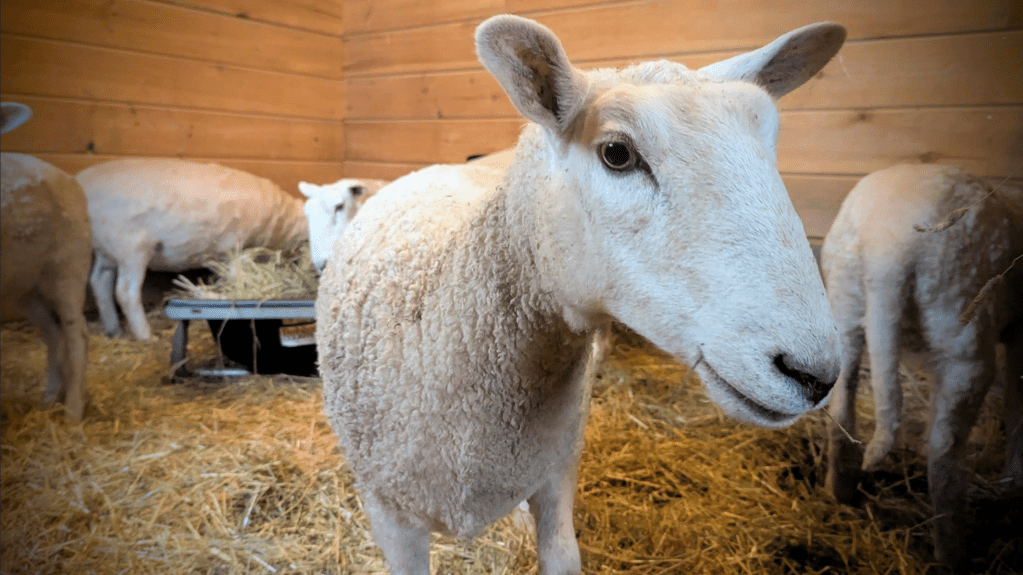
But at least I’m fully dressed. After being sheared, the sheep are all naked and critters don’t struggle with cold as much as they struggle with being wet.
Humidity vs Temperature: Pick Your Poison
If I had to choose, every time, I would take cold over damp. Temperature matters, yes of course. But humidity is the multiplier. Humidity is what takes the situation from “Yuck” to “Danger”.
A dry animal with shelter from wind can tolerate temperatures well below what most people are comfortable imagining. A wet animal — especially one standing or lying on wet ground —loses that resilience quickly and temperatures that wouldn’t be an issue were the day dry can quickly become life threatening. When they’re in full fleece, I keep them fed and give them shelter options and don’t worry too much. When the ladies’ pink skin is peeking through, we’re in very different territory.
So in March and April, I’m not thinking so much about keeping everyone warm, I’m much more concerned about keeping them dry and out of the wind.
Bedding Is Not a Luxury
Is there anything nicer than hunkering down in your sheets and blankets when winter is busy roaring around the eaves? It’s hard to leave that little cradle of warmth when Monday morning comes, isn’t it? All my sheep are “Same, Tara. Same.” In our sheds, the deep bedding is doing more work than almost anything else this time of year. We use barley straw and it is a workhorse around here.
Straw, in particular, functions as:
- insulation from frozen or saturated ground
- moisture buffer
- a way to keep animals elevated out of muck and manure
For anyone who knows me, they know I am a . . . well, an indifferent housekeeper. I am quite willing to putter in clutter. When “burrowcore” crossed my interior design-heavy social media feed, I was like “At last!! My people have found me!”
But while I may live like a small tunnelling rodent in the house, in the sheds my mania is cleanliness. I am trying above all else to keep things DRY.
That means:
- adding bedding before it looks necessary — keep an eye on those knees!
- building depth rather than cleaning back to bare floor
- accepting that this will become a pack
A well-managed bedding pack generates a small but meaningful amount of heat and, more importantly, keeps bodies out of moisture.
If animals can lie down dry, you are already ahead.
Infrastructure: Airflow Without Exposure
There’s a temptation in bad weather to close everything up but it’s actually managing moisture levels inside that’s the key, particularly when a bedding pack is bubbling away in a confined space. Our sheds can be fully enclosed and I do, when circumstances (like a pounding south wind) call for it. But equally, we have a high level of ventilation.
At this time of year and in these conditions, what you’re managing is not just cold — it’s condensation.
In a closed barn, especially with multiple animals:
- breath
- manure
- urine
…all contribute moisture to the air. Also smells.
Without airflow, that moisture settles:
- into bedding
- onto walls
- into fleece or on to skin
And now you’ve recreated the exact problem you were trying to avoid. So the balance becomes:
Airflow + Shelter from wind and precipitation.
For me, that looks like:
- windows cracked, even in winter
- functioning ridge or peak vents
- dry zones that are protected but not sealed
- ventilation fans that can be called on whenever necessary
I’m not trying to build a warm room, I’m trying to keep a dry one.
Breed Matters: Upland Sheep Are Built for This (Mostly)
Working within the British system, Upland breeds were developed for exposed, variable conditions. These are not fragile animals. My Border Leicesters, like other Upland breeds, are robust creatures with a lot of tolerance for variability in weather, bless them.
Upland sheep tend to have:
- strong wool coverage
- good maternal instincts
- an ability to maintain condition on less-than-perfect forage (and anyone who got hands on with the ladies at Shearing Day knows precisely what I’m talking about. Still no sign of Amy’s backbone, folks. I’ve been checking. More on BCS below)
All this becomes super-important in March and April. While I absolutely will intervene when I need to, I don’t want to re-engineer an animal that’s simply not built for what we have here. That right there is a source of unending anxiety and I just don’t have the emotional or mental bandwidth for that kind of thing. Much better to start with a critter that’s already got the tools to deal with what Mother Nature is dishing.
Upland sheep are meant to:
- lamb in less-than-ideal weather
- move across uneven terrain
- tolerate fluctuation
But—and this is important—they still require margin. They’re not wild animals and they need support.
Nutrition, shelter, and observation are what ensure they get it.
Body Condition Is Your Real Insurance Policy
If there is one thing that determines how well an animal will come through late winter, it is body condition. We can’t trust to just optimism, or infrastructure, or good intentions. Even breed on its own is not a determining factor.
A ewe in solid body condition has the energy reserves to maintain her body temperature appropriately (you can see a demonstration of Body Condition Scoring if you’re curious). If she’s pregnant, she can still grow her baby and produce good colostrum if she’s got the reserves in her back. For a thin girl, her margins have a lot less to draw on. In March and April, her body may start to steal from the her dwindling resources to protect fetal growth leading to pregnancy toxemia or other poor outcomes. With that in mind, I spend as much time eyeballing fat stores and getting hands on with my girls and then feeding accordingly.
Body condition is a marathon, not a sprint. Because my animals are outside (as in, they have access to high-quality shelter but there’s no heat sources anywhere), making sure they maintain good body condition starts well before the weather turns. I don’t like fighting a rear-guard action. Even on those occasions when you might win, the effort and the stress on everyone concerned is a high price to pay if it could all have been avoided.
Putting It Together: What Matters Most
March and April are — like October and November on the flip-side of the calendar — months that really do highlight the gaps in my procedures. If I have been diligent and spent the time and attention making sure all the pieces of my puzzle are in place — the shelter, feed, bedding, breed, body condition, ventilation and infrastructure — then while I dislike most intensely kitting up to slog through the ooblek that’s piling up outside my windows, I know we’ll come through it okay. There will be a fair bit of dis in all our gruntles but we’ll be okay.
Paying attention to —
- Dry animals
- Dry places to lie down
- Adequate body condition
- Airflow without drafts
- Feed that matches demand
Keeps us more-or-less on an even keel physically, even if we’re all feeling grouchy. The most important thing I try to remember and manage for — every day, regardless of what the meteorologist goblins are telling me — is humidity. I’m not chasing temperature, I’m managing moisture.
A Final Note
Early Spring has to be the most godforsaken season here in the foothills. It is capricious — a terrible flirt, one day showing us the kind of soft temps and gentle breezes that bedeck the passages of a children’s story and then suddenly turning on a dime and screaming in our faces like some kind of frozen banshee, resurrected from a frozen crypt. To be honest, its the most emotionally fatiguing season. . . Just keeping up with the swings can feel like a full-time gig when there are animals to tend to.
But while the seasons argue, I need to remember I can’t waste time pining for a Spring that simply doesn’t exist here. My job is to hold the line long enough for the flerd to come through it well.
And to keep repeating every dryland farmer’s mantra. . . “At least it’s moisture.”
This is a Tending post — a practical look at our tools, methods, routines, and on-the-ground decision-making. It’s not a one-size-fits-all how-to, and it isn’t meant to substitute for local knowledge or professional guidance. It’s just what we’ve found useful and what we’re doing here on our farm, in our conditions, with our sheep (and alpacas), written down plainly in case it helps. For more about why we do things the way we do them, the philosophy that informs our process, you’ll find those posts in Living.

 Providence Lane Homestead
Leave a comment