The Quality of the Question determines the Quality of the Answer. . . So whether you’re talking to your veterinarian or typing with AI, how do you make sure you’re collecting and sharing the information you’ve got in a way that will actually be useful for the care decisions that must come next?
DISCLAIMER: The views and opinions expressed below are MY OWN. These are based on my own observations and experience and are absolutely NOT representative of anyone else’s experience. Nothing below is intended to take the place of good veterinary medicine. Be smart, make wise choices and choose good consequences. The health and welfare of the animals we care for is paramount.
A year or so ago I sat down with some experts — producers of my acquaintance as well as veterinary medicine practitioners from the University of Calgary — and drafted a document that outlined and explained how to triage an animal (in this case, sheep) effectively.
At the time, the intention was to provide my fellow producers with a key they could use to gather high-quality information to share with their veterinary support team, something they could follow that would help keep things organized in the midst of a crisis when emotions can run high.
Like much of North America, my province is labouring under a large animal vet shortage. With corporate consolidation and fewer vet school graduates opting for large animal practice, many more farmers are relying on over-the-phone consultations. Hauling animals in to clinics is increasingly the norm and for some, that may mean a trip of several hours to get to their closest available facility. In order to determine the best way forward, vets and farmers must work together to provide the best information possible. That’s what this document was intended to provide.
Artificial Intelligence and Vet Med
And then A.I. entered the chat.
The more I listened and asked questions, the more I discovered that many of my producer and shepherding colleagues and friends were opting for A.I. when they couldn’t access vet care. . . Sometimes even before they called the vet. The conversations were guarded and coded — like something slightly illicit. It felt like a sotto voce sales pitch from some would-be Venus Flytrap at the Forum parking lot, circa 1988. There was a definite feeling of something shady about it all.
Some more reading later and I discovered that vets themselves are using A.I. — not as diagnostic tools but to streamline patient records, troubleshoot, help build individual treatment plans and interpret test results. Imagine my surprise! Like so many, I’ve put ultimate faith in my vet medicine professionals. . . Surely they don’t use A.I.??
Well, a tool is a tool. While Artificial Intelligence causes — rightly — a lot of raised eyebrows, nevertheless the truth is it’s becoming ubiquitous in the world of livestock farming. I have tested it myself on a few occasions and have found that its biggest asset is the ability to streamline information into a linear and logical flow and to break down technical histopathology reports into accessible language. I have also found that what you get back is only ever as good as what you put in. High-quality info means high-quality answers — whether that’s a human vet or an A.I. chat.
Back To Basics
I don’t believe A.I. is a substitute for a human being with specialized training, access to solid protocols and techniques and the facilities and experience to make it all come together for the health of the animal in front of me. However, the reality of life in remote and rural communities means that sometimes we do our best with the cards we have. There are no perfect scenarios. So what are some of the things to keep in mind if A.I. is one of the tools in your toolbox?
First, A.I. has no concept of urgency or consequences. It doesn’t have to live with the results of a bad decision. It feels no guilt, accepts no responsibility and is not going to cry with you in a poorly-lit barn. It can’t reach out and feel a cold ear, doesn’t know the animal in front of you and can’t process “off”. . . Whatever that means.
What A.I. can do is recognize patterns, organize symptoms and offer possibilities you may not have considered. It can present probabilities. It is excellent at taking structured information and presenting structured possibilities.
But it all depends on “structured.” Give A.I. bad information and you absolutely will get bad answers. Possibly even dangerous answers.
Which brings us back to my triage document.
A, B, C, D
Triage is not about determining what disease you’re dealing with, triage is about figuring out how urgent the situation is. It’s a way of recording what’s going on, starting with the big picture and working down to more nuanced details. Triage, done well, gives reliable and up-to-date information that helps determine the next move. Sometimes a glance is all that’s needed, sometimes a more thoughtful examination will be required to do the work of triage.
Underpinning it all is this principle — the better the observation, the better the performance. Whether its a human vet you’ve woken up from their rest at 3AM who is trying as hard as they can to catch up to your adrenalized outpouring of high-velocity information or an A.I. chatbot, the quality of the information you provide is foundational to whatever happens next. A human can ask you leading questions, prod you for more clarity, ask for explanations — A.I. likely will not. The vaguer you are, the more dangerous A.I. becomes.
In my triage document, the very first level of triage is exactly the same as the kind of process that would be used in a human emergency room. Airway, Breathing, Circulation and neurological Deficits. When any of these are in play, A.I. is not an option. These are all acute conditions that require emergency medical care.
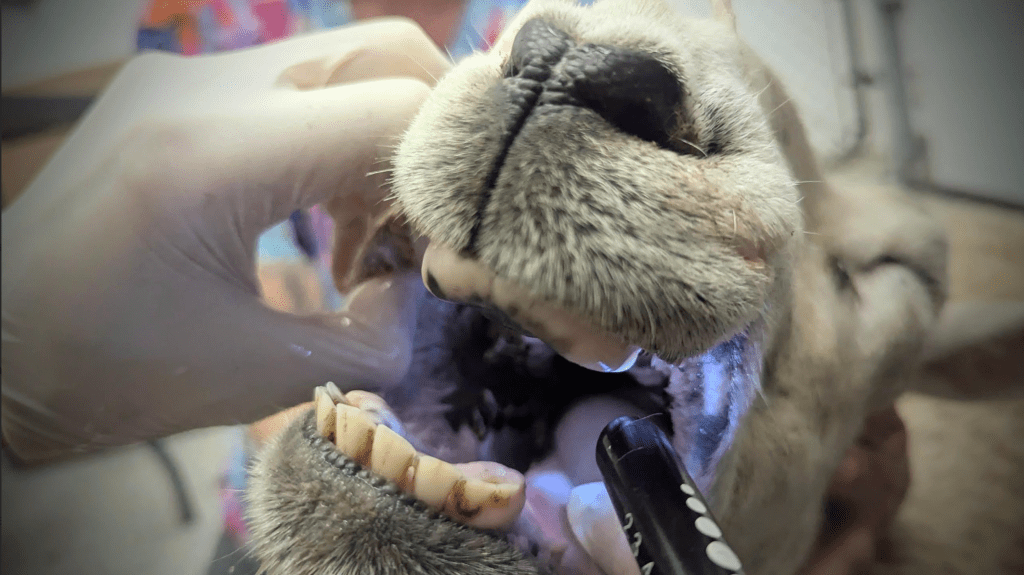
However, once you’ve got that vet on the phone, a solid triage protocol absolutely can help you and your vet decide together on your next steps. Presenting the basics — species, age, gender, reproductive status, respiratory and heart rate, temperature, feeding and watering over the last 12 hours, defecation/urination, and any other obvious symptoms (ie straining, slavering, limping, tenderness, distension, star-gazing, physical injuries/deformities etc) can make a high-stress situation, if not easier, at least more straightforward. It helps to keep the emotions in check because after all, everyone in that room has a job to do.
Plus ça Change
Whatever combination of animal care options any of us may pursue, every human livestock steward must bear the full responsibility for what happens next. On its own, A.I. is not a terrible thing — it can potentially be incredibly helpful. It’s just a tool — and like any other tool, it’s the calibre of the human holding the screen that determines its efficacy.
I have seen some incredible wins thanks to highly competent, compassionate and decisive veterinary medicine practitioners. I have seen lives saved. I also know what it’s like to be alone in the dark waiting desperately for someone to return your call. Knowing how awful that feels, I’m not likely to turn my nose up at anything that may offer some spark of light when everything feels like it’s hanging by a thread.
But the arrival of A.I. changes nothing – no new bright-and-shiny technological development changes the task I have at hand.
I still have to look.
I still have to think.
I still have to decide.
. . . and I have to live with it.
There is no way A.I. replaces that — not in this lifetime or any other.
If anything, A.I. in the barn raises the bar. As of now, while that initial giddy flush of optimism is wearing off, the real work of figuring out how to make good use of a powerful tool must begin.
It comes down to our communication skills, no matter who — or what — we’re working with. Underpinning it all, the quality of the answer depends entirely on the quality of the question.
And on a farm, the question can only ever be as good as what you’ve taken the time to notice.
This is a Tending post — a practical look at our tools, methods, routines, and on-the-ground decision-making. It’s not a one-size-fits-all how-to, and it isn’t meant to substitute for local knowledge or professional guidance. It’s just what we’ve found useful and what we’re doing here on our farm, in our conditions, with our sheep (and alpacas), written down plainly in case it helps. For more about why we do things the way we do them, the philosophy that informs our process, you’ll find those posts in Living.

 Providence Lane Homestead
Leave a comment