In 1957, the poet W. H. Auden wrote “The More Loving One.” This poem has long been a favourite of mine – for it’s candor, Auden’s mastery of his skills and for it’s blunt-but-beautiful message that some things are universal and inevitable. Autumn, for many of us, is a season of gorgeous colours, a crisp snap in the air and sweater weather. The popular culture waxes on about cinnamon and pumpkins. But for some of us, the falling leaves remind of us that this is a year drawing to a close. Autumn is the beginning of the end.
TW – this post deals with my experience of grief and loss on the homestead. These are my words, this is my experience.
Autumn, for all it’s glories, reminds me that things end. And endings, no matter how used to them I may get, bring a language of their own. . . Grief. Farming sheep has inevitably brought grief home to me. I can’t speak to anyone else’s experience at all, I can only speak for myself, but I can tell you that grief, the sucking vacuum of something gone where something used to be, is part of the topography on the homestead. It is always there, lurking on the edge of every single day. To love is to understand that love may be lost and grief will come knocking.
So how to navigate the shores when I once again find myself on them? When the small boat of my world has been breached, the hull shattered and splintered and the black water comes swirling in and threatens to suck me under, how do I continue?
How does anyone?
Loss and Family-ar Ground
I’ve thought about this a lot over the years. I have often encountered an unspoken assumption when I am out in public. . . On one side, there are those who assume I don’t feel anything. Otherwise, how could anyone do this work? How could anyone cradle newborn lambs and then watch that life slip away? Farmers must be robots or so calloused by the experience they no longer feel the loss. On the other side, there are those who assume I am perpetually incapacitated, reeling from one unhappy occasion to the next, in a constant state of devastation.
Neither are true – and both are.
Let me begin with a little background. . . I am the first surviving child of my parents. In all the family photos, I am there, the oldest between my brother and myself. I am also the oldest grandchild, the oldest granddaughter, the oldest cousin. But I am not the first. The pole position belongs to my two older brothers, twins, Shawn and Trevor, who died before I was born. It might sound a bit fanciful but it’s not less honest to say that my mother, in an act of just the most superhuman hope and optimism, carried me while she grieved (and continues to grieve) her first children. I was marinated in grief. And from the moment I was born, I became the child who lived. I may not have got a lightening bolt scar but I carry the same title. And just like Harry, it has shaped every single part of my world ever since.
Acquainted With Grief
Now, there were no Voldemorts in my life — I am truly blessed — but I think it’s safe to say that because every part of my known world was imbued with grief, I have an understanding of the landscape grief creates. I have never known a time without my brothers — I can honestly tell you that the fact of them has never not been a point on my personal compass. They have never not been a factor in our family — how could it be otherwise?
And so, shaped and moulded by grief, I navigated a world where I understood — even if I had not directly experienced — that life and love, and all the promise they contain of shared futures, can disappear like water into the ground after the rain. It can get sucked away slowly or all at once and you will be left staring at the spot where it all used to be and where now, there’s nothing but a stain to show you the outlines of what once was. As such, death is not a shock to me. I haven’t — and this is something I’m truly thankful for — ever been surprised by the fact of death. I have never known a time when it wasn’t there. So the horror of a sudden passing doesn’t happen for me. . . I may be shocked by the circumstances but I can say that even the most untimely death has never taken me by surprise because it happened. How, or to whom, or when? Yes, those things can feel brutal and terrible but the fact of it? No.
The Runway
I consider that an advantage, over all. From my earliest days, I’ve had the capacity to push feelings to one side and consider circumstances analytically. I am told by those who love me most that it’s a cold kind of process and very uncomfortable to witness. It also, as I read this back, makes me sound like a psychopath.
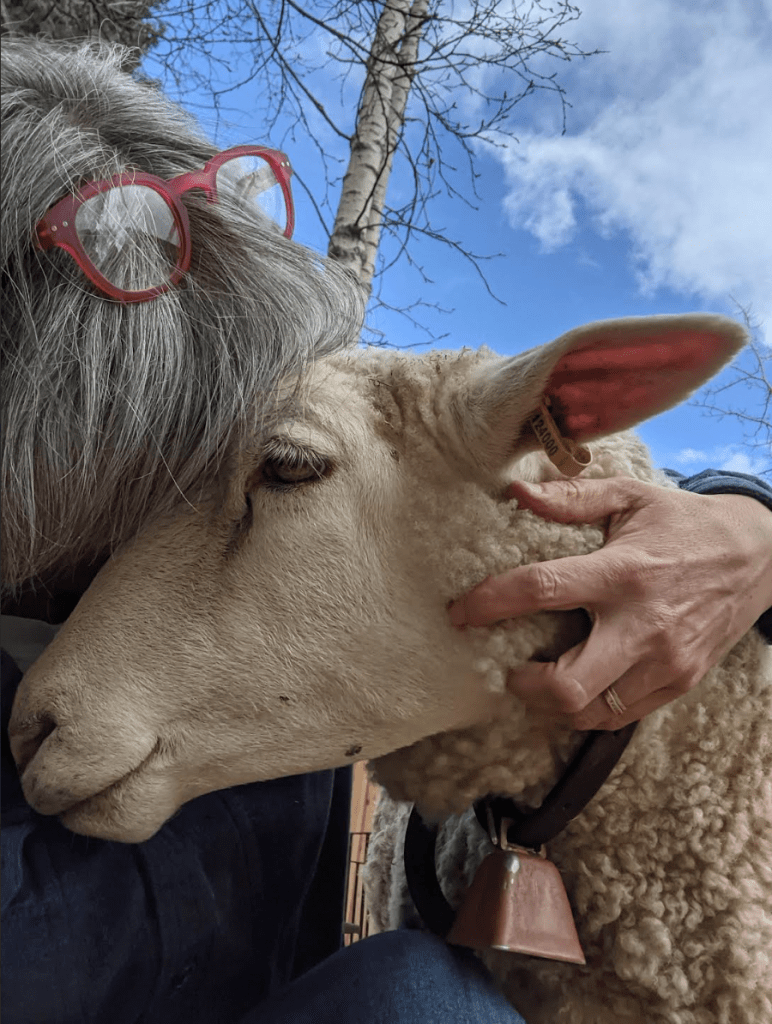
But what does it mean for the farm? What does it mean for the animals who live here? In my upcoming book “Prairie Wool, A Canadian Story About Getting Lost and Finding Home,” I had to do a lot of work excavating exactly this question. How does my particular understanding of grief impact the beings I care for?
There are really two parts to this question. The first is clinical. When one of the dogs, sheep or horses present a set of symptoms, there are obvious standards of care. There are veterinary medicine experts. There is my own experience of dealing with similar things in the past. There is a protocol and treatment options (when I’m lucky) and there are appointments to keep. And in the back of my mind, there is the knowledge that the longer these interventions go on, the less likely a happy resolution becomes.
The second part is what does it do to me, the shepherd? What is it like to work and care and labour alongside the patient? When things go well, it’s a triumph like no other. When a used-to-be afflicted animal improves and resumes normal life — or whatever was normal for them — I want to parade and show them off, “Look!! Look at her now!” Not as a tribute to any of my efforts but because this particular animal has rallied and, along with their good health, balance within the flock has been restored. I am delighted for their society.
When, as happens, that is not the case, when the growing gloom of loss gathers on the periphery of my vision and I can see the road ahead leads nowhere bright, care becomes a grind and the wait for the inevitable is agony. I don’t allow suffering — in so far as I can recognize it, I mitigate it by every and any means at my disposal — but there’s a lot of daylight between the last day and all the days that lead to it. It’s in those greying days, when hope is still flickering and the work goes on, that I use up the greatest part of my emotional runway. This is where the hurt happens. This is the trial by fire.
And it has never-not-once gotten easier.
Refined
Nor should it. I have learned over the years that grief isn’t “love with no place to go.” It’s not, in the words of King Thranduil a sign anything was real. At least, not to me. Grief is not an experience — although I experience it — it is a place. It is as solid and concrete as a skyscraper, as permanent as the horizon. Grief isn’t a feeling, it is a path and the way I feel happens because I’m on it.
As a shepherd, the greatest part of grief happens when I’m working with our supports and with the being in front of me. I am walking alongside our patient, grieving while they’re still with me. I work, I hope, I dedicate myself to every reasonable means of treatment but I am no stranger to the state of grief and I often recognize it well before anyone else in my orbit does. . . That’s down to the way my world was built from my very beginnings.
And it’s augmented by the knowledge I carry about the beings in my barns and pastures. While my veterinarians may be experts in their medical knowledge, the animal in front of them is mine.
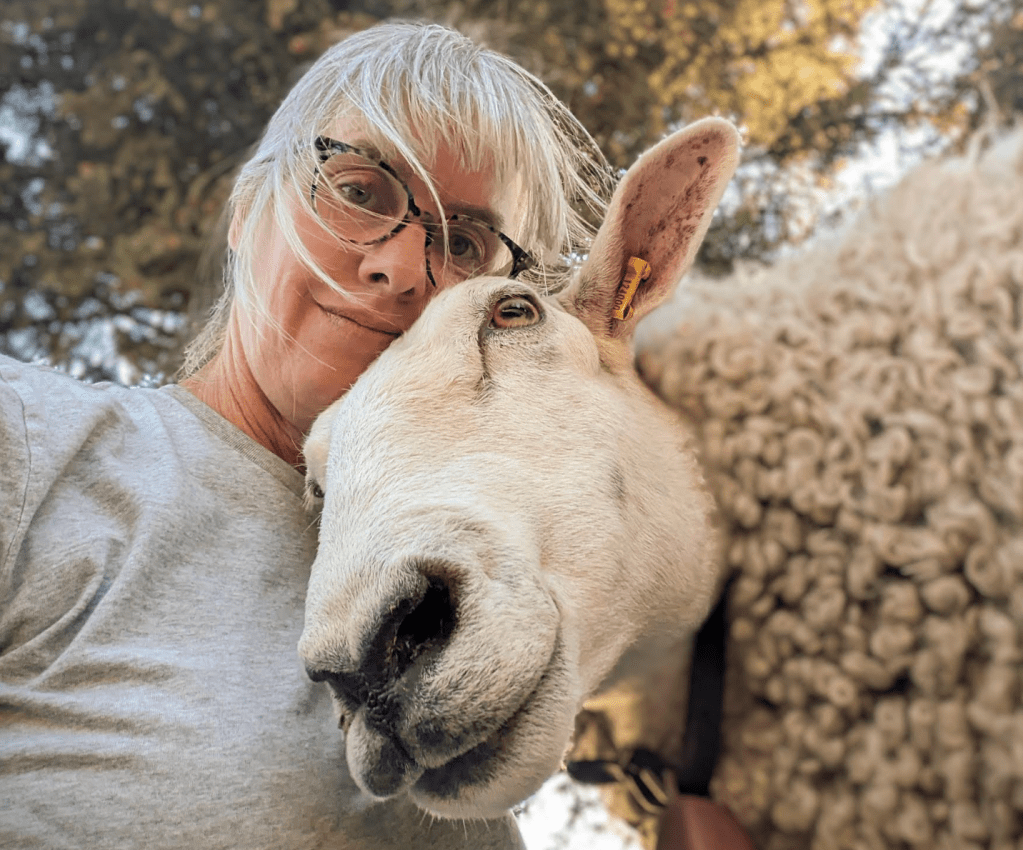
I am not a vet — I regularly have trouble mathing and all but the basics of biology escape me. But the animal standing in the clinic or in the stall? No one knows them better than I do. I know what’s normal for them and I know what’s not. Both kinds of expertise are needed.
I have found over the years that veterinarians, bless them, are often slow to see that their expertise has run its course. There have been several occasions in my experience when I knew — because I knew the animal — that we had run out of runway. I am not infallible, I’ve gotten it wrong before and I work through my penance daily. But increasingly, I am inclined to place my faith — gingerly, as one would set down a bomb — in what I know about my animals. The tilt of a head, the angle of an ear, the lift of a chin, the curve of the neck. These things are eloquent, when the being in front of you is known.
The Truth Always Hurts . . . But Not Forever
So, when we together reach the end of the runway and permanent decisions have to be made, I wrap up the experience of care and set it to one side to make the choice that has to be made. I have expended so much effort and so much time and so much emotional and physical energy getting to this point that it’s not all that hard, really, to get clinical. To make lists, to schedule appointments. To reckon up the reality. As uncomfortable as it may be to watch — as cold-blooded as it is to write it down — I’ve been doing the hard work of grief, of loving and supporting when I have never not known how it might end. The grief of this time doesn’t prove that the love was real. The life itself was the proof, if any was needed.
But obviously, that final moment is always horrible. When it’s finally over and only the small rituals of remembrance are left, it sucks. But when I’ve done my job well, this marks the end of grief and the start of a process that transfigures grief into sorrow and sorrow, pigeons, is something very different. Sorrow is where Thranduil’s words have relevance — the sorrow is what makes the work meaningful. Not the grief, the sorrow. Sorrow holds in its embrace all the memory, all the care, all the love, all the colours of our shared existence. Sorrow can smile through the tears. Sorrow can lift her face to the stars, and take a breath, and carry on.
From the Fenceline
Auden’s “The More Loving One” is a glorious testament to love without reciprocation. It reminds me that my job in all of this is to keep loving, even when the object of that love can’t love me back. . . Whether that’s due to their nature — as in the stars — or the absence of the beloved. Sorrow is the vehicle that lets me do that, it is the bittersweet, quiet companion of my life, the alternative path to staying in grief. I know myself and I know that if I were to be stuck there, it could allow bitterness and anger to take root. I have seen what grows in that soil and I have no interest in a life lived in that kind of shade. I choose to work and walk through grief while my creature is still with me. And then, when the end of that trail is reached, if I have done my job, I have a story I will tell with real love, even if the tears stand in my eyes while I do it.
This is my experience. This is the way the world looks from my vantage and from behind my eyeballs. Is this true for every farmer? I couldn’t and wouldn’t presume to say. . . I just know that for me, made the way I am, with the experience I have, this is the way the world works. I don’t get it right all the time, I have let myself down in the past. But by-and-large, when everything around me feels inexorable and unchangeable, when I’m Wile E. Coyote watching the train barrel down the track, the only comfort I have is that grief will pass, sorrow will come and in the end, it all mattered.
Because it was real.
This is a Living post, a post to share my thought processes, my experience and the philosophy that underpins our activities here at the homestead. It is not a how-to, “expert advice” or meant to reflect a wider experience than just my own, on my farm, here with my sheep.


Leave a Reply