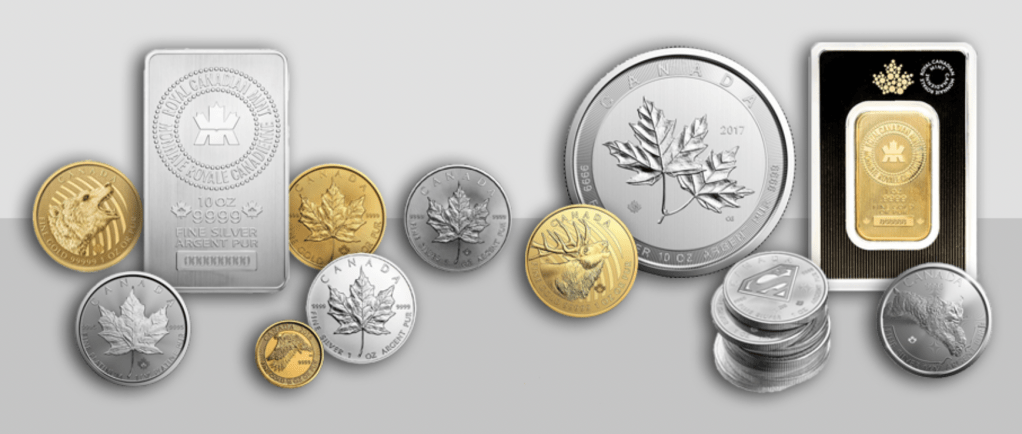
Let’s take a look at labels! What are they for? What do they do and what lies below the label? To do this, we’re going to start at the Canadian Mint. Yes. Really.
(This is Part 1. If you’re looking for Part 2 of this series, click here. )
Maybe you heard that the Royal Canadian Mint has recently got itself into a bit of a kerfuffle. A New York Times story had come out showing the American Mint had ties to Colombian cartel gold – shock! Horror!!
In an interview with the newspaper, the doughty money-pressing Canadians clutched their pearls, lisped “Not us!” in tones that would thrill the heart of Church Lady (you youngsters will need to look up that legendary SNL character) and thought they were done with it. Not so hasty. Turns out our Mint also uses purloined bullion from the cartels. Oops.
According to the New York Times article, the major difference between the mints boils down to two major distinctions:
First, thanks to the gold traceability standards in Canada, the Royal Canadian Mint knew exactly what they were using while the American Mint — with a paucity of traceability tools — did not; and secondly, the Canadians, rather than change the source of the gold, craftily decided to change the meaning of the label.
“. . . unlike the Americans who have gone decades without tracking their gold supplies, the Canadians have known that they were getting it from a country where cocaine trafficking, paramilitary violence and the gold trained are intertwined.
The New York Times, “Canada Says Its Gold Is Traceable and Clean. So We Traced It.” by Justin Scheck, April 27, 2026
Yet they continued to call it North American gold.
They did so, officials explained, because before the Colombian gold arrives in Canada, a Texas intermediary mixes it with American gold. In the Mint’s eyes, the resulting mix is entirely North American.”
Apparently the Royal Canadian Mint decided on a “don’t ask, don’t tell” approach. They knew what was happening, so they re-labeled the gold to suit their purposes.
“If a refiner as prestigious as the Royal Canadian Mint is not undertaking meaningful, enhanced due diligence on mixed-origin, recycled and mined gold, then what does that suggest about the gold supply chain as a whole?”
David Soud, as seen in the NYTimes.
A Label By Any Other Name
In this case, the Royal Canadian Mint, fully aware — at least according to the NYTimes report — of the problematic Colombian gold, handily dealt with the issue by deciding to end its inquiry at the Texas border. Even though the paper trail was there for all to see, the Mint lawyers said, “It’s not our responsibility.”
Now what does any of this have to do with a little ole sheep farmer in Alberta? As Mr. Soud points out in the article, if an institution as venerable as the Mint isn’t doing its due diligence, isn’t doing the work to bridge the legal requirements and what any member of the public might reasonably expect, then what does the label mean? What does any label mean?
What good is traceability if it stops just before things get – for lack of a better term – interesting?
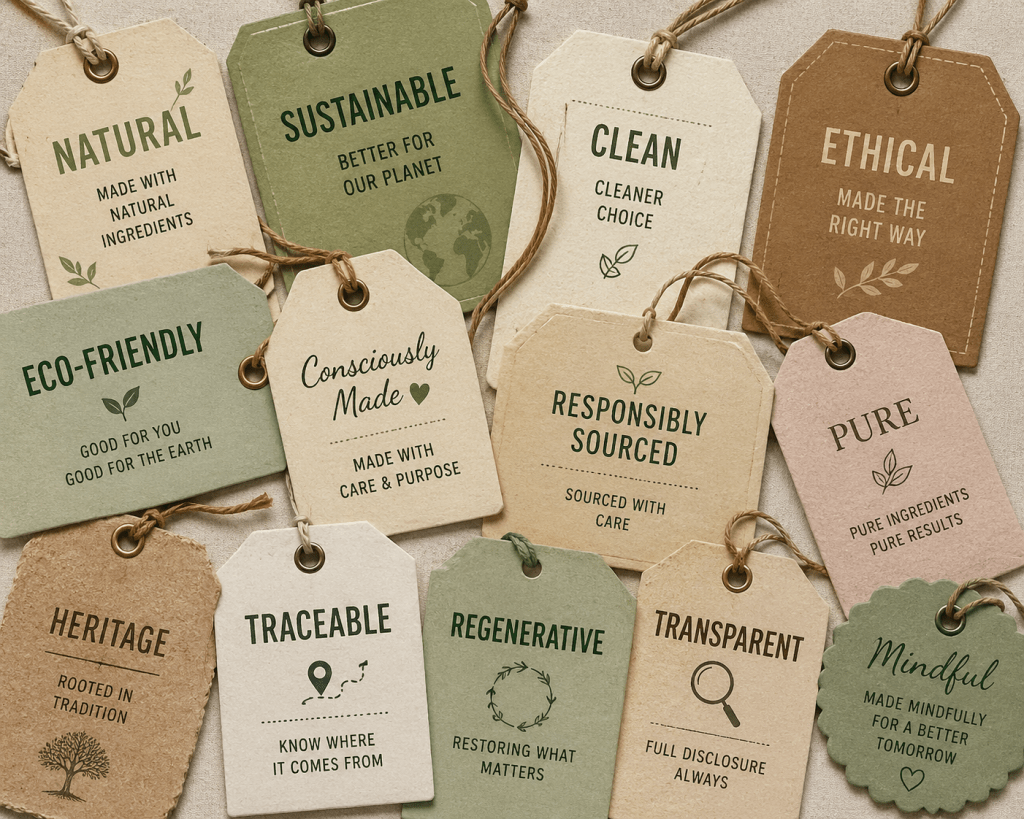
So it is with Canadian wool and sheep. Labels like “local,” “traceable,” “regenerative,” “ethical,” “sustainable,” or “transparent” are being thrown around online and in person every day. Labels on skeins, labels on farms, labels on fashion, labels on food, labels on home goods.
Labels are everywhere and increasingly, the gap between the letter of the law — compliance — and what the public thinks the label should mean is growing.
Compliance vs. Integrity
You’ve heard of money laundering, no doubt. What the Canadian Mint was doing was a kind of administrative laundering, a way of legitimizing something questionable by adding layers of confusing bureaucracy. The Colombian gold was shuffled through a series of rubber stamps, “audits” and “inspection certifications” until it looked — lo and behold, a miracle! — like “North American” gold. The Mint was content — problem solved. They were resting on their lables.
Lables function like a moral shortcut. As consumers, we trust labels — or we want to — because it’s so much easier to look at a label than it is to do the digging the reporter did. I don’t want to wade through someone else’s paperwork, a label makes my life so much easier! But as we have seen over and over again, the minimum required to be compliant usually means just that — “minimum”. It does not always mean “trustworthy.” We may wish it did but alas, not so.
This is particularly in evidence when it comes to animal welfare – “standards” means, in the words of one study, “. . . standards and practices are generally aimed at defining minimum rather than optimal criteria for welfare.” This is a floor, not a ceiling.
You’ve seen it in other labels — things like “Made In Canada” when really, all the raw materials came from somewhere else and it was just assembled or packaged in Canada. Or “Grass Fed” — until the last six months of that cow’s life when it lived on an industrial feedlot. Or how about “cria” yarn when a close reading of the label reveals less than 10 per cent of the fibre in the skein is actually from an alpaca’s first shearing.
Behind The Labels
That’s not to say there aren’t trustworthy labels out there — there are. I am a huge proponent of two in particular, certified Animal Welfare Approved by AGW and Certified Canadian by the Canadian Wool Collective. In both cases, I did my due diligence to ensure what any reasonable human might expect and what these labels actually represented were identical. I wanted the expectation and the reality to be fully aligned, no daylight between compliant and ethical.
What stories like the Mint’s tell us is that unfortunately, consumers can’t make assumptions. You can’t assume anything, you must make the effort to know.
Finding Your Feet
How can anyone know for sure what a label actually means? Not all of us have access to the NYTimes research department. I’m pretty sure if I left a message at the Royal Canadian Mint, no one would return my call. So how do we follow up? While every label isn’t inherently trying to fool you, every label should be examined. So here are some things you can do to figure out if that label is everything (you think) it’s promising:
- Who developed the standard? Is it an industry standard? Isn’t that a little like the police investigating themselves?
- Are producers carrying the label independently audited or verified?
- Specific claims are better than vague ones — what’s the language, exactly? “Grown, milled and dyed in Canada” is a lot more solid than “Made In Canada”.
- How long is the chain? The longer the chain, the greater the risk of administrative laundering. Not always, but be aware.
- Transparency and traceability go hand-in-hand. The more open and transparent the label, the higher the likelihood you’ll be happy.
- Look at the language. When outcomes present potential stakeholder sensitivities, complexity in language can provide a valuable layer of interpretive insulation, allowing organizations to maintain procedural legitimacy while minimizing unnecessary external interrogation.
. . . Uh, whut. Exactly.
From the Fenceline
It shouldn’t be up to consumers to decode, deconstruct and Mike Hammer (there’s another Gen X reference for you!!) their way to an ethical purchasing decision. In a perfect world, labels would mean exactly what you think they mean — there wouldn’t be any daylight between “Free Run” and “Cage Free”. Alas.
A word to my fellow producers — I have also found an unexpected benefit to being certified. For me personally, going through the process gave me an opportunity to engage with my guests and fibre friends about two issues that mean so very much to me. The conversations have flowed very naturally and I’ve been allowed into some rooms I wouldn’t have made it into otherwise.
When I began my own certifications, I wasn’t looking for a marketing angle, I was looking for alignment. I was looking for trust. My certifications — built with integrity — have given me a foundation for discussions that are needed and valuable. It gives our community comfort and assurance — through accountability, traceability and transparency. As a result, the homestead’s relationships are stronger and more resilient, not the kind of thing to get melted down, mixed together and rebranded as something else.
. . . Now, where do you suppose I could find the label for that?
We’re not done with labels yet! For Part 2: “Worth Their Weight,” click here to read about labels that do more than just what’s advertised.
This is a Living post, a post to share my thought processes, my experience and the philosophy that underpins our activities here at the homestead. It is not a how-to, “expert advice” or meant to reflect a wider experience than just my own, on my farm, here with my sheep.


Leave a Reply