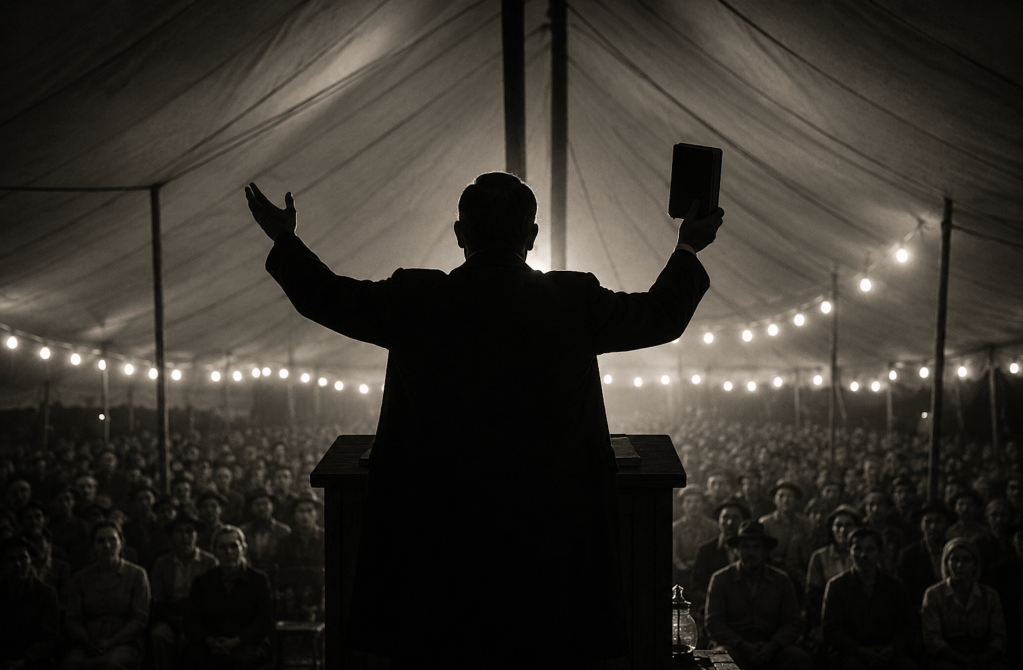
Then they came to Jerusalem. And he entered the temple and began to drive out those who were selling and those who were buying in the temple, and he overturned the tables of the money changers and the seats of those who sold doves, and he would not allow anyone to carry anything through the temple. He was teaching and saying,
“Is it not written, ‘My house shall be called a house of prayer for all the nations? But you have made it a den of robbers.”
Mark 11: 15-17
Bet that got your attention, hey?
Trust me, I’m being inflammatory with a purpose. Let me tell you where this post is coming from and then together, let’s see where it’s going.
The Challenge
A couple of months ago, a friend poked me on a point I continually make when I ask people to review my writing. Why, she wanted to know, Are you so afraid to sound like you’ve got some authority? Why are you always trying to reframe your expertise as opinion?
That stuck with me. It’s not that I’m not proud of the work I do — I am. I’ve worked really hard to get to the point where my writing can truly reflect the way I think and speak. I’m very proud of that. And I’m proud of the work I’ve done in the regenerative ag and animal welfare space. But despite that, she’s not wrong — when it comes to asserting my experience as fact, as doctrine, I get nauseous. I don’t want to be The Voice Of Authority on anything. I try really hard to couch the points I make in my own experience and what’s worked for me. . . I default to nuance rather than certainty.
. . . Now.
My Personal Story
When I think about it, there’s a really REALLY good reason for this. Like many of you maybe, I grew up in an evangelical Christian household, I was brought up Evangelical Baptist. Further, I went to a K-8 Dutch Reform-founded Christian school and, for one year, a Mennonite-associated high school (before I was thrown to the wolves in a public high school. Whoa.) I have had the Westminster and Heidelberg Catechisms. I have read Nahum. I know who Jael was and I will never look at a tent peg the same way again.
For much of my adolescence and young adulthood — not including a solid couple of prodigal years — I did my best to be what that world view taught me was necessary. I was orthodox in my belief and my practice. I was legalistic and, I have to say, cocky. I thought I knew how the world was supposed to be and I thought when it wasn’t, I knew how to fix it. Gawd, I must have been a prick. Publicly, I defaulted to church authority even while privately I may have gnashed my teeth. James Dobson, Tim Eldredge, Stormie Omartian. . . I have read them all. My world had order and a very organized hierarchy of acceptable behaviours that would, all things being equal, lead to appropriate outcomes.
Change Is Gonna Come
And then a global pandemic happened. Like so many others, the COVID lockdowns brought me face-to-face with some values I’d barely ever questioned and suddenly, marooned with only my own personal compass for reference, they just didn’t seem very. . . valuable.
So I did what I usually do under such circumstances. Wrestling with uncomfortable questions, I tumbled down some research rabbit holes. I read a lot. I talked to a lot of folks. I audited a class from the Vancouver Theological Seminary with Dr. Ray Aldred. I did some more reading, cleaned out the sheep sheds and did some thinking. My youngest son was in theology school in Calgary and he became a source for yet more books. I read authors I’d never even heard of prior to this period, people like Richard Twiss, Clarence Jordan, Dorothy Day, Wendell Berry, George Washington Carver (whose quote opens this website), Dietrich Bonhoeffer and Vaclav Havel. I read Jesus and John Wayne and that, pigeons, did it.
Suddenly, I began to see so many instances of what I can only call a culture of coercive control. I didn’t arrive at this moment in a blinding flash of light — there was no Road To Damascus for me. It was gradual and painful.
Now, to be sure, I don’t think anyone intended to build this kind of system with the express purpose of controlling me. I think in the main, most of these things come to be due to the human need to organize and prioritize in order to contain and manage. (Please note, I am speaking only of my own direct experience. I understand that many people have experienced profoundly damaging harm – criminal harm – in churches. I am not minimizing their experiences at all. I’m just not part of that group and can’t speak with any authenticity about it.) No one, in my specific experience, was overtly malicious but that doesn’t change the facts as I experienced them — North American evangelical Christianity was not opening a world to me. It was separating me from the world I lived in. And once I understood that, once I saw all the times and ways that restriction had been layered on me via guilt, doctrine, authority or emotional manipulation, I rebelled. I was determined no one would ever corral me like that again. Ever.
And Balaam’s Ass Spoke
So what does all this have to do with regenerative agriculture and agritourism?
As an interested observer, I find myself more and more uncomfortable with the kind of language some regenerative farms and organizations are using to promote their agritourism offerings. There is a whiff of the evangelical about it. More than a whiff, it’s set my alarm bells ringing.
I have what you might call a heightened sense of language when it’s being used to provoke a specific response. Not just when it’s cultivating a sense of outrage — though that’s often the starting point — but when language serves an objective that is material and/or physical and almost entirely based on an initial emotional hook. Evangelical altar calls are a perfect example — the speaker drags his congregation through a series of grim scenarios, using cadence and oratory to build the tension and then the pinnacle of the service results in an altar call — people flood to the front, a physical and public demonstration of what the speaker has been targeting from the get-go. People who don’t find themselves at the front getting prayed over or receiving a “laying on of hands” are often asked to donate financially because look!! Clearly the need is great!!! The harvest is plentiful but the workers are few.
See what I mean? An emotional trigger manifesting itself in a physical response which is used to justify a material ask and results often in some kind of financial yield. A dynamic speaker, an emotional event making all kinds of promises, a sense of mission and urgency and in the end, everything is focused on 1 square foot of shiny real estate — the offering plate. I see it in churches and increasingly, I see it on some high-profile regenerative-promoting agritourism initiatives. Join us, your like-minded community! We’re going to show you how to do everything right! We’re going to show you how to change the world! All for $XXX!
Obtain a Yield
I want to be real clear about this. In both regenerative and religious systems, it’s not every voice, it’s some voices. Not everyone is using the evangelical-adjacent language of my youth. My religious experience was with just one branch of the evangelical church and my regenerative experience is largely influenced by permaculture. I can’t claim that either is broadly representative. I can say however that I recognize patterns when they’re put in front of me — in fact, pattern recognition is a basic part of permaculture — and I see a pattern emerging, not just in permaculture or in the Baptist church but more broadly. I’m quite sure there are people out there from other faith traditions and regenerative disciplines doing the same thing. To outsiders, these groups use language, venerate leaders, signify belonging and exert a kind of control over their followers . . . Sometimes, society calls these organizations cults.
After a lifetime — more than 45 years — in a faith movement that has too many casualties to ignore and with a sensitivity to language that at this point could be measured with a Richter scale, I am pretty confident in my ability to suss out the suspicious. I’ve been trained all my professional life to do just that and what I’m seeing more and more often is language coming out of the regenerative community that makes my eyelid twitch.
The problems aren’t intrinsically with permaculture or the Baptists, not with biodynamics or the Pentecostals, not with holistic management or the Seventh Day Adventists. When any organization or movement — agricultural or religious (or economic, cultural or otherwise) — becomes mired in opacity, coercion, and monetized dependency, THAT’S the problem.
Agritourism By The Numbers
Does any of this even matter? Is this a mustard-seed problem?
Agritourism is not some weird granola-offshoot of “real” farming. As of 2021, agritourism accounted for $800 million (USD) to Canada’s agricultural sector. This isn’t chump change, it’s a valuable and growing part of the industry. Agritourism offerings can include things like U-picks, farm-to-table dining, educational experiences, behind-the-scenes YouTube channels, wellness retreats, on-farm markets, tours and events and volunteer/internship opportunities. The list of possibilities gets longer every season as more and more farms try to pad out thinner and thinner margins with direct public engagement.
Agritourism is no longer just a “side hustle.” Nowadays, it’s often the difference between viability and closure.
By themselves, all these offerings are opportunities, a chance to engage thoughtfully with people who may have only a glancing familiarity with the way agriculture and rural life work.
And agritourism has resonated deeply with regenerative farms. These folks are much more likely to participate in agritourism initiatives, perhaps in an effort to diversify income streams, to find new ways to leverage and influence policy through public pressure or to simply bring a new audience along on the adventure. Values, whether by default or design, are a fundamental part of the communication and marketing that goes into agritourism promotion. But here’s the thing –
Good intentions do not automatically create ethical systems.
When a worldview that already aligns itself with values-laden language — the way regenerative agriculture does — crosses into the same kinds of systems where inequality, unpaid labour, personality cults, status hierarchies, exclusion and extraction are already endemic, we have trouble.
Evangelical church, meet regenerative church.
Real World Examples
Quite a few years ago now, I came across a flyer for a workshop being offered at a small-scale regenerative farm. Participants were invited to register — for a fee — and learn how to build a pizza oven. Accommodations for the weekend were to be tents (provided by the participants) and everyone was invited to bring their own food and make use of some campfire sites provided by the farm. The culmination of the workshop was to be a wood-fired pizza party.
On the surface, fun, right? The materials were supplied by the pizza oven manufacturer and a weekend spent nestled in the bosky bosom of the Rocky Mountains sounds idyllic, no? But consider — the participants were essentially paying to camp and provide unpaid labour for a pizza oven they’d only ever get to use once. It’s not like they could take it home with them, after all. Sure, there might be some transferable skills but if they ever wanted an oven of their own they’d have to shell out to buy it, they’d need to provide all the necessary building materials and ensure they’d picked up enough skills across the weekend to do the install entirely on their own. . . Unless they offered a “Suburban Pizza Oven” workshop. Doesn’t have the same ring to it, does it?
Or consider the ever-popular “Goat Yoga” afternoon. The social media photos look hilariously adorable — bouncing baby goats bounding all over the semi-prone figures splayed out on the ground, valiantly trying to maintain Pigeon Pose while some blue-eyed, moon-spotted imp tap dances up their hamstring. Words like “connection,” “wellness,” “grounded” and “rest” get flung around. “Healing” occasionally makes an appearance.
It all sounds fine. But sometimes a vague sense of something else drifts by – a faint odour of commodifying health or turning the farm into an idealized background, an anaesthetized aesthetic rather than a fully-realized livelihood.
Similarly, internships — generally unpaid — and “volunteer” opportunities can absolutely be a chance to connect with others who are similarly motivated but without care and transparency, these things can drift into exploitative labour practices. Participants may be encouraged to demonstrate their “true believer” status by enforcing the status quo.
Where else do we see payment-to-participate, solicitous offers of respite, an emphasis on photogenic aesthetics, a call for free labour and the threat of unbelonging if you don’t toe the line?
Why, in church.
The Call
People have organized around values since Noah built the ark — faith communities do it, activist communities do it, farming communities do it. Shared ideals aren’t the problem. Emotionally-loaded language functioning as a sorting mechanism, is. This is language designed to define, “Do you belong?” If I drop this ratty old hat on your head, what’s it going to yell? Are you Gryffindor? Or Slytherin? Do you belong?
It’s creeping into regenerative agriculture, particularly around agritourism. Think about words like “Awakening,” “Transformation,” “Purpose,” “Mission,” “Aligned.” Or how about “Connected,” “Community,” “Self-reliant,” and so many others. None of them are all that dangerous on their own but words don’t exist in isolation — they exist inside the systems that claim them. Do you identify? Do you belong?
I Was Blind But Now I See
Emotional appeals that lead to financial asks; charismatic performers becoming moral authorities; participation as virtue; a correlation between evangelizing and recruitment and criticism treated with disdain or pity . . . Watching a kind of green-tinged prosperity gospel filter into regenerative ag has been jarring. Joel Osteen or Joel Salatin?
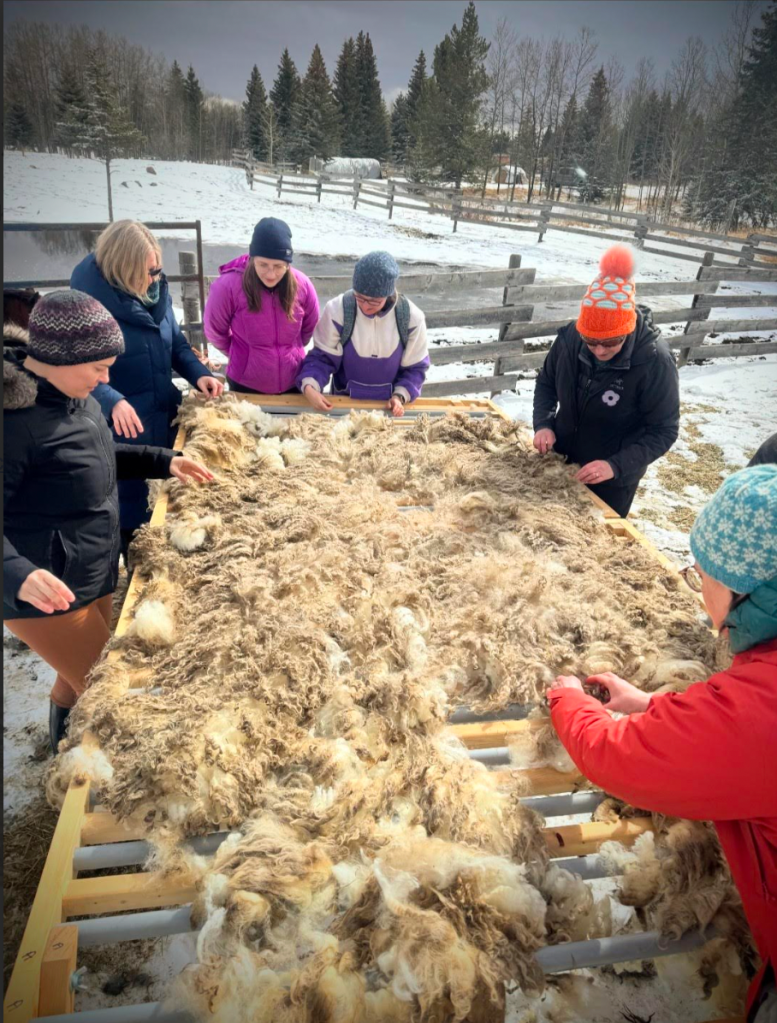
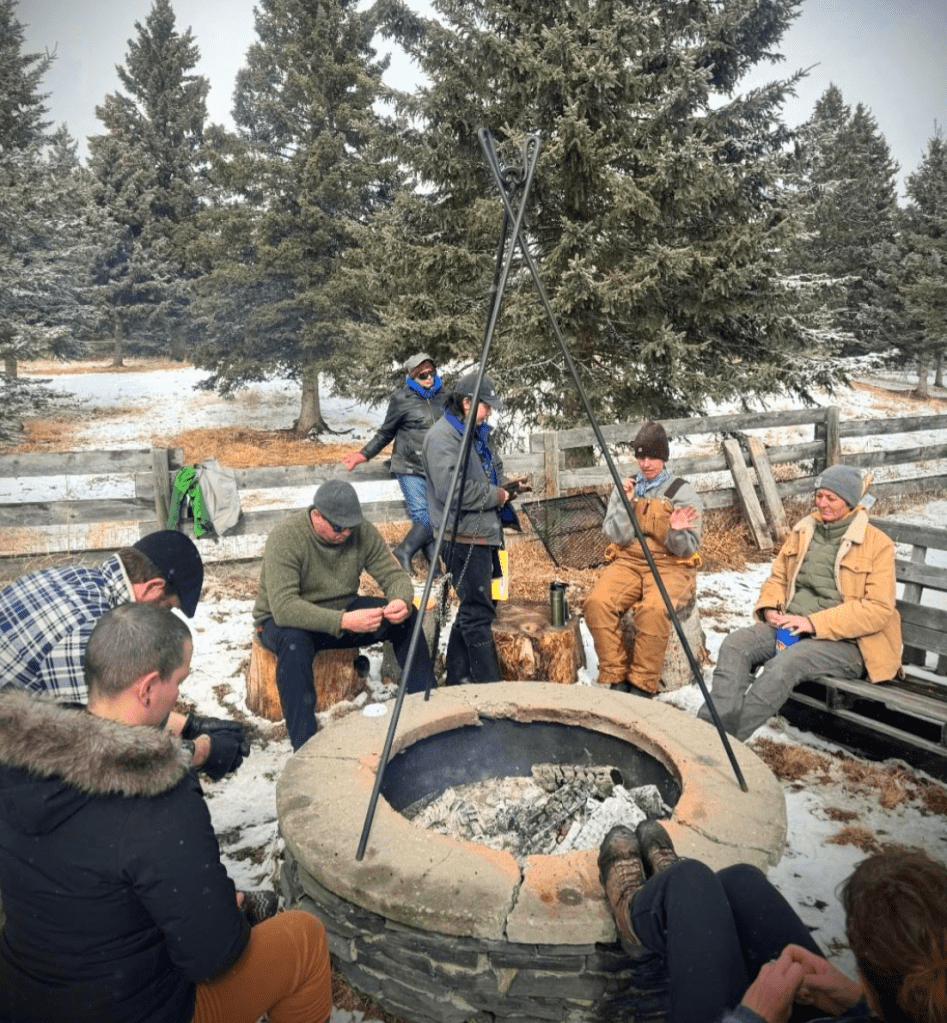
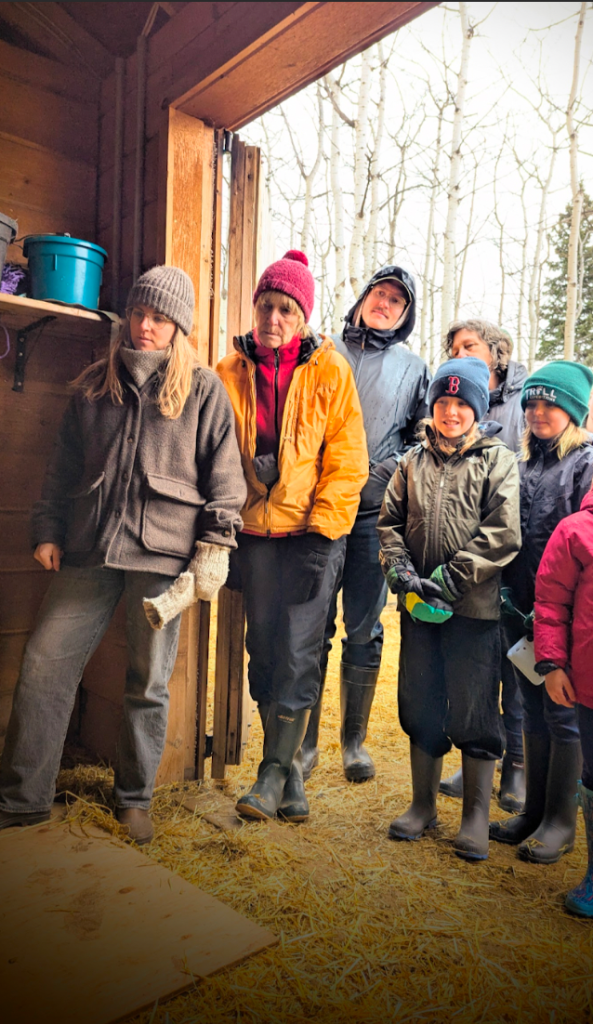
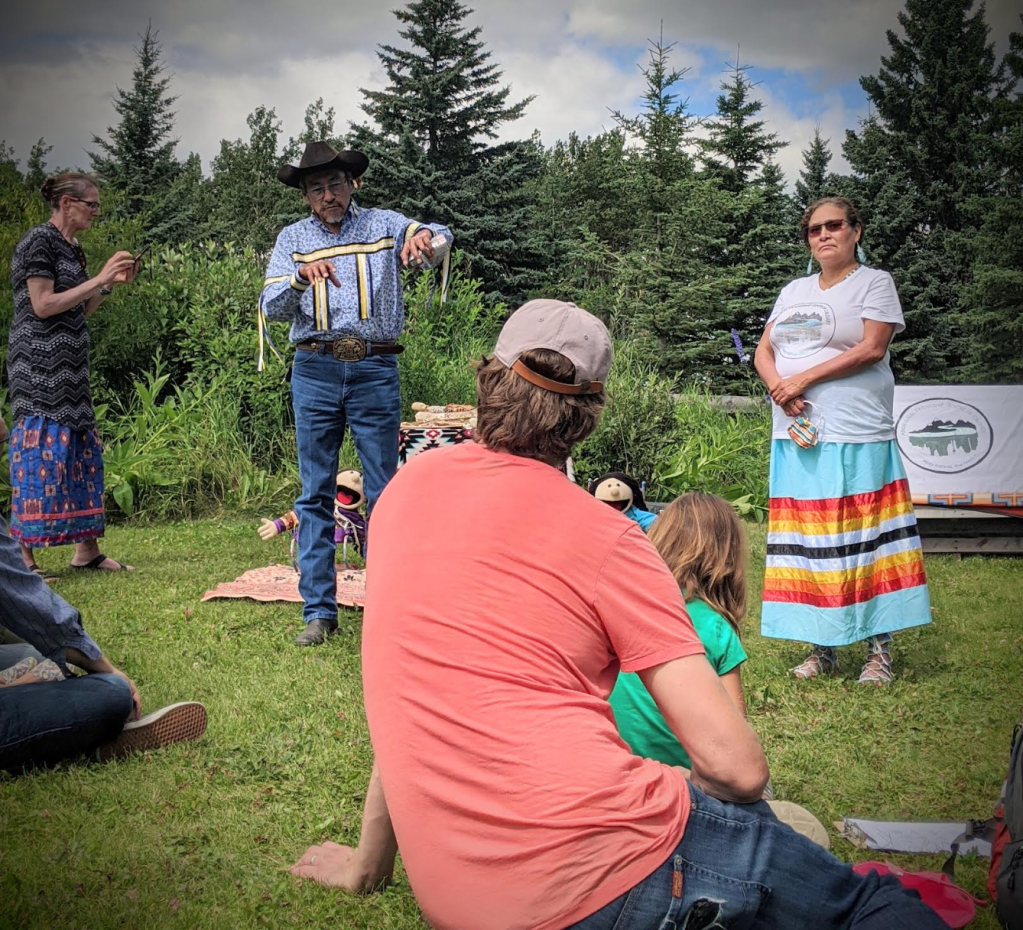
I am not opposed to agritourism. Obviously. The homestead’s Shearing Day and our participation in Open Farm Days would put the boots to that particular accusation. And I’m not a raging anti-church theocrophobe (is that a word? It should be a word. Consider it created!) either. In fact, while I am still navigating my church re-entry, I find my highly-altered faith much enlivened for its recent browbeating.
What I am is particular . . . It’s a hard-earned kind of scrutiny, one that I think might be valuable for folks both inside and outside the regenerative farming movement. Is there a way to do agritourism in this space well? To do it so it really does reflect values and doesn’t simply replicate the exploitive systems we are already so familiar with in other communities? Can we keep this temple for its intended purpose?
I think we can. I’ve done some thinking about it — see what you think.
First, a hard-core and non-negotiable commitment to transparency. For anyone offering an agritourism experience, I think it’s necessary for participants to know exactly what they’re paying for, who benefits and what is being exchanged. Any promises made need to be detailed — not just as outcomes but including the process that’ll get a guest to that outcome. The destination, the road map, the stops along the way and the guide. Everything on the table.
Secondly, a genuine transfer of skills. This is specific to those “educational workshops” — there must actually be an education. For this to truly be ethical, one of our three currencies must be exchanged for one (or two) of the others — most often in this context, money and time for skills. Things like practical knowledge, growing confidence, understanding of context and ongoing resources must be part of the equation.
Reciprocity — is everyone who joins the effort going to find meaningful benefit? Is there value flowing in multiple directions? Are the leaders well-respected in their expertise? And going along with that, is there a proper respect for the grittiness of genuine labour? Even at our glossiest, we must be wary of romanticizing “back-to-the-land,” “self-sufficiency” and “simple living.” Farming is real work, not an aesthetic. Leave that stuff up to the influencers.
In agritourism, it can be tempting to default to a view that knocks the hard edges off farming, that skates lightly over the pitfalls of poverty, exhaustion and burnout. Understandably, these things would be a hard sell.
Finally, to do agritourism right it’s essential to promote a version of community that actively and vocally eschews manipulation in all its forms. Healthy communities can tolerate disagreements, do not demand ideological conformity and they don’t use belonging — or its corollary, exclusion — as leverage to extract support, financial, labour or otherwise.
I believe the strongest and most ethical agritourism experiences are rooted and connected to place. There is a real place — not some fabled Beulah land. There are real ecosystems and real seasons, there is an abundance of meaningful real work done by fallible, real people. No “rustic vibes,” just the real deal.
The View From Here
What about here? What does agritourism look like on the homestead? I’ve thought long and hard about it and the approach we’re taking might best be summed up as . . . evolving. I’m trying, as best as I can, to bring community to life in a couple of ways, all built from a foundation of relationship. I’m not all-the-way-there yet but I’m working on it.
First, the vendors and collaborators that are part of our agritoursim efforts are carefully chosen based on their professional expertise, credibility and how well they fit the event theme. These are folks who have done the work and are now doing us the honour of sharing their passion.
While I am confident that our guests are getting the very best Alberta has to offer, I know there’s more I can do to ensure our facilitators are getting a fair rate of exchange. For those who specialize in craft and maker goods, I want to them make excellent sales on our shared weekends and so don’t take any part of their earnings or charge a table fees or space rentals. For out-of-town guests, I provide food and accommodation free-of-charge. At this point, I’m not able to offer hourly compensation — something I’m very straightforward about — but I do try and build in opportunities for a paid clinic or workshop in their area of expertise so they can turn a reasonable profit. I handle the marketing and work extensively not just with the umbrella organization — for Open Farm Days, it’s the Alberta Association of Agricultural Societies — if applicable but also do press releases and arrange for any individual media support I can.
I don’t barter on promises about “exposure” or “networking opportunities” as compensation for sharing time or skills. After 25+ years as a freelancer, I firmly believe there needs to be some kind of financial remuneration and if I can’t provide it, I’ll do everything I can to find some mutually-agreed-upon way to make this community a equal-value community.
Done right, done carefully, communities — whether faith or regenerative — can be vital places of mutual respect, honouring and creativity. They can be incubators for evolution, creative expression, intellectual rigour and moral clarity.
Or they can become stages for moral showmanship, pulpits for charismatic personalities and backdrops for status photoshoots.
Agritourism can be an enriching and stimulating exchange of value or it can be cloistered and elitist, an exercise in self-congratulation for the soil set.
From the Fenceline
When Jesus walked into the temple precincts that day, he started flipping tables. He threw out the folks who’d set up shop selling goods at premium prices preying on the desperate, the ignorant and the unprepared. The religious leaders who had allowed this activity to go on – who got a cut of the proceeds — were plenty pissed. This rabble from some fringe province had marched on to their turf and disrupted their world and their cashflow. They started plotting. But did you notice something? Jesus wasn’t just flipping tables, he was teaching even as he threw the furniture around. He was engaged in the work of restoration, he was bringing the temple back to its intended purpose. He was, according to Mark, doing God’s work.
Agritourism, especially agritourism connected to regenerative agriculture, is getting perilously close to a temple moment. I’m writing this in the hopes that my fellow regenerative farmers will notice that the public is getting restive — there is a fatigue with social media, a suspicion of moral posturing without proof, a deep skepticism of world-saving claims. If we’re going to invite the public in, what we show them must be real, it must be honest, it must have scope. We have to tell the whole story in words that invite and include and never shame or disregard.
We talk a lot in the regenerative community about resilience — evangelicals talk about redemption. In both cases, we must remember that authentic and loving communities can handle scrutiny, different ideas, nuance, transparency, decentralization and, most importantly, imperfect people.
Our efforts — faith or farm — should not simply be another way to turn a basic human longing for place and a place in it into a business model.
That way lies a brittle fragility at odds with our espoused values.
That way lies table flipping.
This is a Living post, a post to share my thought processes, my experience and the philosophy that underpins our activities here at the homestead. It is not a how-to, “expert advice” or meant to reflect a wider experience than just my own, on my farm, here with my sheep.


Leave a Reply