How do you get sheep from Point A to Point B? What happens when you move from a set-it-and-forget-it approach to grazing to something based on an Adaptive Multi-Paddock philosophy?
When I was but a baby shepherd (as opposed to the strapping toddler I am now), I used to spend hours a day tearing down and setting up electric lines to rotationally graze the flerd. In those days, I wasn’t doing any kind of observation-based rotation, it was purely a calendar move kinda thing. Every two days or so, I’d putter out to the pod and tear down the step-in posts, untangle the electric ribbon fencing — hopefully looping it up so it wouldn’t snarl again — and then set up the new pod, deploy the ribbon again and hook everything back up to one of two ancient Patriot solar chargers. All in, the entire operation took about two hours, often in the heat of the day. It was great.
After sweating through a summer like that, in a tantrum I decided something had to be done. That’s when I bought my first-ever Gallagher SmartFence. Boy howdy, are those things ever awesome. My set-up/tear down process got exponentially faster and in time, I added more SmartFences and solar chargers (Gallaghers, all of them) to my roster of equipment. While the initial outlay wasn’t inexpensive, let me walk you through the how of what we do and you tell me if it wasn’t totally worth the investment.
Enter Google Earth.
As I transitioned from the calendar-based rotational grazing to an adaptive/observation-based approach, I discovered Google Earth. Working through my Permaculture Design Certificate in 2019 helped me divide the property into zones, something this aerial tool makes so much easier.
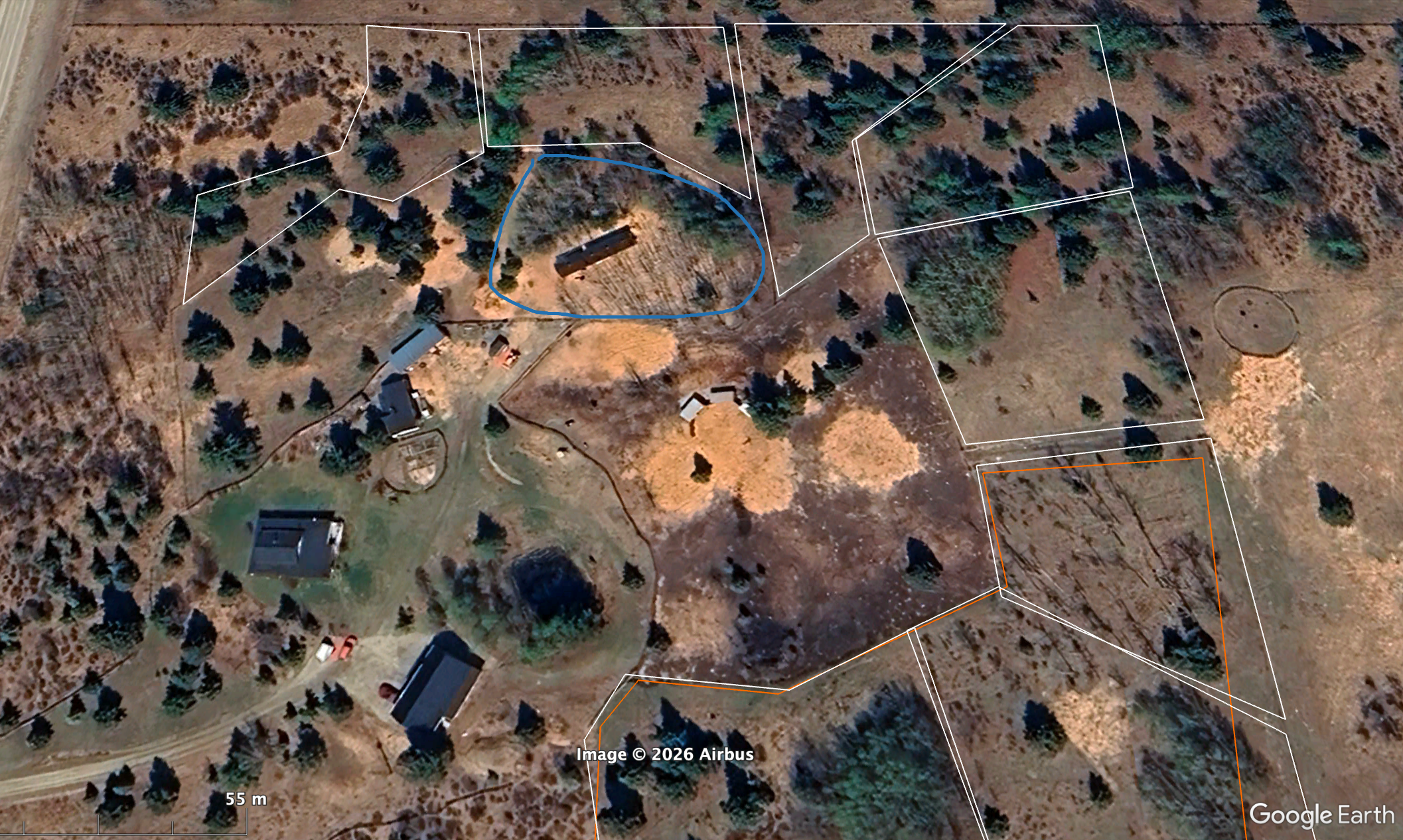
This is the Google Earth view of our property. It’s a couple of years old — I don’t own that red truck you can barely see in the photo anymore. At any rate, it’s recent enough for our purposes here. You will see that ringing the central horse sacrifice area (it has the straw circles in the centre of the screenshot) there are several zones outlined in white — these are grazing pods. By making use of this very nifty tool, I’m able to map out the pods, measure them, assess conditions (moisture, biodiversity and overall health) and then cross-reference those measurements with the number and species of available animals. Together, this information helps me to decide if my pod sizes are going to work for me or if adjustments — to either pod or critter — is necessary.
You’ll also note that quite a few of these pods — the ones on the southern end of the photo (the bottom) are some distance away from the sheep main paddock (circled in blue). Those southern pods are a heckuva hike away. . . how do I get the sheep there???
Transitions and Alleyways
This is where the SmartFence shines.
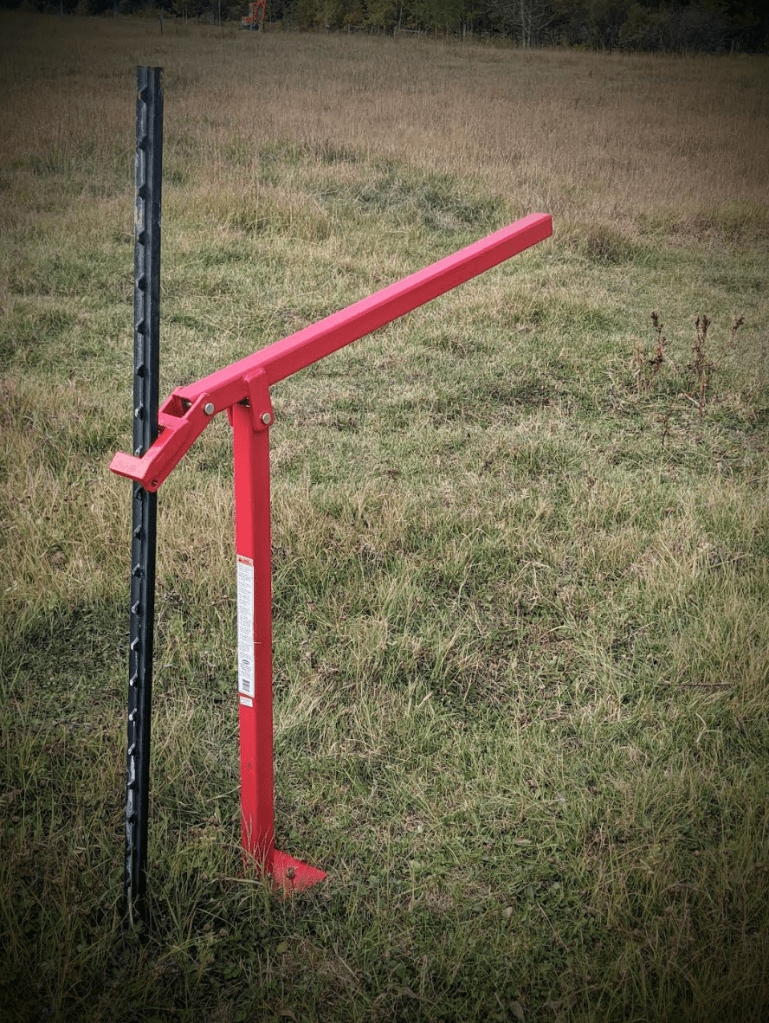
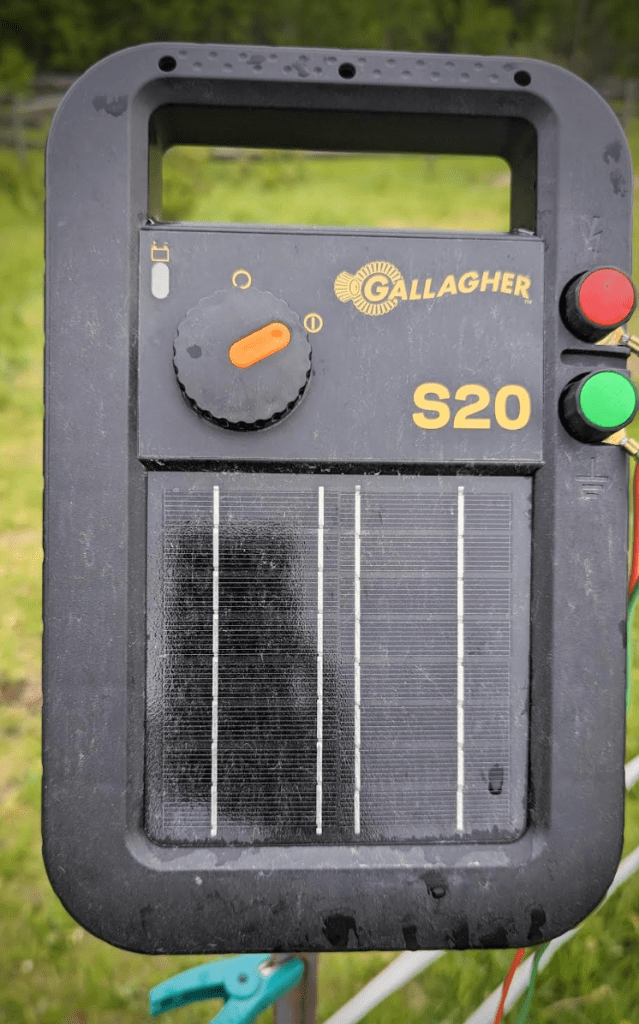
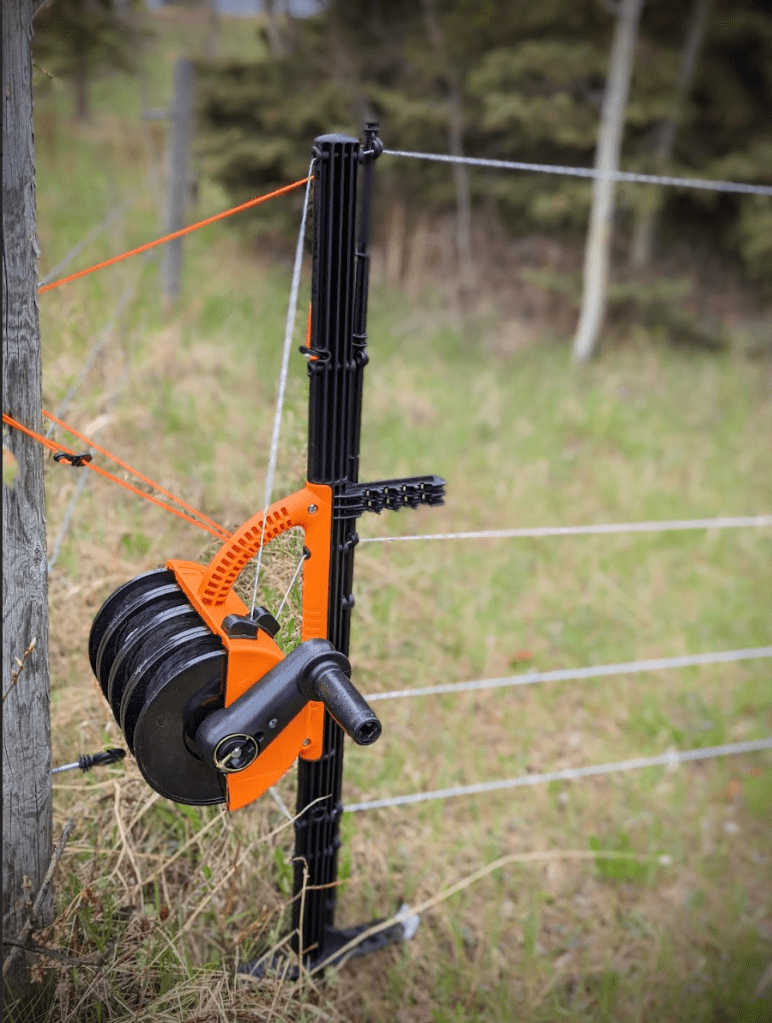
In order to move my flock where I need them to go, I have essentially set up a series of alleyways, channels that guide the alpacas and the sheep. T-posts at reasonably regular intervals are extra support and handy mounts for my solar energizers — they function beautifully as grounds — and are always an easy clip away from the charger. With five SmartFences now in my rotation, I’m generally easily able to set and connect them up and at this point, the sheep and alpacas are well used to them.
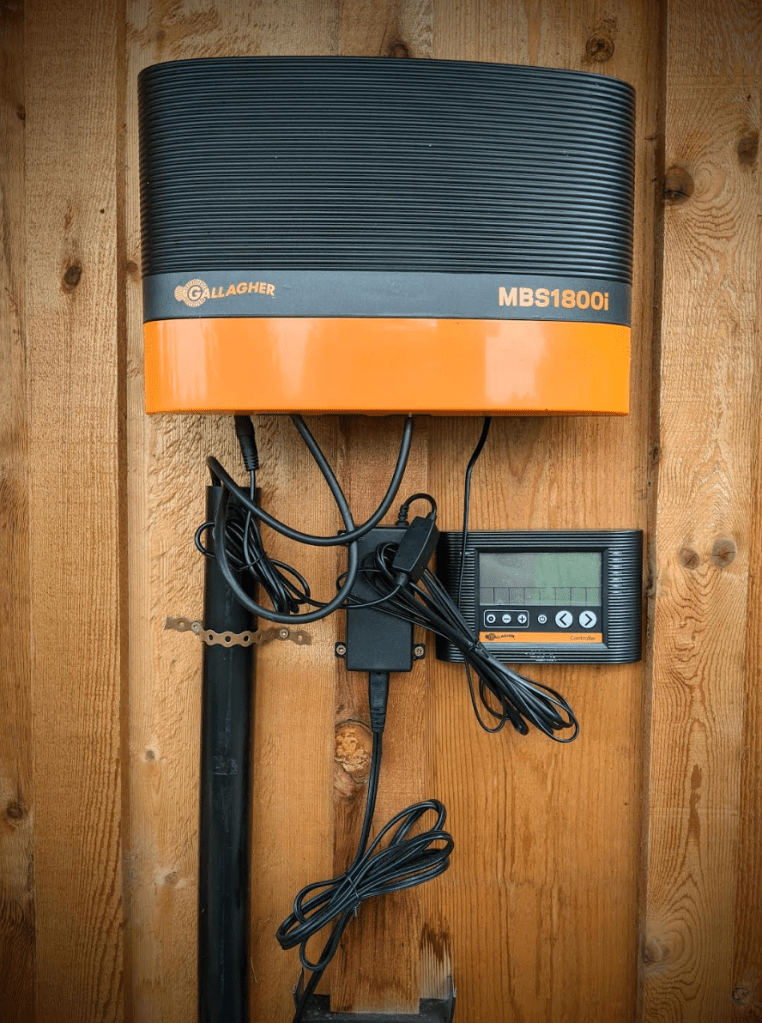
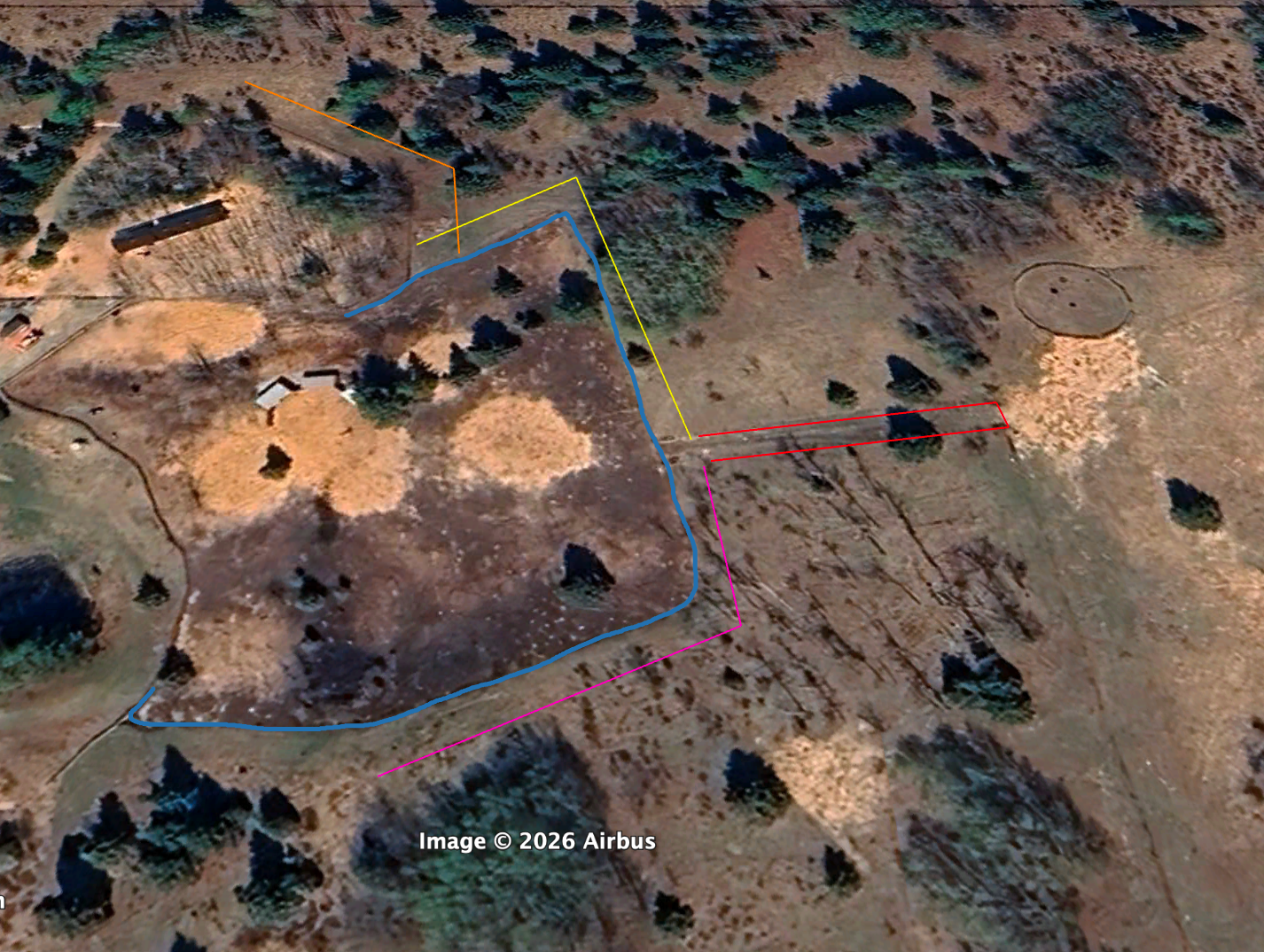
We have a hard-wired energizer that powers the fenceline around the edges of the horse paddock (the blue line in the image below). I am able to tie into that line as needed with simple insulated wires (generally this is what I do for the final boundary SmartFence) and I use portable solar energizers for the alleys and leading SmartFence lines. Imagine it this way — you’re walking down a charged hallway and there’s an open door on your left. Walking through that door, the walls to your right and left are charged. Would you touch them? No, I didn’t think so.
“But what about the wall at the back?” I can hear you ask. Not to worry, pigeons. We have robust perimeter fencing. It is not electrified but both the north and south-side property line fences are very sturdy and escape isn’t an attractive option.
When we head out any given morning, the general routine is to gather everyone at the appropriate gate, brace myself for the noise and essentially point the dogs in the right direction. Brian the Sharplaninac, because he is still young and full of enthusiasm, wears a 20′ lunge line so I can step on it when it goes sailing by. Clio is an old hand and sets the pace, the alpacas fall in behind her and the sheep behind them. Knowing her as well as I do, I am more than happy to let Clio lead — she has yet to make a wrong turn.
In the image above, the orange alley goes to the series of North-side pods; the yellow to the Backside pods; the red to the Main Pasture and New North pods and the pink to our South-side pods. Each of those alleys takes one SmartFence and can be lengthened or shortened according to need.
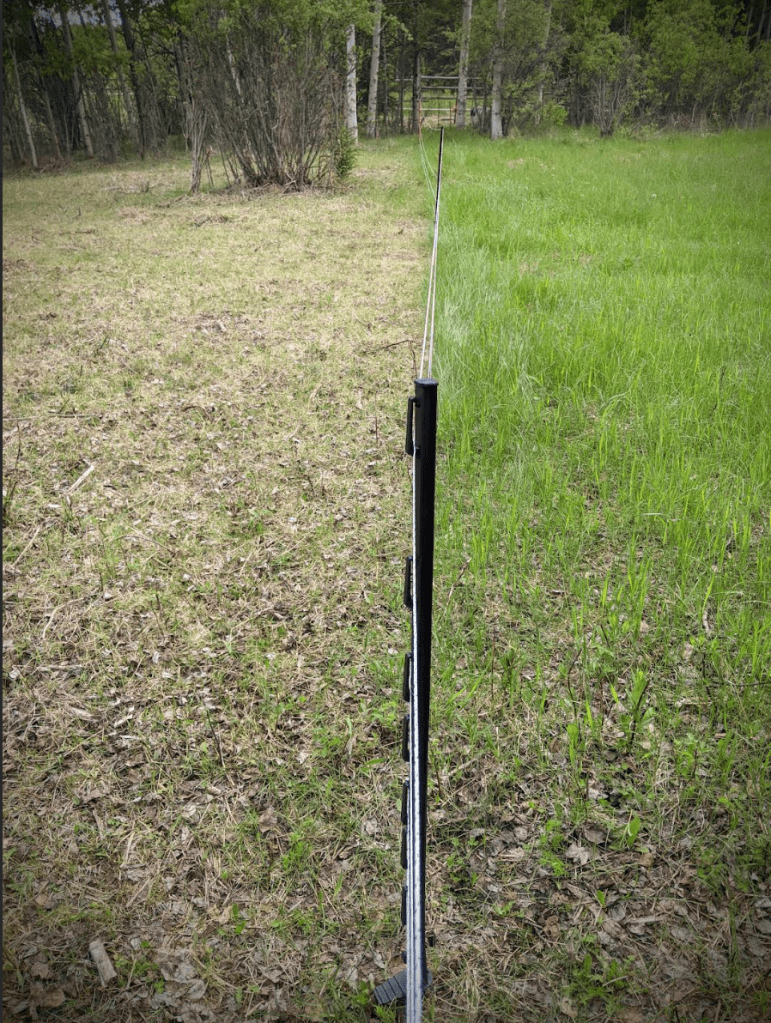
I simply reel back the alley SmartFence to create an opening — the doorway — and place another SmartFence as the boundary on either end of the pod — the room walls — if required. It works beautifully.
A ramble down whichever alleyway is currently set up to take us to our pod and the flerd is away to the races, ready to put their heads down and do their part for pasture conservation.
A Note About Electric Fences
While I make a lot of use of electric fences and energizers of various makes and models (admittedly Gallagher is probably over-represented in my inventory), there is one thing in particular that I am pretty particular about — I want a lot of bang for my buck. Or, to put it another way, that fence needs to bite.
As a general rule, horses and alpacas don’t need the same kind of zap to get their attention. Horses in particular are sensitive souls and on those rare occasions when their spidey-senses mislead them and they run afoul of a charged line, their standard response is a hasty retreat followed by a martyred look, “Why’d you do THAT??”
Sheep, however, by virtue of their dense and fast-growing fleece, are a different beast.
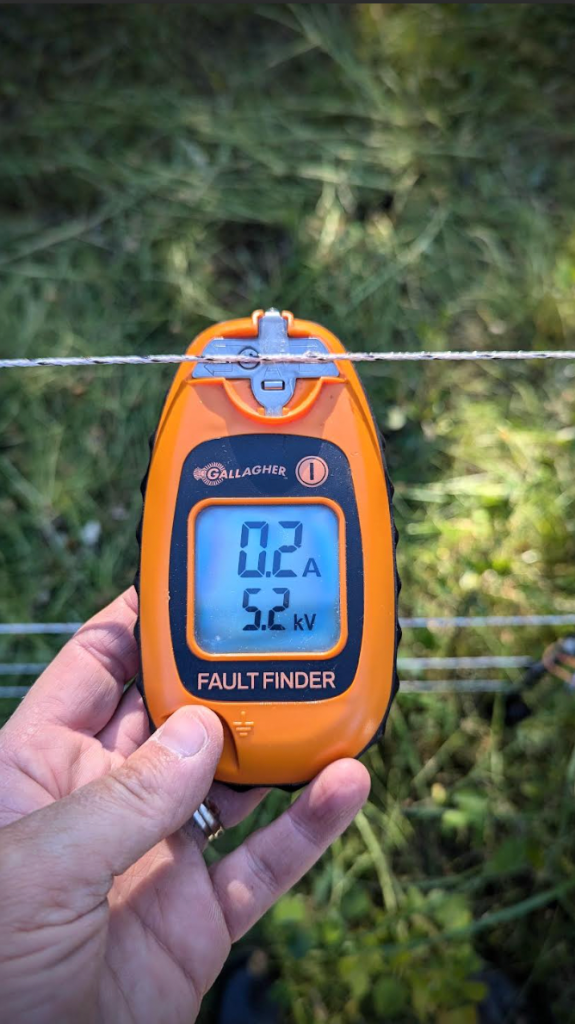
Most of the time, my sheep don’t test my fences. Why? Because I set up what might best be called “educational experiences” when they’re newly naked. Oh yes, Shearing Day is most definitely the start of teachable moments around the homestead. I have found that sheep feeling footloose and fancy-free, their heavy wooly coats left behind on the shearing boards, are highly sensitive to the electric fence’s instructional zap. I know it sounds nasty — I’ve been jolted myself, a time or two and can confirm, it IS nasty — but believe me when I tell you, that brief snap of pain is nothing to what a mauling would be. I have but one rule for my sheep — they must stay inside the fence. It’s the only place the livestock guardian dogs can keep them safe from all four of the Big Predators that roam these parts. In order to ensure they’ve taken the lesson to heart, my energizers generally keep our lines powered at something north of 5000 volts though I prefer anything over 6500. At that intensity, even the most inquisitive sheep tends to rethink their life choices.
And getting them while they’re fresh and impressionable is foundational. Because the pods you can see in our map above are actually the pods that are closest to the flerd’s homebase, ensuring that the sheep, even while their buffering fleece is growing at a frankly ridiculous rate, respect the fence is Job One. I don’t want my sheep to freelance outside the boundary, for any reason. So yes, our early encounters must be. . . memorable. It is the most effective deterrent I’ve found to extra-curricular activities.
Does Not Play Well With Others
When Merry and Pippin were in Hobbit School, I can only imagine what the comments on their report cards were. The naughty hobbits kept their incorrigible ways right up to their maturity — Pip in particular — and unfortunately, it is the way of lambs to get their Pippin on. Because I want to set the flerd up for success, I don’t typically use SmartFences for very young lambs. They don’t have the recall to keep themselves on the straight-and-narrow for starters and repeated zaps are just traumatizing, not helpful.
Similarly, I don’t let the sheep graze a pod down so far that anything else looks better by comparison. Sheep are generally on the side of angels — at least compared to their goat cousins — but even the best-behaved sheep gets a little harder to manage when its hungry. As fleeces grow and insulate, careful management of the forage in the pods — which is what I’m supposed to be doing anyways — is essential to ensure no one wonders if it was really all that bad. Unlike their reputation, sheep are actually pretty quick and it doesn’t take many demonstrations before they detect and take advantage of a weak spot. To avoid this, I don’t let my pods get overgrazed and even if I have to move sooner than I want to, I will switch pods if it means I minimize restlessness. Usually-compliant sheep testing fences is a very clear bit of feedback — often, they’re just trying to tell you they’re hungry. Whether it’s second breakfast, elevensies, snacks or supper, it doesn’t matter if you don’t think they should be hungry, they are.
Always, always prioritize respecting the fence. It will save a world of headaches later.
Grounding
In order to make the fence work well, it’s essential to have a good ground. In some gentler, more bucolic parts of the world, this is not as hard as it is here in Alberta when the ground is frozen solid eight months of the year. I’m not an electrical expert by any means but if you intend to use electric fences during the winter season (we don’t), then you might want to explore pos/neg electric fences. This set up ensures a charge in ground that may not have sufficient moisture. If in the height of summer you notice your sheep are getting a bit more headstrong with the fence, a low voltage due to insufficient ground moisture may be your culprit. In these situations, I will generally dump a 5 gal-bucket of water around the ground rod to restore the conductivity I need but a pos/neg fence may be an excellent option for you.
From the Fenceline
Electric fences are a wonderful tool but — particularly in the case of Gallagher — they are not cheap. I was fortunate and qualified for a grant for two of my SmartFences and an energizer a couple of years ago. These occasionally become available through conservation/forage associations. I encourage you to do some digging around and find out if any are available in your area. The energizers also don’t last forever which means that eventually, you’ll be looking at replacements. My original Patriot Energizers lasted for seven seasons before finally giving up the ghost. For me, in our environment and with our goals, I honestly think the Gallaghers are well-worth the investment.
Whether your goal is containment, adaptability, flexibility or responsiveness to changing seasonal scenarios, fencing is going to play a huge role in your farming world. Our evolution to this system of electric fences didn’t happen overnight — there was a lot of trial and error — but I am so pleased at this point with the ability I have to observe, both animal behaviour and the environment, that I can’t imagine doing this the way I used to. It’s truly been a game-changer.
When routines are well-established, handling the animals themselves has become, if not a cake walk, than certainly a much gentler and more peaceful experience. Our flock matriarchs — Maude and Charlotte — are seasoned professionals who often determine the day’s order of events. They always know the way home and like Bo Peep’s proverbial lost sheep, I can count on our black-and-white combination to bring the flock safely home. Everyone knows the fences, everyone understands that the best option is to stay inside the lines.
Ultimately, thanks to good perimeters, flexible-but-effective interior electric and a bit of ovine education, I am able to respond to the land instead of trying to force the land to conform to my expectations. My sheep stay where I put them — the dogs too — and everything has the best possible chance to work together. It’s a kind of beautiful, symbiotic neighbourhood . . . all because of a well-placed, well-maintained fence and a receptive — and highly teachable — audience.
I’m not trying to build Fort Knox. The pods aren’t prisons, after all. The fencing equipment I use has proven itself — it is durable, flexible and communicates clearly even in less-than-ideal circumstances.
And when the equipment works, everything about this job is just so much more enjoyable.
This is a Tending post — a practical look at our tools, methods, routines, and on-the-ground decision-making. It’s not a one-size-fits-all how-to, and it isn’t meant to substitute for local knowledge or professional guidance. It’s just what we’ve found useful and what we’re doing here on our farm, in our conditions, with our sheep (and alpacas), written down plainly in case it helps. For more about why we do things the way we do them, the philosophy that informs our process, you’ll find those posts in Living.


Leave a Reply