With apologies to Inspector Gadget, today I thought I’d walk you through what I need to get the flerd ready for grazing season – my grazing gadgets.
I mean, I could just turn ’em loose. But I don’t. This is what I do instead.
The Lay of the Land
Before I ever think about setting up my grazing pods or dragging out my fencers, the very first thing I do is walk. I walk a LOT. Why? I’m so glad you asked!
As much as it’s fun just to get outside and stretch your legs after a winter swaddled in layers, this is a walk with purpose. In a kind of general way, I am looking to establish a baseline for each of our grazing pods. Now this doesn’t mean the grazing pods won’t change — or that the flerd won’t, for that matter. Anything can happen but because I need some kind of framework, I most typically walk the pod layout from the previous year. Sometime in early-to-mid May, I’ll hike out and pick approximately 9 or 12 different “locates” in each of our various pod pastures. These are spots that I’m going to mark and map and revisit every grazing session we have over the season. This is my pastoral Ground Zero.
The Goals!
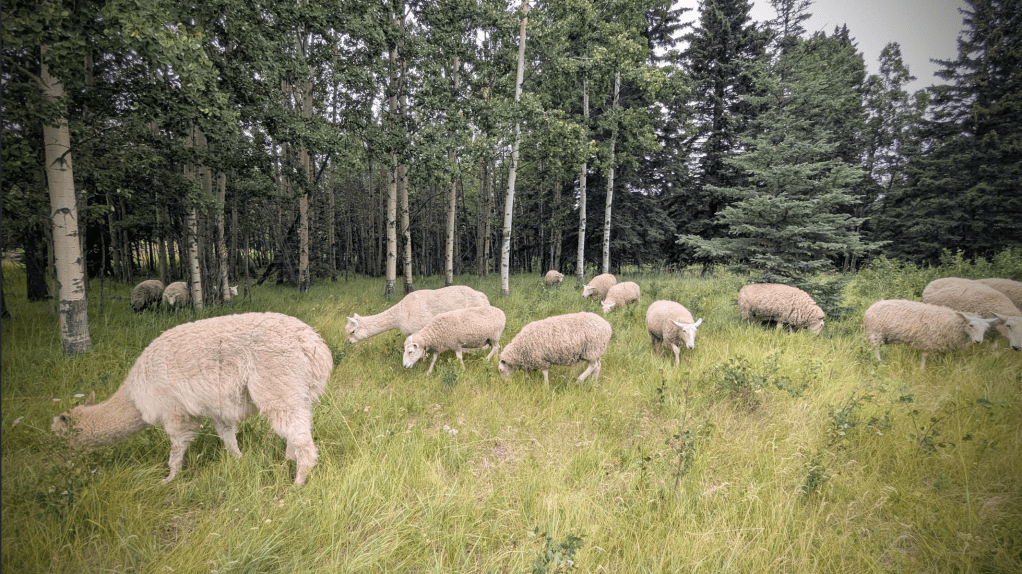
So what are my goals for a grazing season? Why do I spend so much time noodling around?
Well, for starters, because I find it fascinating. So there’s that. Once you get through the nerd-ery though, I have some very specific goals for our stewardship. They’re not complicated or technical and you won’t need a degree in agronomy or biology, I promise.
The very first thing I want to track is water – how much has landed and how much has infiltrated the soil. The best and safest place for water to be stored in a dryland environment such as this is underground. I want to make sure that every drop (or flake, God help us) that lands here stays here.
Secondly, I want to see improvements to soil health. Specifically, I’m looking for things like an increase of organic matter. I’d like to see the depth of topsoil add inches. I’d like to see tilth — that spongey, crumbly texture plants love to sink their roots into — improve.
The third thing I’m looking for happens above ground — I want to be able to plop a square metre frame on the ground and count more species of plants than I did last year. I am not a birder but I do try and document each different bird species I see as well as track evidence of different mammals that make appearances — or have otherwise made their presence felt. I’ll eyeball the willows and tender-barked bushes to see if there is any evidence of moose browse or deer. I’ll track different kinds of scat and try to figure out whodunnit. I’m not a great identifier of insects but I’ll document different ones I see and make a note of when I saw them and what kind of environmental conditions they were in.
To do any of these things even a little bit well, I can’t just go out into a pasture pod and plunk myself down on a bucket. I need a few more things.
Like a sandwich. A sandwich is never a bad idea.
Tools Of My Trade
Let’s start with my phone. Because our pastures are mixed between native grasses (Northern Wheatgrass, Rough Fescue, Fringed Brome, etc), forbs (potentilla, wild rose, cinquefoil asters, etc), trees (spruce and aspen) and non-native cool season grasses (Timothy, Smooth Brome, Kentucky Blue Grass, etc), all with varying environmental preferences and seasons, photo documentation throughout is essential. I don’t want to have to rely on my 52-year-old memory. A camera or a phone is the only way for me to track the seasons for the vegetation and to map over the emergence, prevalence or decline of some species to our moisture readings throughout these months.
(For interest, here are the baseline photos I took for the West End Pod on May 18th, 2026 at 8:30AM. This is before any grazing activity.)
A camera is also a great way to document different species I don’t recognize and refer them to experts who can help. And it’s invaluable when it comes to identifying the calling cards of some of those neighbours – including weasels, sandhill cranes, different kinds of owls, sawyer beetles, native bee species, small brown myotis (a kind of bat) and pocket gophers — I was mentioning earlier.
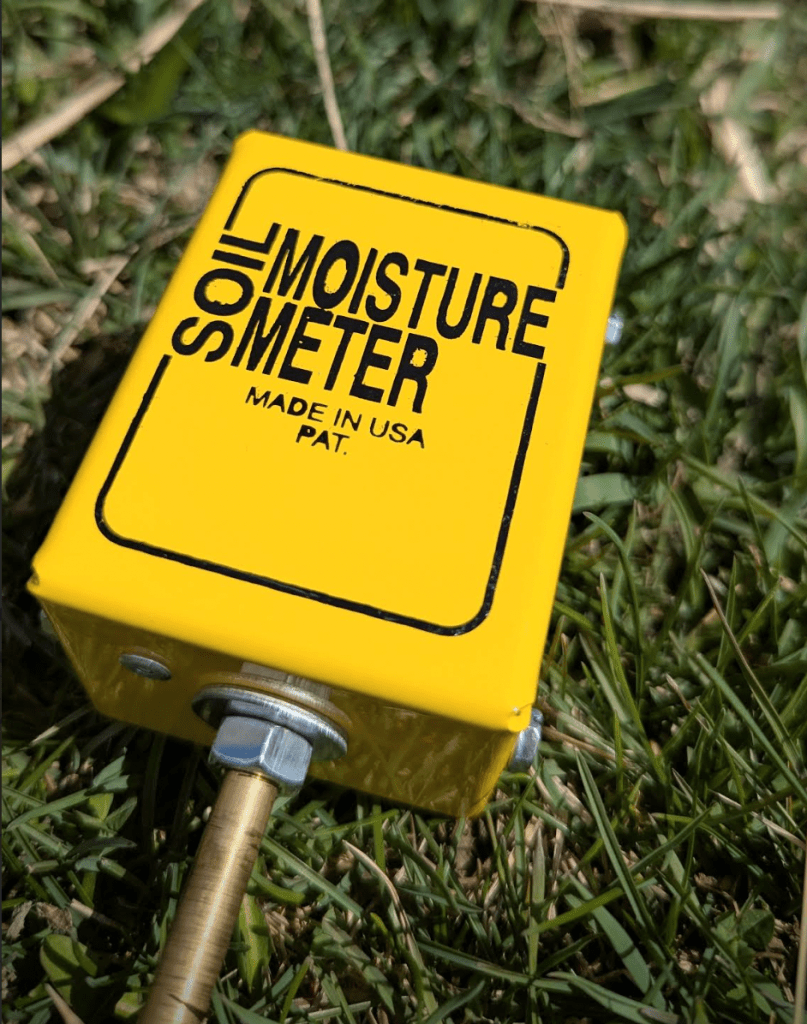
The next thing I need is a moisture metre. Mine has a nice long probe which means I can check levels at varying depths — as deep as two feet. This helps me see just how deeply precipitation is infiltrating the soil and lets me make some judgements about things like soil impaction for adjustments to my grazing plans. A moisture metre is also useful for helping me understand why certain plants — plants I may not have seen before during our 10-year tenure – have emerged. . . Moisture conditions and a dormant seed bank make for some interesting developments from time-to-time.
A hula-hoop!!! What? Yes!! This is my frame for counting. A dollar-store hula-hoop is a cheap n’ cheerful way to give me a frame. If you can’t find a big enough hula hoop, improvise.
The fourth thing that makes it into my handy-dandy kit is a wad of ziploc bags, a shovel and a sharpie. I collect soil samples every year from roughly the same spots so I can track those organic matter measurements. One year to the next, the changes are likely to be quite small but collected over time. it can make for some meaningful data. This is especially true if you’ve been doing your detailed assessments. When you combine the scientific measurements along with the on-the-ground observations and tracking, you end up with a potent story about just what’s happening on your particular piece of land.
Finally, step-in posts, flags or some other way to mark my different locates. The landscape changes rapidly and I have found that the features I found so distinctive in May are completely incognito by June. Marking my spots lets me find them and return to them easily with every documentation visit so I can keep my observations consistent.
Are We There Yet?
Not quite.
Once I’ve made my initial baseline assessment of the pods themselves, sent the soil samples away and sunk the step-in posts where I know I’m going to be able to find them again, it’s time for me to turn my attention to the flerd.
After a winter of hay in the paddock, my sheep and alpacas would love nothing more than a chance to spend their day nose-down in the grass. Unfortunately, this is a terrible idea — rumens that have accustomed themselves to a steady diet of hay don’t like making a sudden transition to grass. Believe me, you won’t like the aftermath either. Very serious conditions like grass tetany — a potentially fatal magnesium deficiency associated with lush spring pasture — to pasture bloat, a risk of certain parasites in damp Spring conditions, and greedy lambs with scours, stewarding the flerd through the transition to grass is worth doing well and slowly.
Easy Does It, Big Guy (and Gal)
When I laid out my barns, paddock and pods, I very deliberately included two pods that are an easy stroll from the flerd’s home paddock. These two pods are generously sized, well in range of the house (and out of range of any inquisitive predators) and have a variety of forage. The West-End Pod is at the western end of the home paddock separated by a length of electric fencing and the Pond Pod is, essentially, my backyard. I am able to gradually increase the access the flerd has to both these pods by simply setting up and leapfrogging my fencing (we will do another post on the kinds of fences I like to use and their benefits and limitations). It’s a pretty slick system, if I do say so myself.
The biggest advantage of keeping the flerd to these two pods for some portion of a one-week to 10-day period is that I am able to closely observe their behaviours and the outcomes. Because I’ve spent time doing the observations beforehand, I like to get into these pods when the clover — our most common legume — is still young enough not to be too risky for bloat. I will turn the sheep and alpacas out for an hour mid-day once the dew/frost has evaporated and the ground is dry and they’ve had sufficient time to fill up on hay. Over our adjustment period, I’ll gradually increase their time, allowing rumens to adapt with minimal negative impacts.
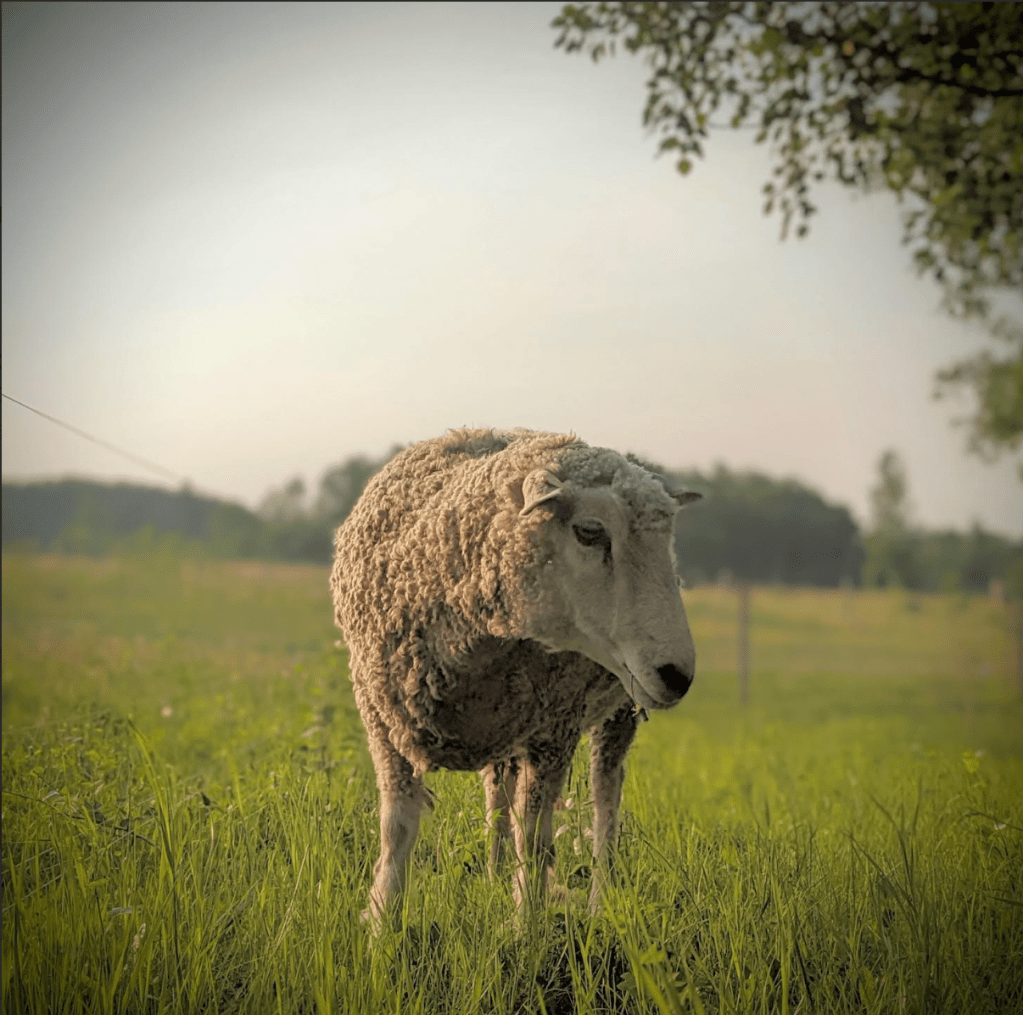
This is also a great time to keep a beady eye on body condition. Unfortunately, while I’m sure it’s a lot tastier than the hay, early spring grass can have wildly variable nutritional profiles – some grass is mostly water, we call it “washy”, and hasn’t got a lot to offer. Other grass may be too rich in sugars leading to metabolic issues we’d rather not deal with — so careful, hands-on observation with the ladies is very helpful.
Two Steps Forward, One Step Back
Now I should note that given the plant variation in our pastures, there have been times when I’ve had to do a kind of two-step with grazing. Pods that have a majority of tame, cool-season grasses can head-out by mid-June, reducing their tastiness (if you’re sheep) and food value. However, the native grass pods often need to be approached with a deferred management strategy and may not be grazed until after shatter, sometime at the end of September or beginning of October. In practical terms, that can mean we’re grazing pretty well at the end of May in order to keep those cool season grasses from heading out too soon, taking a break and back on hay for the dog days of summer when deep shade and easy-acceess to water are appreciated and then heading back out to graze again on our mostly-native pastures much later in the season. When I do that, I don’t necessarily re-acclimate rumens all over again, it all depends — on what I see and what the data tells me.
For anyone who’s interested, some of the books I’ve found particularly helpful on this front have been A.W. Sampson’s book “Range And Pasture Management,” “Grazing Management of Native Grasslands – Handbook 1” and “Range Tips” (for more grazing resources, check out “Farming Practice” on our Keeping page).
From The Fenceline
Letting the flerd out onto grass is easily one of the highlights of my year. The excitement, the capering, the playful head-butting and other kinds of sheepy shenanigans are highly entertaining. It would be so easy to let them have at ‘er — it’s tempting, I will admit.
However, my long-term goals and the overall well-being of the sheep have to come first. If I want the homestead to be truly resilient for the long haul, I can’t afford to give into sentimentality or the lure of not forking, barrowing and spreading hay twice a day. While my shoulders might thank me, my bank balance would not as I might end up dealing with entirely preventable herd health issues.
Whatever approach anyone chooses, knowing your goals, how to collect the data, how to transition your animals so they can do their best work for you and then documenting the season in such a way that it’s useful to you the next year, is time well spent. If you can find your own fascination with land — go ahead, let that freak flag fly! — then it won’t be work at all, all that patient lying-on-your-belly-in-the-pasture-and-counting.
Speaking only for myself, this season, when carefully and thoughtfully managed, is so exciting. . . it’s a thrill to open the gate that first time, to step smartly out of the way and watch the careening cavalcade barrel past you at a speed that’s as charming as it is unusual. My sheep, dotted along the green swath of grass or peeking around the shrubs and bushes, are as gleeful about the changing season as school children on Christmas Eve. Knowing that I’m doing everything I can possibly do to measure, observe, analyze, interpret and adapt means that at the end of these long, halcyon days, we can all – four legs and two — put our heads down satisfied at another day, another graze, another job well done.
This is a Tending post — a practical look at our tools, methods, routines, and on-the-ground decision-making. It’s not a one-size-fits-all how-to, and it isn’t meant to substitute for local knowledge or professional guidance. It’s just what we’ve found useful and what we’re doing here on our farm, in our conditions, with our sheep (and alpacas), written down plainly in case it helps. For more about why we do things the way we do them, the philosophy that informs our process, you’ll find those posts in Living.


Leave a Reply