In the heart-tugging children’s book “The Velveteen Rabbit,” the central question is the difference between what is “real” and what is not. The sage nursery resident, the Skin Horse, tells the rabbit that in the end, authenticity is determined not by what you look like to other people but by what you have endured to get to where you are.
What makes it a “real” farm?
This is not a question I’m ever asked by people who don’t farm. Your average urban or suburban citizen is unconcerned with criteria or checklists. For them, if I say it’s a farm, that’s good enough.
For my rural and farming colleagues however, it’s a different story. And increasingly, not just for them but for the agricultural associations and policy makers that inhabit our sector. So today I thought it would be good to uncover some of the criteria these folks often lob at me. Let’s see if they bear up under the weight of scrutiny, shall we? Yes, we shall.
Canadian Myth-Making
Before we dig in, it’s probably a good idea to put some context behind just where we are. Canada isn’t, as we shall see, anything at all like most everywhere else. With a few exceptions, the way Canada has done agriculture since WW2 is. . . an anomaly. And while agribusiness may be our normal, for many Canadians, the mental images we conjure when we say “farmer” haven’t kept pace. Most people don’t envision an MBA sitting in a computerized control room that would thrill the heart of NASA, for instance. Nor are they likely to conceive of tractors with cabs that could double as a cockpit on The Enterprise.
Increasingly in Canada, agriculture has less to do with feeding people or stewarding land and more to do with industrial expectations and financial systems. In order to keep things relatable, they’re often gussied up with layers of social and cultural mythology. Perhaps it’s time to take a good hard look. What about farming identity — the faces of farming – is true? And of those, which of them will help us see a “real” farm?
The Checklist!! There Must Be A Checklist, Right?
Naturally.
For our examination today, let’s pull out nine different themes. Let me know if you think I missed any.
- Myth #1: Size Matters
- Myth #2: Feeding the World
- Myth #3: Full-Time Farming
- Myth #4: Multi-generational
- Myth #5: Infrastructure and Equipment
- Myth #6: Money Matters
- Myth #7: Specialization
- Myth #8: Ownership
- Myth #9: The Invisible Farmers
Are you intrigued?? I hope so. I’d hate to think I went to all that trouble to come up with snappy subject headings only to find they don’t stir anyone’s curiosity.
This isn’t really about farms, per se. It’s about legitimacy—who gets to claim it, and who gets denied it.
Myth 1: Size Matters
Of all our myths, this one is easily – easily! – the one I get most often. It is therefore also the one that annoys me most. Fortunately for us all, it’s also pretty easily debunked. The assumption often gets framed like this — a “big” farm is a serious farm. A “small” farm is a hobby farm.
Gawd. How I hate the hobby farm label.
But let’s not get distracted by pointless name calling. Instead, let’s pull out some statistics!
AVERAGE Farm Size (ha)
3.2 ha, 7.9 acres
69 ha, 170 acres
63 ha, 155 acres
11. ha, 27 acres
1-2 ha, 1.5 – 4.9 acres
20-30 ha, 49 – 74 acres
(You can see the sources used to determine farm size by clicking on the country). Each of these countries have farm sizes far smaller than the Canadian average, as we will see.
Now let’s take a look at the heavy-weight (size only) categories. For our purposes, that’s Canada, the United States and Australia.
327 ha, 808 acres
188 ha, 466 acres
4331 ha, 10,378 acres
In each of these countries, farming and agriculture represent significant contributions to overall GDP. But none of these counties have average farm sizes anywhere close to Canada and they’re waaaaaay smaller than Australia. The only other countries that come close are Russia and Ukraine (649 ha/1603 acres) **Note: I didn’t include either of these in our table above because I was having a hard time finding clear and current Russian data and Ukraine understandably has other things on its mind.
However, if you’re a sharp-eyed harpy like me, you know there’s one particular country I’ve left off the list.
Welkom in Nederland!
Average farm size in the Netherlands is just 32 ha and yet the sector is worth about 41 billion euros per year. Canada’s agricultural sector contributes more total economic value but Canada does so on farms ten times larger. In The Netherlands, farm size and agricultural value are not dependant — acreage measures scale but it does not measure economic intensity.
Given that The Netherlands is 260 times smaller than Canada, one might say their diminunitive size is an advantage. What Canadians spend on freight and fuel would pop the pennies off a dead man’s eyes.
All this to say, “Does size matter?” Even a cursory look at these numbers would say no. From a global context, size matters barely at all — in fact, it can be an economic liability. Further, when it comes specifically to farm size and domestic food sovereignty, it is important to point out that Japan and The Netherlands both out-perform Canada on this metric. Smaller farms can be more secure — and therefore more valuable to local communities — than big ones.
Myth 2: Feeding The World, Growing For Export
More than 50 per cent of what Canadian farmers grow is targeted for the export market. Most modern agriculture treats export numbers as proof of success — exports mean productivity, productivity means growth and growth means health, right? That’s the conventional wisdom.
But food is meant to be eaten and it is cheaper to grow, cheaper to process and store and cheaper to buy when it’s close to where it’s grown. When we think of countries with solid agricultural export numbers, we often assume the local populations are well-fed. Alas, not so. Export-oriented agricultural markets have been shown over and over again to have very little relationship to food security at home. In fact, when political or social levers are in play, an export mandate can leave local populations more vulnerable to food insecurity than they might otherwise be.
Indian philosopher and economist Amartya Sen points out in his book “Poverty and Famines” that famine is not a hunger problem, it’s an access problem. Countries may grow lots of food but if that food is exported, there’s precious little left for the local populace. An over-reliance on export — either mandated by the government as in the Irish Famine or as a result of reduced regulatory controls — can exacerbate food insecurity.
Production and nourishment are not the same thing.
Output and access are not the same thing. Agricultural success, when it’s measured exclusively by exports and outputs misses the foundational question of who gets fed. Which begs the question. . . Are we measuring the right thing?
Myth 3: Full-Time Farming
If you’re a real farmer, you should be able to live off the money the farm makes.
Hahahahahahahahahaha!!! O, I’m sorry. Was that out loud? My face is very noisy sometimes.
Financial independence is one of the most common “real farm” myths and it’s also one of the most untrue. Patently, irredeemably untrue. Did you know, gentle reader, that in Alberta 80 per cent of farm family income comes from off-farm sources? Simply put, farming couldn’t survive without some degree of off-farm financial support. That’s not worst-case, that’s now-case.
Myth 4: Multi-Generational Farming Roots
People love a fourth-or-fifth generation farm story. You see the signs driving around rural areas, “Blundersnicks’ Century Farm” and other proud talismans to lives hacked out of the earth for a century. It’s heartwarming and I absolutely appreciate the testament to hard work and vision. It’s inspiring.
But as settlers in former colonies, perhaps a little disingenuous? Indigenous stewardship far predates settler farming — by millennia.
I’m not trying to take away from any family’s sense of legacy or achievement. I’m just suggesting that if we’re going to use time on the land as a marker of authenticity, then honesty compels us to acknowledge that our tenure is a blip on the timeline compared to our Indigenous neighbours. That’s not virtue signalling, it’s facts. If generations make farming “real,” whose generations are we comparing ourselves to?
Myth 5: Infrastructure, Tech and Equipment
Increasingly, we’re seeing headlines dedicated to investments – massive capital investments – in technology, equipment and infrastructure. State-of-the-art robotic dairy barns. Self-driving tractors, drones, vertical farming, AI-enabled sensors. . . It’s incredible, it’s dizzying.
And all of this investment, all the blinking lights and whirring rotors and satellite triangulation has become short-hand for legitimacy. Big Iron means Big Farm.
But increasingly, these investments come with a not-so-shiny tag attached — debt. Canadian farmers are carrying record-high levels of debt.
At this point, it may be more accurate to say we’re cultivating debt as efficiently as we cultivate crops.
And it may be that more folks are catching on with the advent of analog tractors and right-to-repair enshrined in law.
Innovation can be adding electronics and artificial intelligence. But innovation can also mean picking up a broadfork where once you’d used a rototiller. It can mean simplifying. It can mean right-sizing.
Ask yourself, at what point does machinery stop serving the farm and the farm start paying for the machinery? Which side of that equation is “real” farming?
Myth 6: Money Matters
Revenue is not the same thing as value. We’ve talked about it a little previously but here, we’re going to unpack the idea.
What is valuable and what is measured? Are they the same thing? Spoiler alert! They’re not and this is where numbers totally fail us.
Small farms – as our international examples clearly show — create tremendous spreadsheet-able value. Small farms also create value that can’t be captured in a revenue statement, the kind of thing that’ll never see the inside of a bank. Some of those value line items might include: local food access; community resilience; biodiversity; habitat preservation or restoration; skill sharing; and local economic circulation — any and all of these can be in play when it comes to small farms.
Historically, Canada’s smaller farms each had families who worked them. They sent their children to the local schools, sang in their local church, shopped in their local towns, had their babies in local hospitals. They went to the dentist, dropped by the barber, popped into the hardware store, stopped by the salon, picked up prescriptions at the pharmacy and slurped a coffee with their cronies at the local Chinese restaurant. It all happened in the lively, bustling little communities that used to dot the prairies. Each of these vital ecosystems supported whole networks of people and families and associations. There was mutual aid, mutual support, mutual identity.
You’re telling me that’s not valuable?
As those farms grew, absorbing their neighbours, automating so fewer people were needed to run things, spreading across the landscape, those tiny engine communities hollowed out. They disappeared. What had been bustling and busy was, in some cases, tipped into a hole and ignominiously burned. The prairie went on without them.
Myth 7: Specialists
Back in 1922, my Great-grandpa John was a mixed farmer. He had dairy cows, some turkeys, grew a little wheat and corn and every Spring the whole family went out to the sugar bush for a few weeks while the sap was running. He had his fingers in all kinds of pies.
Good thing, too. When my Grandpa, John’s youngest son, was just 8 years old, brucellosis (Bang’s Disease) swept through the dairy herd and every one of those cows was shot. John, father of eight with an invalid wife, was out his biggest money-maker. He needed a fall-back plan. Thank goodness for the wheat, the corn and the turkeys but it was the sugar bush and a woodlot of elm trees that kept all 10 bodies and souls together.
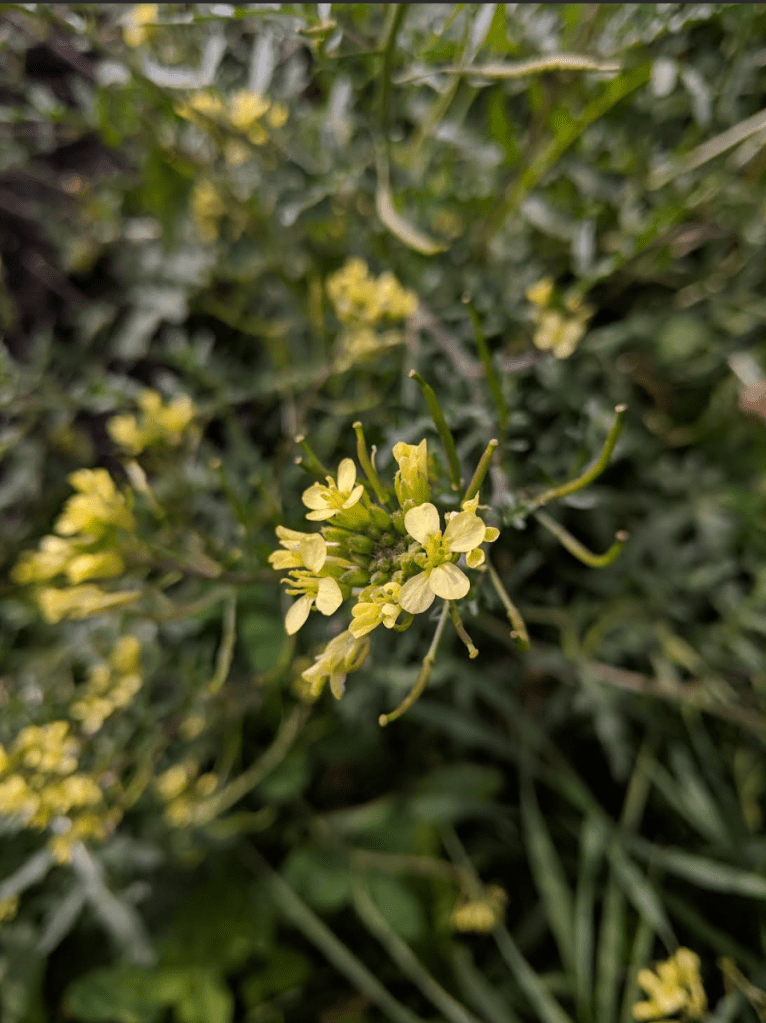
Nowadays, that kind of diversified farming has gone the way of the dodo, especially in big farming operations. Instead, what we have is a cascade of specialization. Where once a farmer might have been a grain farmer, markets encouraged specialization so he became an oilseed farmer. From oilseeds, he specialized further to canola/wheat rotation. From canola/wheat rotation he titred down again to high-oil canola producer and finally, he squeezed himself into glyphosate-tolerant canola specialist.
But that degree of specialization also creates incredible fragility. Risk can’t be spread out into different income streams the way Johnny Ghent did it. Today’s canola farmer won’t have turkeys to back up the lost income when clubroot comes calling. The resilience my great-grandpa relied on, the capacity to fall back, has been eliminated. And as Monette Farms is discovering, what looks like efficiency can become vulnerability when disruption inevitably arrives.
Myth 8: Ownership
What kind of cockamamie new-fangled idea is this???
Tenant farmers are real farmers — always have been. And while ownership is often treated as proof of legitimacy, the truth is that many farmers don’t own part or any of the land they farm. Leaseholders farm, workers farm, Indigenous stewards and other groups from outside colonial ownership models farm. Ownership is a legal structure but stewardship is an agricultural reality and these are two Venn circles that don’t always overlap.
Myth 9: The Invisible Farmers
Farm imagery centres visible work – stuff like tractors, fields, silos, livestock. But so much of farming is invisible, even in this day of YouTube and high-profile farm influencers like Sandi Brock, The Sheep Game or Tara Farms. And while celebrity farmers like Jeremy Clarkson have done a lot to raise the profile of some of the very real challenges farmers face in their various countries, for most people, the vast majority of farming happens behind-the-scenes and after-hours.
I’m talking about stuff like the planning that goes into the grazing season or breeding groups. The marketing and relationship-building, the endless errands, the phone calls with vets and nutritionists. The preserving and caregiving and bookkeeping. The 4H meetings, the driving and navigating the sales barn.
And increasingly in Canada today: the teacher’s classroom; the salon; the small-town bank; the school bus driver; the weekend farmer’s markets staffer; the heavy-duty mechanic and the office administrator — all those “off-farm” income jobs that keep the farm running.
A lot of this kind of work is invisible and historically, much of this labour – in particular, women’s labour – has been treated as secondary. It is foundational. Invisible farming is what make visible farming possible. My insurance rep might be farming just as hard from her office in town as I am from my office above the feed room.
From the Fenceline: Let’s Be Real
Farming doesn’t depend on size or exports. It’s not about the equipment in the shed, the lights on the console or the revenue on the spreadsheet. It has nothing whatsoever to do with inheritance or ownership and can’t based on self-sufficiency (or we’re all in trouble). A farm, a real farm, is a place where life is tended, where land is stewarded, where food is grown, risk is carried and relationships — those myriad threads that connect us all to soil, weather, animals and community — are carefully knotted and strengthened through attention and care.
All data and research aside, I think farming — in the stewardship sense — is a vocation, not an occupation. It is something you’re called to do by something outside yourself. It’s a state of being, a way of knowing, a kind of living that, if it’s the right thing for you, nothing else will ever do.
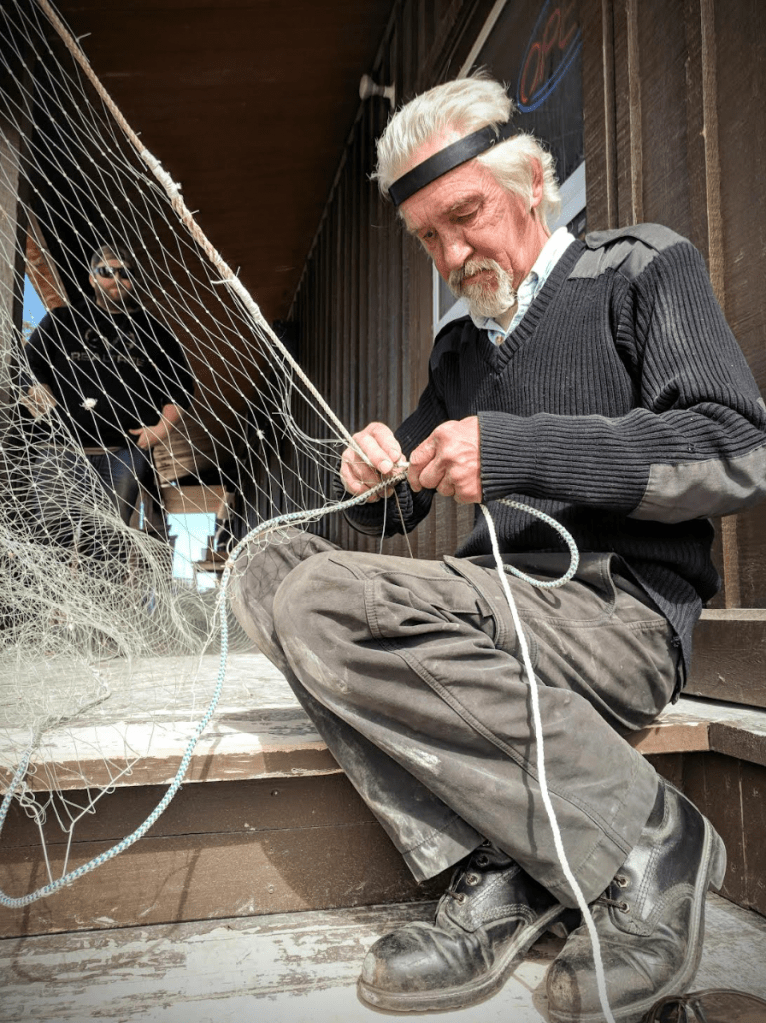
I once sat on the steps by an Inuk man named Brian who was mending his fishing net in Churchill, MB.
“Why do you keep fishing?” I asked him. I might as well have asked him why he kept breathing. Bending over his net, he didn’t even look up at the idiotic white woman who’d just asked him the stupidest question he’d ever heard. “There’s nothing else I do,” he said.
I fish, was the inference, therefore I am. That’s it, in a nutshell.
We farm because it is the way we pay (some of) our bills, the way we move through life, the way we understand the world. I do it so I’ll know who I am, where I am and why I am. There’s nothing else I know how to do.
Real isn’t how you are made,” said the Skin Horse. “It’s a thing that happens to you.
“It doesn’t happen all at once,” said the Skin Horse. “You become. It takes a long time. That’s why it doesn’t happen often to people who break easily, or have sharp edges, or who have to be carefully kept. Generally, by the time you are Real, most of your hair has been loved off, and your eyes drop out and you get loose in the joints and very shabby. But these things don’t matter at all, because once you are Real you can’t be ugly, except to people who don’t understand.”
Maybe the question isn’t what makes a farm — or a farmer — “real.” Maybe the better question is “What is a farm — your farm — for?” If you can figure out the answer to that, you’ll never again have to feel small when someone looks around and then sniffs and says you’re not a “real” farmer.
You can just smile. Because clearly, they don’t understand.
This is a Living post, a post to share my thought processes, my experience and the philosophy that underpins our activities here at the homestead. It is not a how-to, “expert advice” or meant to reflect a wider experience than just my own, on my farm, here with my sheep.


Leave a Reply