Somebody once told me, “On every parade, a little rain must fall.” I’m afraid I’m about to bring the rain.
I was recently being interviewed by one of the regenerative farming groups here in Alberta and they asked me what I thought the biggest threat to regenerative farming was.
I answered promptly — I’ve given it some thought and in my mind, there’s absolutely no question. It’s not glyphosate (Round Up) or tillage or market swings.
The biggest threat to regenerative agriculture in Canada today is the language we choose to frame it — when old ideas are given new names, principles become prescriptions, and good farming is packaged for sale.
Let’s talk about it.
Heeeey Goood Looookin’!
When I first heard the word Permaculture about 10 years ago, I did what I usually do — I dove deep into the research. The more I read, the more my skeptical eyebrow crawled up my forehead. It’s not that I didn’t buy in or believe the claims or that I thought any of it was bogus. Long before I ever worried about knowledge appropriation and proper attribution of skills (something that became a real problem for me later), I was bemused by the overlap I saw between some of the permaculture-branded promises/principles and something I knew very well — poverty.
Now to be clear, I realize that a white, north-American version of that experience is vastly different — oceans of difference! — between poverty in other geographies and even for other people right here in Alberta. No matter how you want to parse it, poverty in my context placed on a global scale looks like comfort and privilege. Context is everything — about which, more later.
But even so, I walked into my first Permaculture Design course (Oregon State and, for the money, still one of the best PDCs on offer, I think) with a healthy degree of doubt. Some of the things my research had uncovered — promises and processes carrying a new brand identity — had been gussied up a bit but essentially were the same things I’d watched my parents and grandparents do, things that had roots in the profound poverty of the Depression and the Prairie Dust Bowl of the 1930s. There wasn’t anything new about them — once upon a time, these ideas had been “normal.” They were simply part of farming.

Only now, I was encountering them in an unfamiliar context that had cut them adrift from their original mooring, like an old, reliable dory given a fresh coat of paint.
An Example
Take rotational farming for a start. Let’s wander through history for a second. Did you know The Old Testament outlines the ancient Israelites’ approach to farming and prescribes a rotational system built around the concept of rest? It was the Sabbath principle applied to land — for seven years, work hard, be productive. Then, rest. Fallow was an important concept in agriculture for millennia and practiced around the world in some form or other.
Then, in the early 16th century, Dutch farmers developed a new rotational system. Prior to the development of synthetic fertilizers, farmers had to make use of natural means to reinvigorate top soil and these toiling Dutch innovators developed and then exported what became known as “The Norfolk System” around the world. Rather than leave rotating fields to rest one season out of every four, the Dutch farmers followed a regimented rotation of crops which boosted soil fertility exponentially. No one could argue with the results — many had to go and see for themselves.
One of the people who visited and then exported the system, funnily enough, was a farming family named Bakewell in the Midlands region of England. Robert Bakewell went one step further and converted cropland back to grazing land and then, through a system of hand-dug canals (O to be a farmer in the 1700s! Doesn’t it sound fun?), experimented with a system of overland flooding to redistribute soil nutrients. This was so successful that he began preaching his system far-and-wide, like influencers today but with periwigs instead of TikTok.
As an approach, regenerative agriculture is having a moment in this moment but as we’ve seen, some regenerative concepts have long been riding through history, practically since Noah wobbled off the ark. It’s not a new concept.
Having said that, the speed with which these ideas are shared today is new. Robert Bakewell spent years and years developing his ideas — his entire lifetime, really. Nowadays, someone — like me, for instance — can barely have a decade in and all they’ve got to do is put some well-chosen words and a good image in front of people and there’s a very real risk that an audience may get the idea I know what I’m talking about.
Transparency
So what I really want to do today is talk about something I think is critically important.
In a world where history is so often swept aside, where grand claims are made, where there’s very little requirement to actually “show your work,” what sort of questions are healthy when you’re trying to make up your own mind about regenerative agriculture?
After all, anyone can claim to practice regenerative agriculture — it hasn’t got a settled definition, there’s no overseeing body, everyone’s metrics of success are different. For those of us fumbling along and trying to make the best choices we can, particularly with climate crises and extreme weather events breathing down our necks, the pressure can be intense and that sense of urgency, swamping. So what are some of the things I try and keep in mind when I’m assessing a regenerative agriculture personality or approach?
- First, Beware All Hat, No Cattle. Influencers have gotten canny about packaging their “expertise.” While I fully support someone’s right to earn some money when they share their hard-earned wisdom, increasingly I am seeing slick campaigns and glossy presentations built around remarkably hollow content. Watch out for marketing-speak, the kind of thing designed to get you to buy – particularly if that purchase is repetitive (think ongoing subscriptions or memberships). Some of these things ARE valuable but you have to be very discerning.
- Next, I’d tell you that Not Everything Translates. I love me some YouTube explainers — Anne of All Trades is hugely informative and entertaining . . . and she’s also farming in Tennessee. I had frost yesterday (July 6th). The kinds of things she can do and grow on her farm don’t always survive in Zone 2A at 4400 feet elevation where it can literally snow at any time, god help me. Finding practitioners who live and work in comparable situations is key to maintaining realistic practices.
- Never forget, Regenerative Agriculture is NOT a Magic Bullet. There are no quick fixes. Whatever you read, watch or join, keep an ear to the ground for a whiff of this kind of evangelicalism. Riding shotgun with the “no quick fix” posse, never forget that there isn’t a formula. There’s no linear A+B=C in any of this — once regenerative farming has been reduced to formulas, it’s no longer a practice, it’s starting to veer into cult.
- Results Are Not The Same Thing As Skill. Rain can make a mediocre decision look brilliant. Drought can make an excellent decision look like failure. A beautiful field is not proof of good management unless you know what the weather did, what the soil is, what was there before, how much money was spent, and what happens next year.
- Starting Conditions Matter Enormously. Someone beginning with deep topsoil, reliable rainfall, inherited infrastructure, established perennial pasture, paid-off land, or family labour is not running the same experiment as someone starting with degraded ground, debt, drought, no equipment, or a short growing season. We are very bad at disclosing the starting line. Transparency is critical.
- I’ve been banging on about it for a while but Scale Changes Everything. A practice that is elegant on 20 acres may be impossible on 2,000. Something affordable for six sheep may be absurd for 600. And the reverse is also true: some efficiencies and infrastructure only become possible at scale.
- The Farmer Is Part of The System. Time, age, physical ability, family obligations, off-farm work, money, available labour, and plain old exhaustion matter. A system that produces beautiful ecological outcomes but consumes the person running it is not regenerative. It’s extractive — I’d call it parasitic.
- Observation is NOT The Same Thing As Proof. “I did X and then Y happened” does not necessarily mean X caused Y. Maybe weather changed. Quite likely the seasons changed. Animals moved around. Any one — or a dozen — of a hundred other variables could have shifted. Farmers need to be able to say, I think this helped, without turning every observation into a universal law. Speaking from experience, this is much harder than it should be.
- You Cannot Copy Someone Else’s Relationship With Their Land. You can borrow tools, you can study principles and you can learn from other people’s mistakes but the actual work is paying enough attention to your own place that you know when some advice doesn’t fit. This especially critical for those of us who come from settler backgrounds. There is a temptation to venerate and then appropriate Indigenous ways of knowing and being and we must be vigilant to guard against any inclinations we may harbour. The challenge for us is to find ways to honour without stealing, to build a wide and expansive tool box without saying we discovered it, to incorporate not just the technique but also the world view that developed it. This is the work of a lifetime.
- Failure Is Information — but only if people tell the truth. Social media is full of finished paddocks, fat cattle, beautiful gardens and triumphant before-and-afters. We rarely see the reseeding that failed, the expensive infrastructure that was abandoned, the grazing move that was mistimed, or the idea that worked for three years and then stopped working.
- Beware Of Certainty. The more absolute the claim — always, never, this is the only way, if you understood soil biology you would… —the more suspicious (and annoyed. Also triggered) I become. Living systems are complex and life is complicated. Competent people usually become more precise and more conditional as they learn, not less.
- Finally, Stewardship Is Not Performance. You do not owe the internet a picturesque farm, a perfect grazing chart, a branded philosophy, or ideological purity. The land does not care what school of regenerative agriculture you belong to. The sheep do not care what podcast you listened to. The question is: What is happening here? What does this place need now? And what happened after I acted?
From the Fenceline
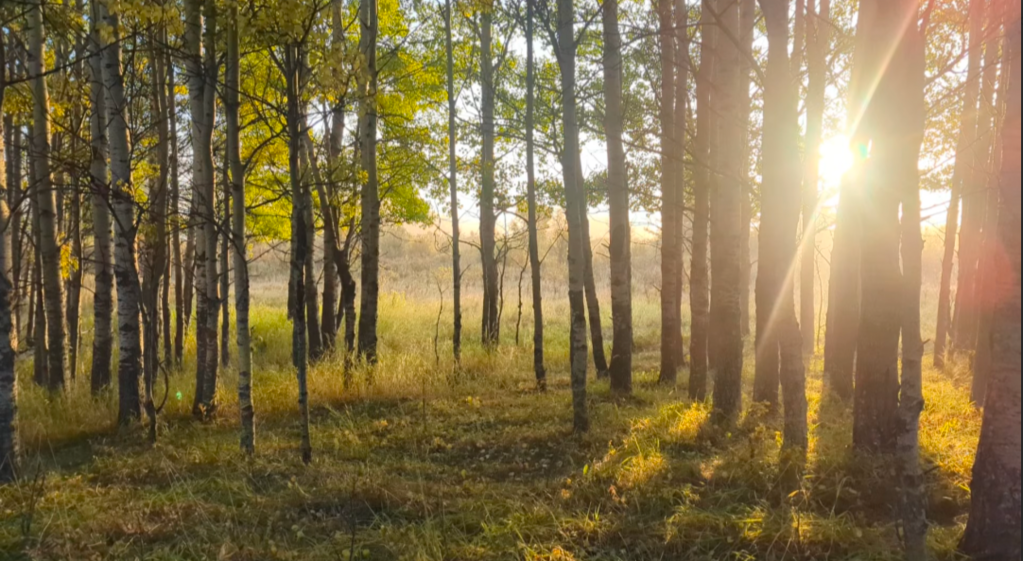
“A society grows great when old men plant trees whose shade they know they will never sit in.”
Attributed variously to the Greek Stoics and poet Rabindranath Tagore, the idea is simple — do the things that are right to do, as best as we can, because we have hope for a future, not because we expect an immediate payday.
That’s the beating heart of regenerative agriculture.
The work is slow. Sometimes circumstances will fall into beautiful alignment and we will look like geniuses. Other times, everything will be out of whack, nothing will work and we’ll look like fools. The important questions are not, “How many followers did it attract? How well did it photograph? Can I package it, brand it and sell it?”
The questions are, “What was the process? What was the starting point? What was the logic? Where are the roots? What happened next?”
Regenerative agriculture — until something else comes along — may be the best tool we have. But listen carefully to the people who would tell you what it can promise. Listen with discernment. Look past the branding, the subscriptions, the symposiums and the beautifully lit photos — never mind the bollocks. Ask to see the work.
Anyone can make almost anything look good if no one looks too closely . . . anyone can look like a good farmer when it rains.
Never mind the bollocks.
If you’re keen to read more, I invite you to peruse our Keeping page! It’s full of resources, including online resources and original sources, that you might find sends you into a deep dive of your own. Enjoy!
This is a Living post, a post to share my thought processes, my experience and the philosophy that underpins our activities here at the homestead. It is not a how-to, “expert advice” or meant to reflect a wider experience than just my own, on my farm, here with my sheep.


Leave a Reply