There’s an old idea about grazing that measures success by what disappears. When it comes to our native pastures, I’m discovering the better metric might be what remains.
When I think about it, it makes sense. As a shepherd, I want my sheep to eat their fill. When it comes to some kinds of forage, like hay for instance, I tend to get a little green around the gills when they leave great hanks of hay behind — I see dollar signs and smoke signals. It’s very unsettling.
That same kind of headspace can creep into our grazing approach. We may wander out to the pasture and see a lot of standing material and think to ourselves, “They’re not eating it all!!” That can feel like a missed opportunity. The temptation is to hold the animals on that particular patch until every plant has felt some teeth or toes pressure. In a tame/soft grass pasture, that’s a practice that may have some merit.
However, when it comes to our native pasture, that portion of the homestead we call “the Back 20,” the impact from grazing is a much finer balancing act and, as a recent study has confirmed, one with very (very!) long-term consequences.
Wander With Me
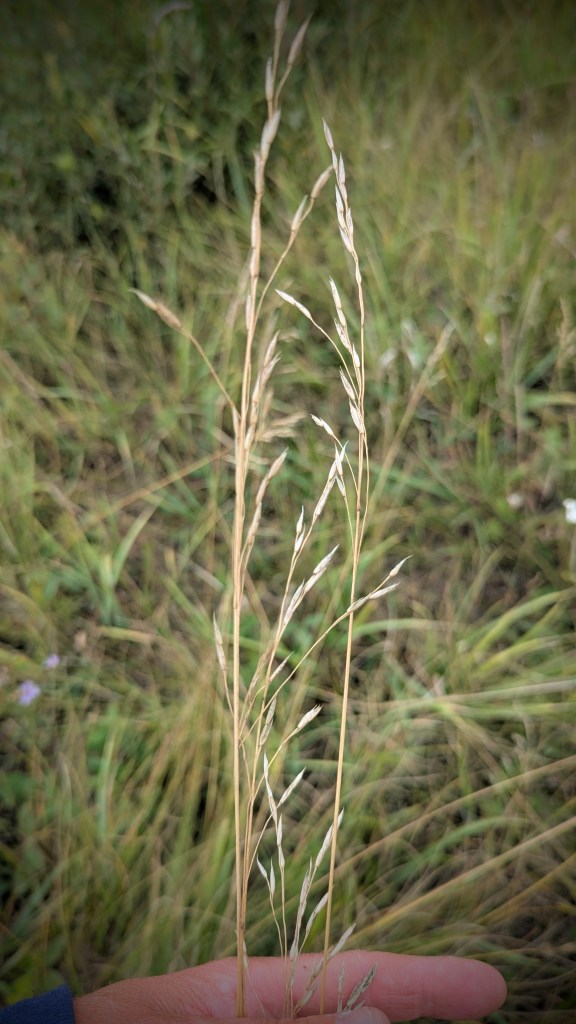
Our Back 20 is a blend of vegetation. Over here you’ll find a quite-thick mat of Kentucky bluegrass. Over there, you’ll see the bushy humps of willow. Between the willow are channels of brome and aster, potentilla and aspen suckers. Rising over them all are the iconic, dainty seedheads, found waving on the ends of Festuca campestris, better known as rough fescue.
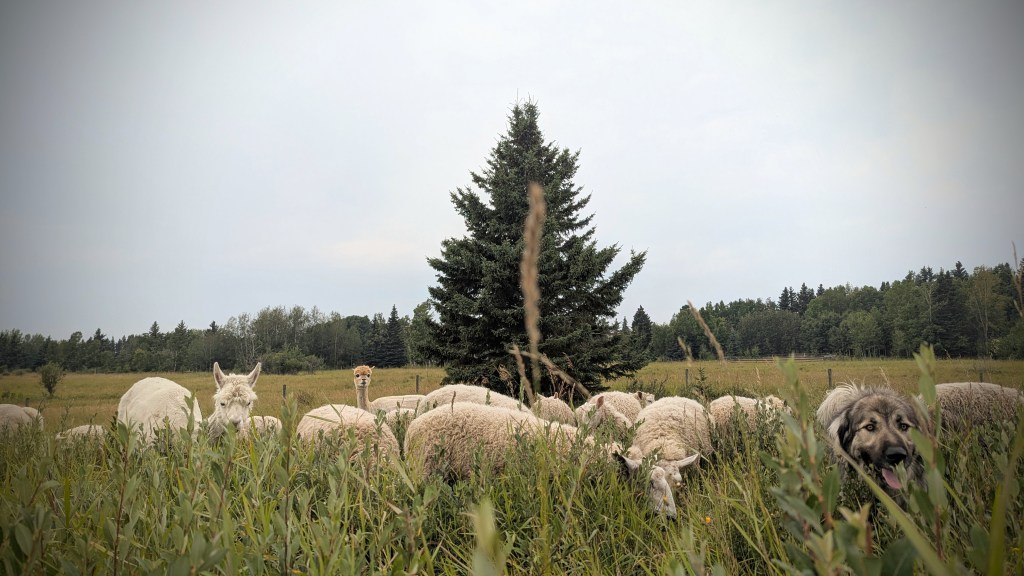
On a late-August morning, I’m wandering down to the Back 20 with 14 sheep and five alpacas behind me. Everyone seems just a tiny bit slower this morning, possibly because we all know that the day is forecasted to hit 30C and no one is feeling any particular urge to step along any more briskly given the already-noticeable temps. Stepping through the gate, out of the tame pasture and into this rough-and-ready field, the sheep navigate around a stand of Canada Thistle and then head due south, making a beeline for the space they were in yesterday where they feel most comfortable. I have noticed that the sheep often want to return to the previous day’s grazing zone as a kind of familiarization ritual before they strike out and head a little further afield.
This is an area of old growth grassland. For the first six or seven years, we did nothing in this area at all, we didn’t even graze the horses. Gradually the willow and aspen that make up a good bit of the biomass here grew higher and tangled themselves together forming a woody wall. This was the home of moose and deer with occasional forays by myself and my dogs. There was grass but in fairness, the willow really was dominating the ground, a situation I was more-or-less content to leave alone. Until . . .
One breathtaking charge by a grizzly bear later and I decided that Something Must Be Done. That began a two-year process of consultation and research before I screwed up all my courage and made a phone call to my friend Jack, he of the forestry mulcher. In April 2025, Jack and I worked together to clear half of the Back 20, ensuring the spinning drum of the mulcher was well above the crowns of the rough fescue. The goal was to shove the willow back into balance with the grasses, maintain sightlines for my own security and engineer conditions to ensure the rough fescue had the best chance possible to bounce back.
The Results
The first thing I noticed in the first year after mulching was a massive uptick in wildflowers. Suddenly we had spreading smudges of crimson Indian Paintbrush, orange splashes of Wood Lily, waving colonies of harebell, marching flotillas of False Solomon’s Seal. Further observation and reflection and my hypothesis is that the removal of at least some of the willow allowed other forbs, flowers and grasses to thrive.
And then one summer day, a new bird call came across my Merlin bird identification app. Sandhill Cranes were on the property, wandering around on the cleared slope. I was ecstatic. Our first year after mulching and I was seeing a greater variety of not just plant life but an iconic bird presence I had never seen on our property before. I had high hopes for 2026.
And 2026 didn’t disappoint.
The rain started in May and didn’t let up until mid-July. As of right now, we’ve had 298mm of rain since March (thanks to my nifty weather station), most of it arriving in the prime growing season, and all that water seems to have supercharged the Back 20. I am seeing new plants, new colours and hearing new sounds. And waving above it all are these incredible spikes, airy and tall, reaching up to my chin.
Festuca campestris, it’s so good to see you.
Sighs of Relief
It seems like my gamble may have paid off. Thanks to expert help, some absolute finesse on a forestry mulcher and lots of rain, I have seen more rough fescue this year than I ever have. It’s abundant, in some places in this pasture, I would call it the dominant grass species.
Feeling like I was on a bit of a roll, I wanted to make use of this seemingly newly reinvigorated pasture. But timing, as I had learned the previous winter squirrelled away in my studio, fire crackling and surrounded by heaps of books and forgotten mugs of tea, was critical.
Back in 1913, A.W. Sampson wrote —
“If the plant is robbed of its green herbage during the main growing season, especially if it happens in two or more successive years, growth in the spring is not only delayed by several days, but foliage production is scanty and the amount of food which the plant is able to manufacture is consequently decreased.”
Range Improvement by Deferred and Rotation Grazing, A.W. Sampson, Classic Reprint Series, 2018, pg. 3
Which brings us to this very hot day in late August. We are heading back to the fescue for the first time this year. Mindful of Sampson’s warning not to hit the grazing too early in the season, I have waited until the seedheads on the fescue were thoroughly dry, coming off the stem in my hands.
Why Wait?
Because old grasslands, as Sampson understood in his way and we are (re)learning in ours, are not easily remade.
And we now have modern studies to back up Sampson’s work — not that he needs it. Recent research comparing old-growth and secondary grasslands across six continents found that even centuries after cultivation, recovering grasslands can remain fundamentally different from grasslands that were never plowed.
Once that ecological continuity is broken, planting the right species doesn’t necessarily put Humpty Dumpty back together again.
Which changes the question from, How much can this pasture produce? to How do we use this pasture effectively?
First, let’s define “effective” grazing in this context.
When I say effective grazing for the Back 20, I mean grazing that maximizes the opportunity for our native plant species to thrive. Believing as I do that the native plants have evolved over millennia to handle the kinds of conditions — soil, moisture, weather etc — we have, my goal for the homestead is to increase these populations because I believe that the more native species present, the greater the land’s resilience.
And resilience is particularly important in a time of an increasingly unpredictable climate.
Green, Green Grass Of Home
Sorry for that ear worm, folks. I couldn’t help it.
So far, 2026 has been wet, and the rough fescue appears more numerous — or at least considerably more vigorous and conspicuous — than I remember seeing it in previous years. I wondered what the sheep would make of it so, when the seedheads were dry, I opened the gate and watched the sheep slowly flow through.
Then I watched.
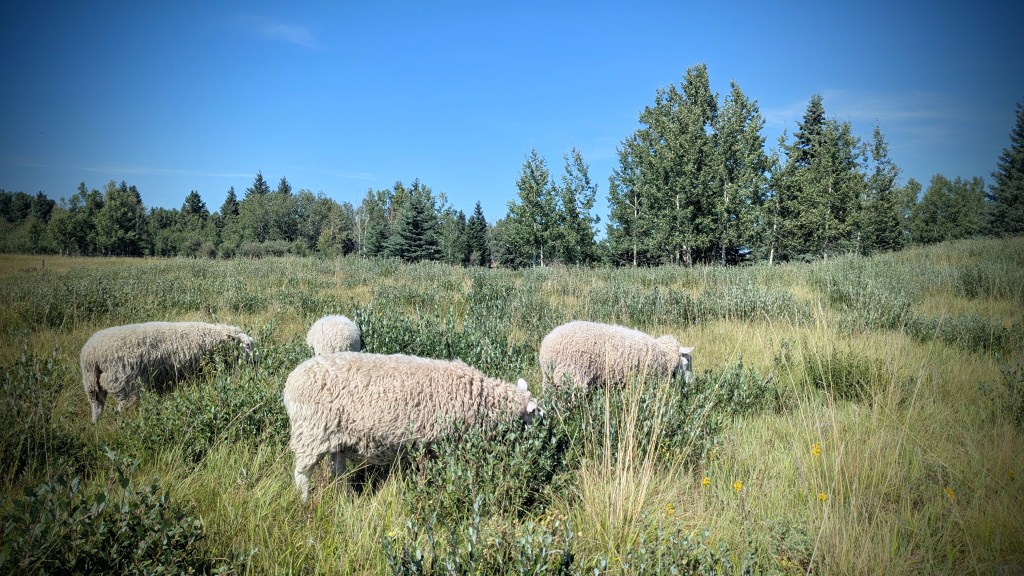
To this point, now four days in to our Back 20 graze, the sheep have had zero interest in the fescue. Instead, they are targeting the willow.
While willow is an important part of this landscape, left unchecked it advances steadily into the open prairie stands. I don’t want to eradicate it, I’d much rather persuade it to stay in its lane. And it turns out that the sheep are very willing helpers in this negotiation.
How terribly convenient.
The sheep are also selecting some of the broader-leaved grasses — like the tame (non-native) bromes, timothy and Kentucky bluegrass — while leaving the mature fescue bunches standing. Whether that selective grazing can meaningfully shift competition in favour of rough fescue over time is something I’ll have to watch – it’s still too early to tell. But research from Alberta’s Foothills Fescue grasslands gives us good reason to pay attention.
Dr. Steven Tannas — One Of Our Grass Gurus!
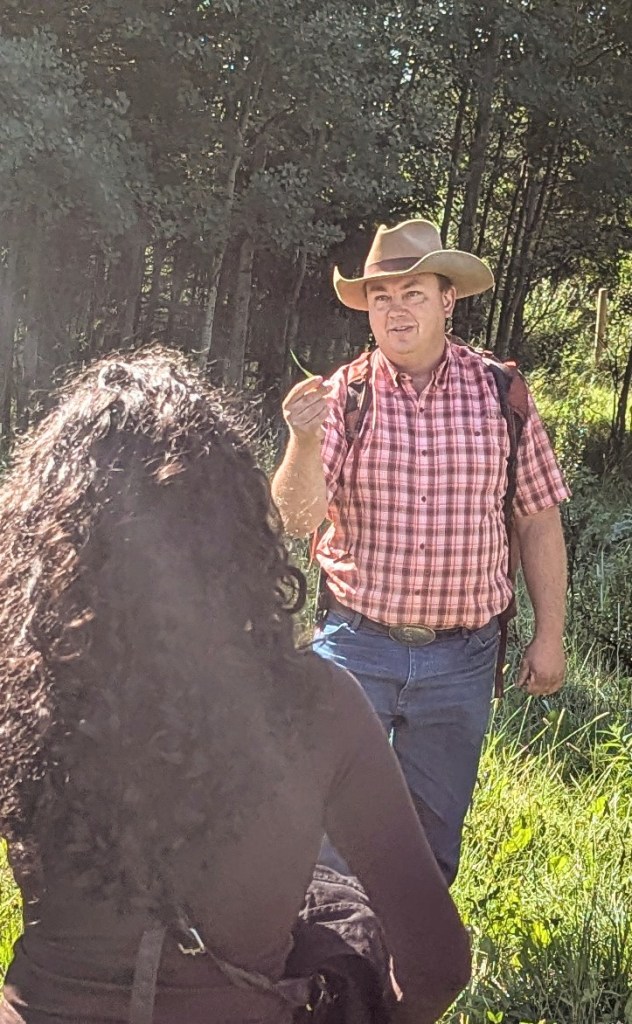
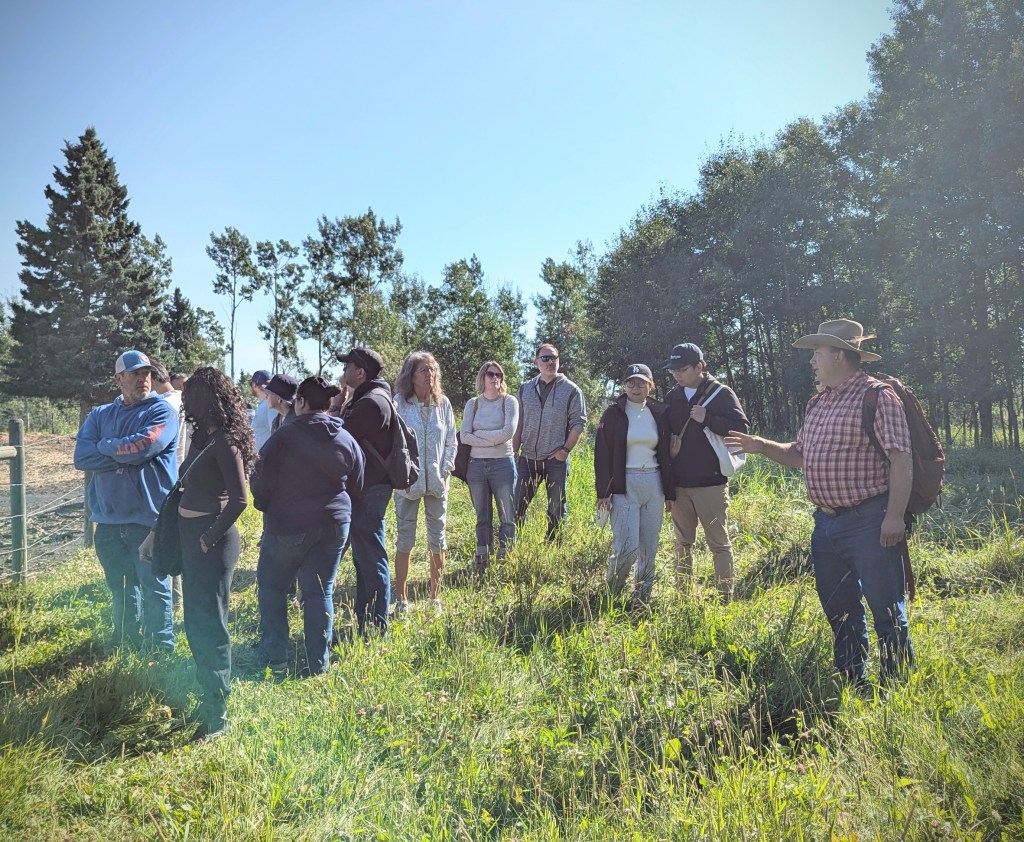
If you joined us for Open Farm Days on August 15, you met Dr. Steven Tannas. His work on rough fescue and Kentucky bluegrass found something particularly important: a healthy population of rough fescue helps resist colonization by non-native grasses. But, particularly in grazing country, healthy populations don’t just happen. In the dwindling prairie landscape where these native grasses occur, careful and thoughtful grazing is essential to ensuring their ongoing vitality.
As Dr. Steven says, it’s a lot easier to protect a native grassland than to restore one.
Rough fescue fares poorly under repeated growing-season defoliation and litter removal; Kentucky bluegrass can exploit the openings that result. In other words, it can look like there’s lots of grass. . . even when the grassland is disappearing.
Which Brings Us Back To The Sheep
I am not asking the sheep to clean this pasture up. I don’t want an even lawn, I’m not chasing uniform utilization. I’m not worried about ungrazed fescue, I don’t see that as a loss of potential. I’m certainly definitely absolutely NOT trying to extract every mouthful the land could — theoretically — provide.
Old stems are not waste, litter (the vegetation left behind) is not waste, plants the sheep walk right past are not waste. I have reframed my grazing success metrics for this pod and all those things are now considered soil cover and snow catch. This is the structure that will protect crowns, hold moisture and provide necessary habitat while leaving photosynthetic capacity intact. This is the Back 20’s architecture, the very things that allow this community to persist.
So the sheep browse willow, nibble selected grasses, fertilize as they travel and move onward.
My Job Now
While I stand among my sheep, watching them ramble and nibble, I’m now watching to see how they’re using the plant resources present in the Back 20. While they’re not currently all that keen on the fescue, I want to see if that changes when their preferred diet loses its appeal. If they return to the same spots over and over again, that’s information.
There are a couple of Kentucky bluegrass mats. What happens to them when I deliberately adopt strategies that prioritize the health and resilience of our native grasses? Is it possible these mats might begin to shrink? Or at least stop expanding?
And if willow continues swallowing open prairie despite the browsing, that’s information too. So for now, I’m standing and watching, taking pictures, identifying plants, pulling Clio the guardian back through the fence and otherwise trying to understand more about this part of the home place and what makes it tick.
From the Fenceline
The measure of success isn’t how much disappears. Or rather, it isn’t only about how much disappears.
For the Back 20, I’ll know if I was successful when, ten years from now, this is still recognizably the same extraordinary grassland — with rough fescue reproducing, native plants holding their ground (or — dare I hope — expanding their reach), willow present but not consuming the prairie, and enough old vegetation left standing to catch the snow when the west wind comes.
There are places where agriculture asks, How much can I afford to take?
The Back 20 asks a better question.
How much can I afford to leave?
This is a Tending post — a practical look at our tools, methods, routines, and on-the-ground decision-making. It’s not a one-size-fits-all how-to, and it isn’t meant to substitute for local knowledge or professional guidance. It’s just what we’ve found useful and what we’re doing here on our farm, in our conditions, with our sheep (and alpacas), written down plainly in case it helps. For more about why we do things the way we do them, the philosophy that informs our process, you’ll find those posts in Living.


Leave a comment