I wrote this for my August newsletter. It seemed to start a lot of conversations and so, once I surfaced from end-of-summer madness and before I disappear into September crazy, I thought I’d put the article up for you here. Let’s dig into craftwashing!
I had never heard the term “craftwashing” before.
Up until last Tuesday, I have to confess I’d not really given it a lot of thought. I was aware of false marketing claims — you know the kind of thing, goods marketed as “local” that were anything but with supply chains that extended well beyond the bounds of local communities. I was also keenly aware of the shortcomings of Canada’s labeling requirements (read my posts on the subject, Part 1 and Part 2) but somehow, “craftwashing” had escaped me.
Well, no more!! So what is craftwashing?
Like Greenwashing. . . But Different
You’ve heard of greenwashing — when corporations use language and marketing to make their products appear to be environmentally responsible or their processes “sustainable.” Businesses have come to realize that “craft” is valuable — they’re borrowing the appearance of craft without accepting any of the responsibility.
On glossy marketing materials, the words “Artisan” or “Handcrafted” appear prominently, smiling faces in a small workshop, perhaps hands smeared with clay or flour or some other “tool of the trade.” You read about “small batch” and “heritage” production. Maybe the grandaddy word shows up.
You know the one I mean. . .
“Authentic.”
The words appear everywhere — from supermarket bread and cosmetics to furniture, coffee, clothing and whiskey. Consumers, increasingly uncomfortable with anonymous supply chains and mass production, are looking for something that feels more hands-on. More . . . human. And Big Business has noticed.
Craft-like
The result is what many commentators are calling craftwashing — the adoption of the look and language of craftsmanship without embracing the practices that give craftsmanship meaning. Craftwashing parallels greenwashing — when the appearance of environmental responsibility substitutes for genuine stewardship. But craft is not merely a style — at it’s heart, craft is a way of knowing. It’s a physical, material representation of experience and utility.
Earlier this year, I wrote about the distinction between complexity and complication. These terms are often used interchangeably but they describe very different realities. Complication is inherently fragile, a brittle system that compromises accessibility and specialization in favour of efficiency and automation. A complicated system doesn’t require a depth of knowledge (that’s what automation is for) but grinds to a halt if one component in the system goes offline. The further up the chain of complication a malfunction occurs, the greater the cascading, compounding consequences. Complexity, by contrast, arises from relationships. A prairie is complex because grasses, fungi, insects, grazing animals, weather, soil microbes, predators and people continually shape one another. It is — to a point, of course — a flexible system that tolerates a high degree of ambiguity and can absorb a range of impacts. It prioritizes resilience and mastery. Understanding emerges not from isolating each component but from recognizing the relationships between them and spending the time it takes to develop the necessary skills. Craft, like true prairie conservation, requires a long tutelage — years of study and observation, application and practice.
This is the world that developed Craft.
In The World of Craft
As a shepherd, I don’t simply manage sheep. I’m watching grass growth, parasite cycles, weather forecasts, lamb development, predator behaviour, soil health, genetics, interactions between individuals, reproductive cycles, water availability and the seasonal rhythms of wildlife in my small corner of Alberta.
Now apply that to craft. A cabinetmaker runs her hand down a piece of lumber and understands not only wood but humidity, grain orientation, joinery, sharpening, finish chemistry and how different species behave over decades. She carefully selects the piece best suited for the item she’s making based on decades of experience and careful training. In a similar way, a potter reads clay, a smith understands the change in the tone of the hammer and a weaver selects warp and weft. To anyone watching, it all seems so simple but every pass of the shuttle, every puff on the blowpipe, every needle stitch or poke of the bodkin is, in fact, the culmination of thousands of decisions compressed into mastery.
Knowing Where To Knock
There’s an old story. In a shipyard, a vast new ship was giving the engineers trouble. No matter how they poured over their blueprints, the giant propeller refused to turn. No matter what they tweaked, no matter how they adjusted, the thing was as immovable as the Rock of Gibraltar.

Finally, one of the junior members of the team spoke up. “My uncle was a shipbuilder for many years. We’ve tried everything else, why don’t we see if he can help?”
After a lot of grumbling, the boss decided to give the old man a call. On the appointed day, he showed up with a doctor’s bag. He spent the day crawling over and under, through and around. Finally, he ran his hand down the side of the propeller shaft, opened his bag and took out his hammer and gave the shaft a smart rap.
“Try it now,” he told the engineers.
Before their disbelieving eyes, the shaft turned and the propeller rotated. After a minute, he turned to the boss and handed him his bill.
“$10,000?!” the boss spluttered. “Are you mad?? For a knock with a hammer??”
“You don’t like the bill?” the old man asked solicitously. “Here. I’ll adjust it.”
He took the paper back and scratched out the $10,000. When he handed it back to the shipyard boss, the adjusted bill read, “Hammer knock, $50. Knowing where to knock, $9,950.”
The point is, the end product of craft is a representation of “knowing where to knock.” . . And knowing where to knock takes a lifetime.
Building Mastery
True craft is the ability to make genuine complexity, a lifetime of acquired and practiced experience, understandable. Real craftsmanship leaves fingerprints. There is evidence of judgement, evidence of selection, evidence of expertise. Every craft requires countless decisions that no machine, recipe, instruction manual or artificial intelligence could fully replicate. A craftsman cobbler may make ten pairs of shoes but each pair of shoes will vary slightly in appearance, feel and fit. A wool grader will choose this fleece to become sock yarn, that fleece for a baby’s blanket. None of the decisions exist independently; they all come out of years of dedicated application, standing on the shoulders of craftspeople who came before.There is knowledge, there is skill and there is inheritance.
Philosopher Michael Polanyi called this tacit knowledge: “we know more than we can tell.”
Sometimes, the most important knowledge is embodied rather than written down. It resides in perception, judgement and experience. It isn’t always easily broken down — it is implicit rather than explicit. You learn by doing. Polanyi wrote, “Personal participation is the universal principle of knowing.”
Without that personal participation, it isn’t — it can’t be — craft.
Craftwashing and Storytelling
I have spent most of my life around people who work with their hands. Although some of the welders and finish carpenters and ceramicists of my acquaintance would probably snort unbecomingly if they caught me calling them craftspeople, when I consider the criteria of personal participation, experience and long practice, I can’t think of a better word. A flawless wall? Evidence of a craftsman drywaller. A beautifully fitted and meticulously mitred herringbone floor? Definitely craft.
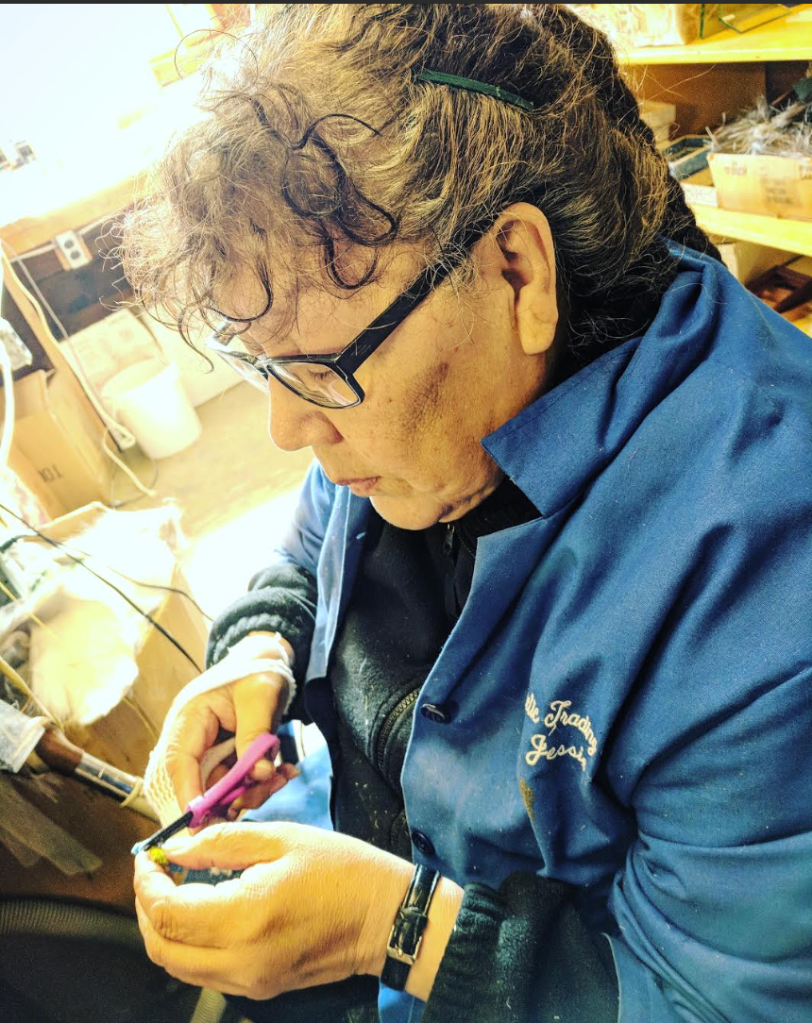
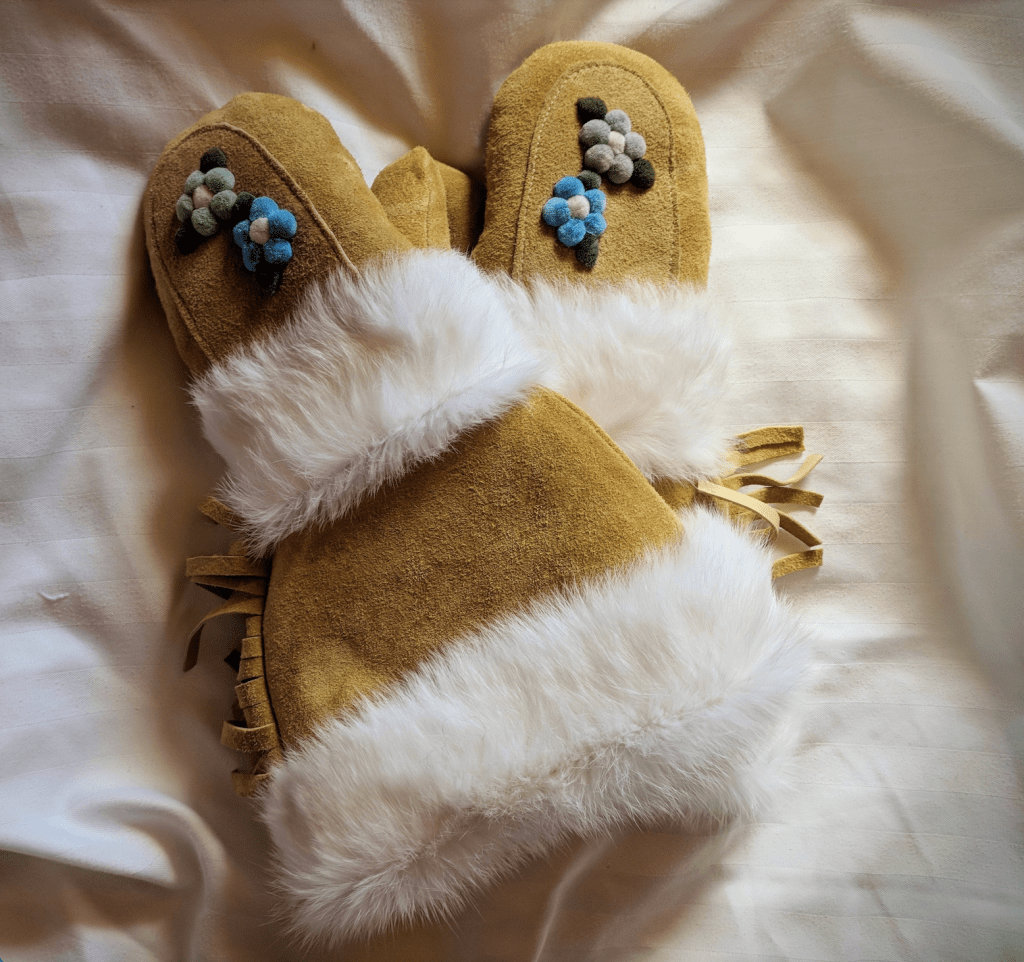
Historically, a person entering the skilled trades would have been an apprentice tradesman. Once their apprenticeship was completed, they would have become a journeyman. Upon mastery of their trade after years of practice and ongoing learning, then and only then, do they earn the title of craftsman.There is a history there, story with weight. So much more than ambience.
From the Fenceline
Consumers often ask why handmade goods cost more. Maybe instead of that question, consider, “What, exactly, am I paying for?” Is it simply the item? Or is it knowing where to knock?
When we purchase genuine craftsmanship — or support genuine stewardship — we are sustaining traditions of knowledge that markets alone are unable to value. Going back to Polanyi, intrinsic value can’t be fully capture by a price tag because the item represents something much larger than itself. Experience, dedication, memory, relationship, judgment, place. The closer we look at true craft, the more complexity we discover. Not a complicated supply chain or a robust marketing campaign.
No, what we see when we look at craft — and what’s missing when it’s been “craftwashed” — is evidence of the beautiful work of a human who spent years dedicated to mastery.
For more on Craftwashing, mastery and related subjects —
- Nicole Burisch, Anthea Black: From Craftivism to Craftwashing
- The New Politics of the Handmade, Anthea Black and Nicole Burisch
- Shop Class as Soul Craft (for all my Trades folks!)
This is a Living post, a post to share my thought processes, my experience and the philosophy that underpins our activities here at the homestead. It is not a how-to, “expert advice” or meant to reflect a wider experience than just my own, on my farm, here with my sheep.


Leave a Reply