It’s July. The sun is shining, the grass is green. . . why is the flerd eating hay?? They don’t like it, not at all, but for right now, deferring our grazing is the wisest choice.
On July 1st, we did something that maybe seems a little odd. I pulled all the sheep off pasture, in the middle of summer, while the green grass grew all around all around, the green grass grew all around. (Sorry, Pete).
So why’d I do it?
It seems counterintuitive. Isn’t summer exactly when sheep are supposed to be grazing?
Usually, yes.
The Big Idea
Regenerative grazing isn’t simply about putting livestock onto grass whenever it’s green. That would be easier, I’ll admit. You may have heard me say it before but if grass was easy, we wouldn’t be losing so much of it. Regenerative grazing, no matter what form you choose, is ultimately about matching what the plants are doing, what the soil is doing, what the weather is doing and — so important — what the parasites are doing. A regenerative shepherd will take all those various factors into consideration and then reach into their grazing toolbox to come up with the approach that —
- provides the most protection to the landscape
- provides the most nutrition for the critters
- poses the least amount of work for the shepherd.
See? Sounds easy, doesn’t it? What could possibly go wrong?
Okay. Here’s The Situation. . .
First, Pete Seeger. Now Will Smith. I contain oceans, pigeons.
At any rate, by the beginning of July we’d had an exceptionally wet spring. Since March, the data showed that we’d had 231.5mm of rain (there was some hail and — god help us — some snow in the mix as well. Quite a lot, actually). The ground had been saturated for weeks, my moisture metre was burying the needle every time I stuck it in the ground. The grass looked abundant but careful, close observation was beginning to tell a different story.
Most of our tame grasses — the Kentucky bluegrass, timothy, brome etc — had headed out and become mature, growth had slowed and the soil was stuck in this constant recovery cycle from all the precipitation. It was when I noticed several of the sheep coming back to their night pen with mud on their hocks (that’s the joint just above the hoof) that I thought to myself, “Uh-oh.”
So what was I looking at? Mud at the hocks on more than just a few sheep is worth investigating. It tells you that some areas of a pod may be in a delicate state — the soil profile was already saturated, and at least some of the continuing rainfall was lingering at or near the surface.
Why does that matter?
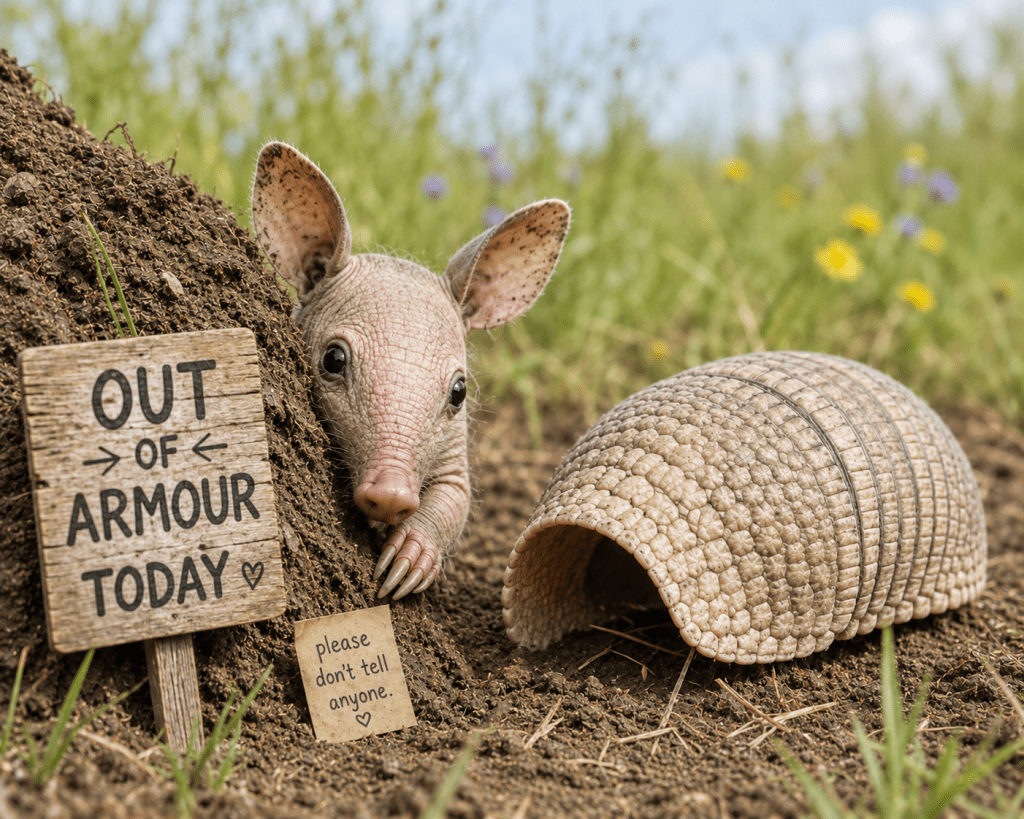
While we want hoof action — animal impact, it’s called — we don’t want to damage the surface of the soil. Wet, saturated soils are uniquely vulnerable, like an armadillo without its armour. The ground is tender and soft and repeated traffic — what we call pugging — can churn the surface, crush pore spaces, damage plant crowns and roots and compact the soil beneath.
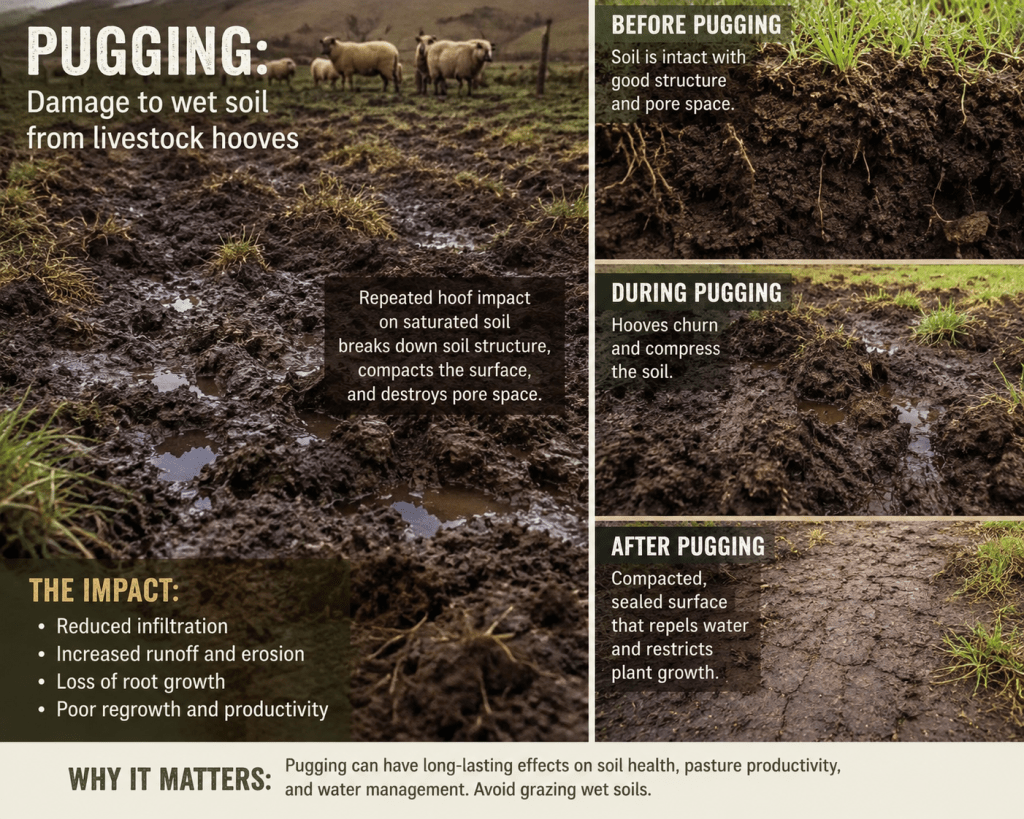
Once that damaged surface dries, it can become hard and crusted. Instead of infiltrating, the next rainfall may pool or run off, carrying soil and nutrients with it. In the worst places, plants struggle to re-establish and the damage can become a problem we have to actively repair. Sometimes in extreme situations, this soil condition is called “hardpan” and there are a range of strategies that farmers can use to deal with it. Hardpan becomes those barren patches one sometimes sees, where the ground is like iron and no root can grow.
If I can avoid it, I’m sure going to try. I’m a big believer in not having to deal with problems if I don’t have to.
Squiggly Grossness
On top of that, the end of June/beginning of July brought temperature spikes — it was warm, sister. When you combine warm temperatures with persistent moisture, you create ideal conditions for gastrointestinal parasites. Yech.
Thanks to our rotational system, we rarely have to deworm. The sheep don’t graze at ground level where opportunistic parasites like to lurk, ready to catch a ride to an accommodating digestive tract. I do a lot more than speculate though, I regularly run fecal egg counts (we gather a pooled poop sample and then it is immersed in a solution, swirled around like a fine Beaujolais until the pellets are thoroughly broken down, then some fluid — gross! — is siphoned off and put on a slide and so begins the laborious task of counting every. single. egg or beastie. It’s a dirty job but someone’s gotta do it.)
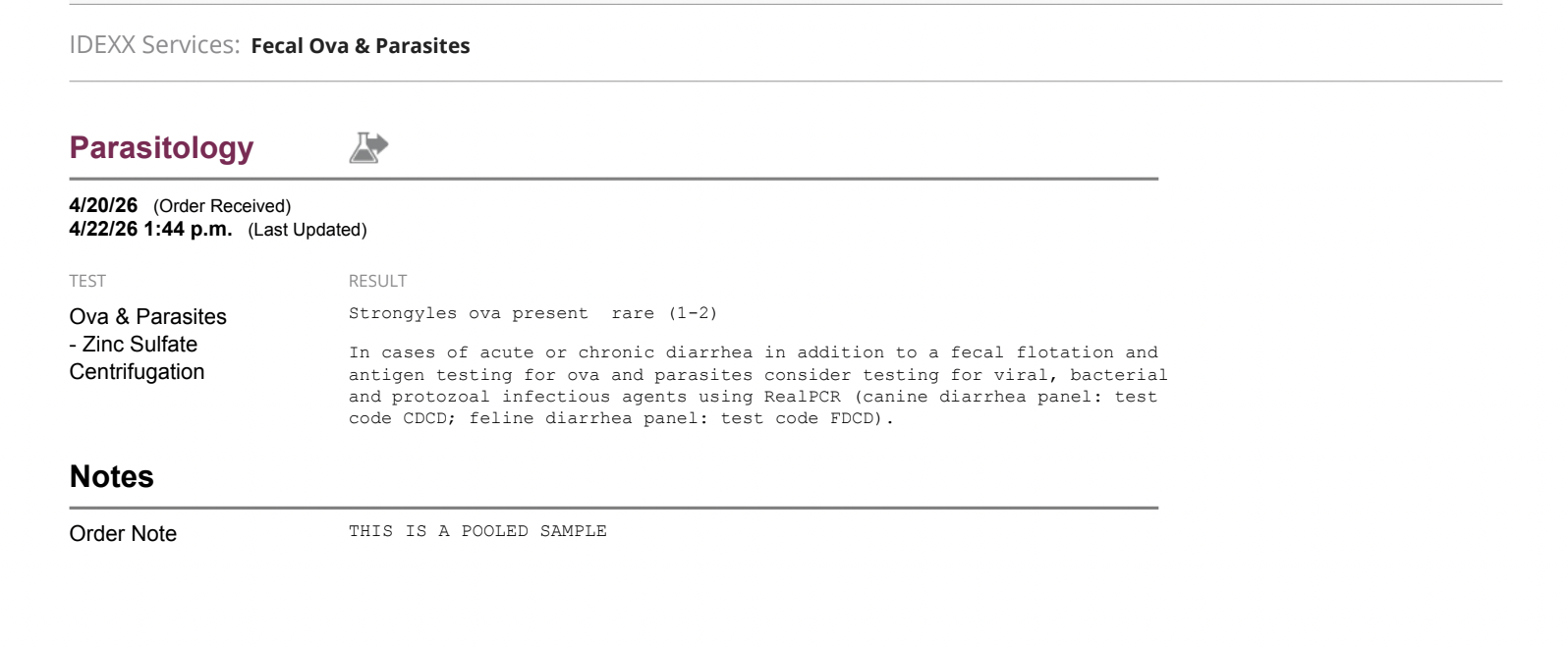
This is a sample of an April 2026 report. We generally do a pooled sample every six weeks or so. Occasionally we’ll do a special one if someone is looking a little peaky.
There are a range of parasitic nasties I worry about — the strongyles noted in the results there are a broad group, including the notorious barber pole worm, along with several other species that can cause problems. Unfortunately, some of these little buggers have shown an increasing resistance to dewormers. It is so much better — so, so, so much better — to simply not get into a situation in the first place. Warm, damp conditions are exactly what a lot of these parasites need to complete their lifecycle. . . Well, warm and damp conditions on the ground — and a host.
That would be the sheep. Let’s add this to the list of Things I Want To Avoid.
Too Many Vectors
Could we have continued grazing? Sure. In fact, if I hadn’t had a store of hay in the yard — ten bales left and counting — I wouldn’t have had a choice. I would have done the best I could to manage the risks.
But hay we had. So why risk damaging vulnerable soil while exposing the flock to warm, wet conditions that favour parasite development?
Sometimes good grazing management isn’t about asking, “Can we?” It’s about asking, “Should we?” Besides, a couple of our flock members had been over-indulging. A break would be good for them.
Ahem.
So the flerd went onto drylot with free-choice hay.
From the Fenceline
Giving both the pasture and the parasites nearly three weeks without sheep accomplishes several things at once.
• It dramatically extends the rest period for the paddocks, allowing plants to recover and rebuild root reserves.
• It gives the soil an opportunity to dry and regain resilience after an unusually wet start to the season.
• It reduces both pasture contamination and the flock’s exposure during a particularly favourable period for parasite development.
• It means that when the sheep do return to pasture, they’ll be grazing paddocks that have had forty to fifty days of recovery rather than twenty.
Just to be completely sure, I collected a pooled fecal sample before turnout so I could establish a parasite load baseline. I don’t expect problems, but good livestock management isn’t about waiting for problems to appear — it’s about making decisions before they do.
It’s one of the things I love about regenerative agriculture. Sometimes, the most productive thing you can do is . . . nothing. Nothing at all.
Healthy grass requires patience.
Healthy sheep require patience.
Sometimes the best gift you can give both is simply time.
This is a Tending post — a practical look at our tools, methods, routines, and on-the-ground decision-making. It’s not a one-size-fits-all how-to, and it isn’t meant to substitute for local knowledge or professional guidance. It’s just what we’ve found useful and what we’re doing here on our farm, in our conditions, with our sheep (and alpacas), written down plainly in case it helps. For more about why we do things the way we do them, the philosophy that informs our process, you’ll find those posts in Living.


Leave a Reply