If you’ve been paying attention to any kind of species — be they dogs, poultry, pigs or sheep — you may have seen that individuals rewarded in the show ring often have traits that filter down (eventually) into the general population. What is the relationship between livestock shows and the animals we see in the paddocks and barns around Canada? And when it comes to endangered animals, what are we trying to preserve?
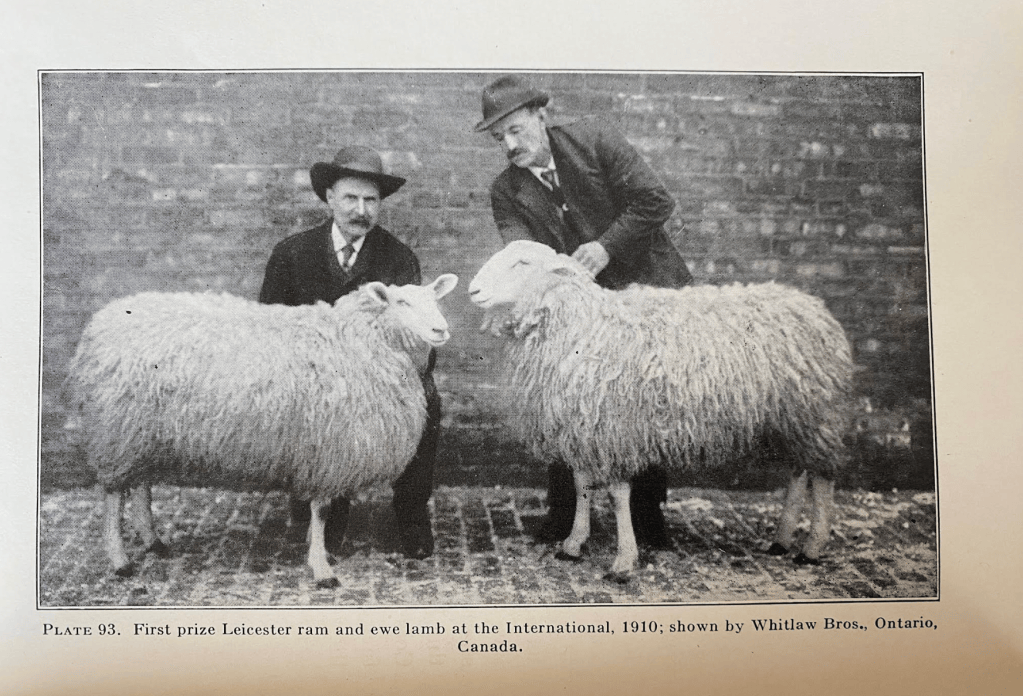
When Matthew and George Culley were developing the Border Leicester back in the late 1700s, they were living in Northumberland in England in a time of incredible social upheaval. The Seven Years War had ground down to an end and with that life-and-death struggle over, a growing surge of newcomers was leaving the countrysides and heading for the cities where jobs in the factories of the burgeoning Industrial Revolution awaited.
Farmers like the Culleys – and their mentor, Robert Bakewell — saw an opportunity. They wanted to develop breeds that would feed the rapidly expanding city populations and, in a harbinger of what was to come, they wanted to do it as efficiently as possible. It wasn’t just about joints of lamb for the spit or mutton to fill pots, these fellas were thinking in systems — they wanted to turn out a reliable product using a reliable method which required reliable critters.
Enter “The Breed Standard.” Although not formalized until the Victorian era, thanks to the record-keeping efforts of people like the Culley brothers and Bakewell, the formation of what a specific breed (be it sheep, cow or chicken) “ought” to look like was beginning to take shape.
As I sit in my paddock looking at the ewes hard at work in their breakfast hay pile under a sky-wide Chinook arch, I often wonder if the animals in front of me would be recognizable to Matthew or George were they to wander from the distant past and into 21st century Alberta. Once we all got over the shock, would these visionaries look at Luther or Lyle and say, “Ah yes!! A Wedder of Mr. Culley’s Breed!”
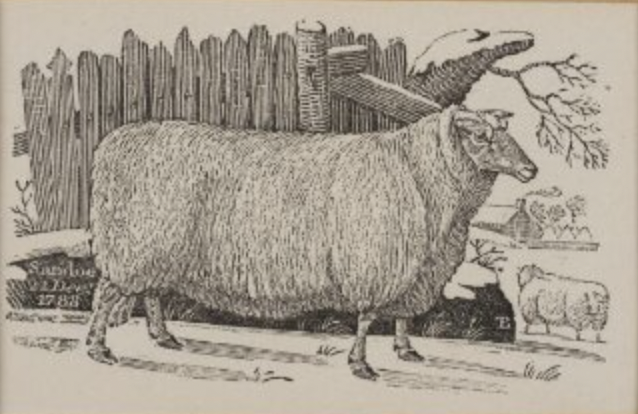
Or would they look, clutch their pearls and gasp, “Mary, Joseph and Sweet Baby Jesus, WHAT do you call THAT??”
And. . . does it matter?
Not What They Used To Be
Breeds change, that’s just a given. But are those changes a positive for the animal? What does the show ring have to do with real life?
Let’s look at English bulldogs for a second. Historic photos of the bow-legged breed clearly show a very different profile than the ones we often see today. In fact, selective breeding to exaggerate particular traits — like the smushed-in (brachycephalic in clinical language) face — have actually led to such poor welfare outcomes that countries like Norway and the Netherlands have taken the extraordinary step of curtailing or even banning breeding.
I bring this scenario up to highlight a trend – breed characteristics that start being rewarded in the show ring have a history of being exaggerated by breeders outside the ring.
In livestock, show ring winners often become more valuable — their progeny sell for higher prices. Show ring results, therefore, have a real economic impact for breeders.
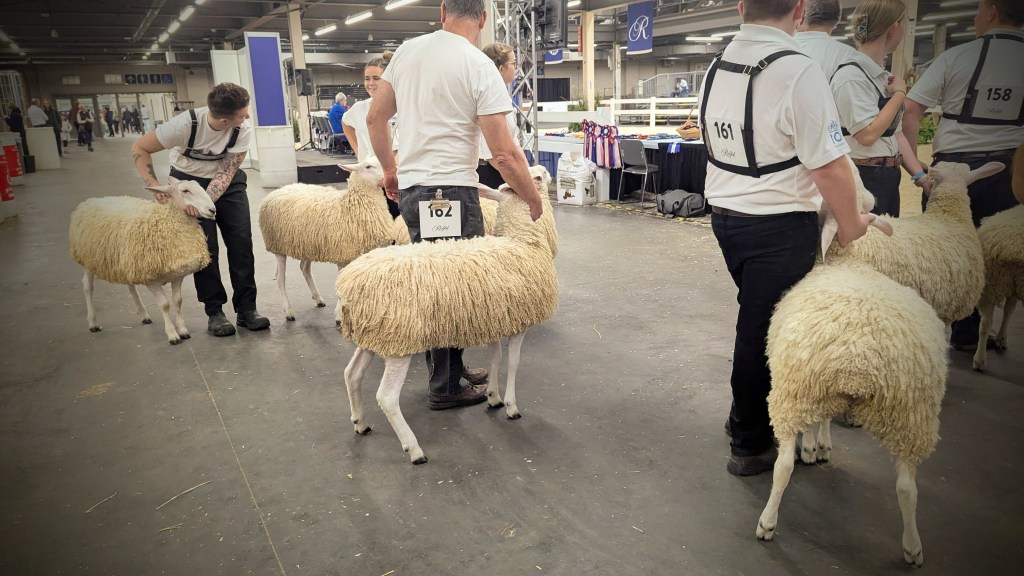
Now obviously, responsible breeders will want to ensure that their show string animals are sound, well-built, athletic (for males especially, breeding requires a fair bit of burpee-style bouncing around. Breeders want boys who can handle the exercise) and robust. So far, so good. And when it comes to rare breeds or animals that are in need of conservation and/or protection, soundness and longevity must be top-of-mind.
So why then, pray tell, do we see an increasing number of animals whose structure and appearance have diverged so sharply away from the historic standard? What’s going on here?
How’s The Air Up There?
I recently saw a photo of a Suffolk ram on a Facebook page. “Big Bad Joe” was the winner of the “Largest Ram” contest and new record holder weighing in at a whopping 568 lbs. Breed standards put the average (obviously there are exceptions) Suffolk ram at somewhere between 250-300 lbs. Big Bad Joe clearly blows those stats right out of the water breaking the previous record set at 507.5 lbs set in 2014. I wonder how long this record will stand?
Now obviously Joe was an outlier in a contest that was designed to highlight the upper (for now) strata of sheep size. However, a perusal of show guidance provided to young sheep show participants highlights words like “width of chest,” “extended through the front end,” and favour a square, heavily muscled back end. In real world terms, the risks for an exaggeration of these traits can lead to downstream real problems. A wide-chested ram can pass those traits along to his offspring leaving the labouring ewe with potential life-threatening dystocia. The “elegant profile” of that front-end extension just means a long neck that adds a bit of height to the animal. Animals that are excessively tall may find the skeleton insufficiently robust to manage the height — often euphemistically called “fine boned” — leading to arthritis and lameness in pasture settings. And finally — and controversially — that square behind often results in a “slick” dock of the tail, a tail that is surgically removed right at the body wall, leaving the lady-parts or anus fully exposed and without protection from marauding insects. The most recent studies I could find also connect extreme tail docking to higher risks of rectal prolapse should the animal strain doing any number of normal things, like cough. Even for those animals who never experience prolapse, new research is positing that animals that undergo banding for tail docking at a very young age — generally just a day or two old — may develop chronic pain as a result, even with the pain-mitigating lidocaine bands.
Just as a bit of inside baseball, the upcoming 2027 All Canada Sheep Classic show and sale will be hosted in Vermilion, AB. At the same time, the province of Ontario is revising its animal welfare laws just after Alberta did the same. The heightened scrutiny over the issue of cosmetic procedures like tail docking has some members of the show fraternity on the defensive. Best to batten down the hatches on that one, friends. And stay tuned.
About Those Ears. . .
My own breed is the Border Leicester, a developed breed, not an ancient breed like the Cotswold or Soay who can trace their histories back thousands of years. Thanks to the efforts of Bakewell and the Culleys, we have a pretty good idea of how the breed began which makes tracing the changes that have happened over the years fairly easy.
The breed is described by one of the Culleys as follows –
The head of the ram should be fine and small, his face white, nostrils wide and expanded, his eyes prominent, and rather bold or daring, ears short and thin, his collar full from his breast and shoulders, but tapering gradually all the way to where the neck and head join, which must be very fine and graceful, being perfectly free from any coarse leather hanging down; the shoulders broad and full, which must at the same time join so easy to the collar forward, and crops backward, as to leave not the least hollow in either place; the mutton upon his arm or fore thigh must come quite to the knee; all his legs white and upright, with a clean fine bone, being equally clear from superfluous skin and coarse hairy wool, from the knee and hough downwards; the breast broad and well formed, which will keep his fore legs at a proper wideness; his girth or chest full and deep, and instead of a hollow behind the shoulders, that part, by some called the fore flank, should be quite full; the back and loins broad, flat, and straight, from which the ribs must rise with a fine circular arch; his belly straight, the tail well set up, quarters long and full, with the mutton quite down to the hough, which should neither stand in nor out; his twist deep and full, which, with the broad breast, will keep his fore legs open and square; the whole body covered with a fine thin rosy pelt, and that with a fine long bright and soft wool.
“Observations on Livestock” p. 73
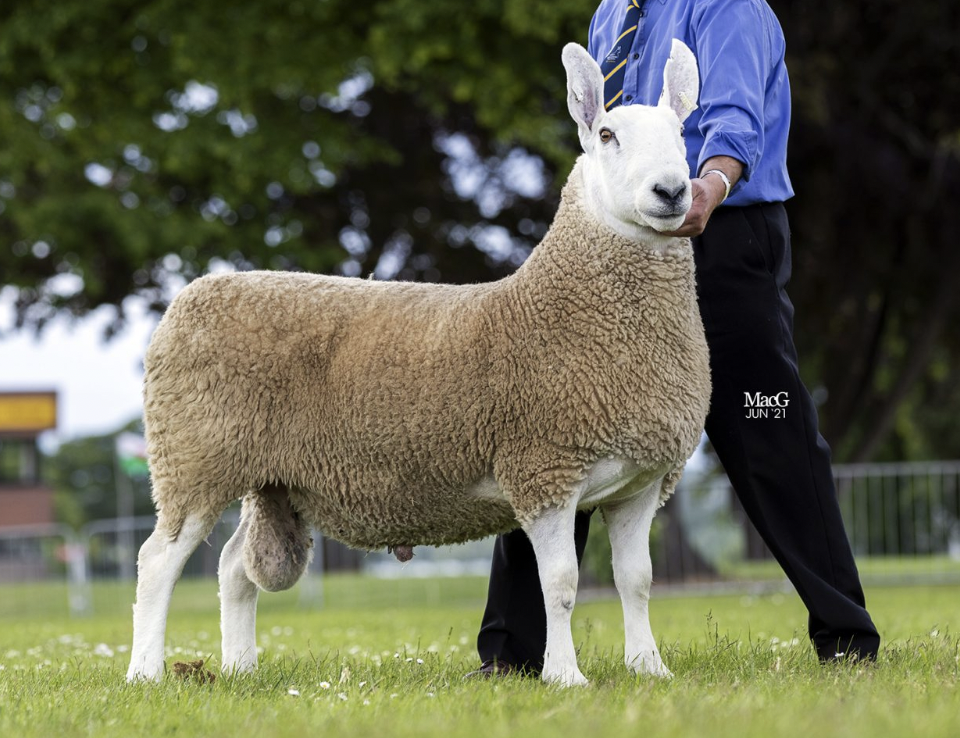
Take a specific look at what that description — from the originator of the breed — has to say about the Border Leicester’s ears. To whit, “ears short and thin.”
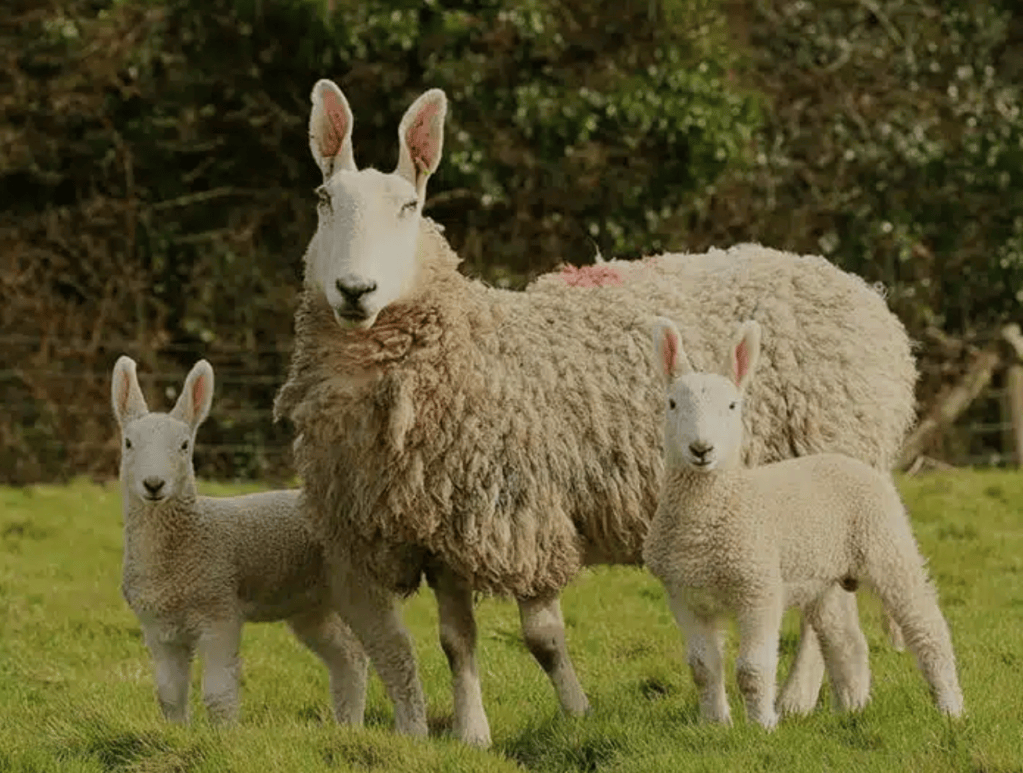
Photo from the Rare Breeds Survival Trust.
This is the modern Border Leicester from its country of origin, the UK. I wonder what the Culleys would make of it? How did we go from Culley’s “short and thin” to what is arguably the most recognizable characteristic of the modern breed? Is there a jackrabbit somewhere we need to talk to?
Now, of course standards shift and evolve over time. And there are, notably, regional variations. When the Border Leicester was exported off the north Atlantic island of Great Britain to south Pacific islands of Australia and New Zealand, those flocks were sequestered from other populations and as a consequence, the Border Leicester in those countries doesn’t . . . look. . . like that.
Ditto the Border Leicester in the United States and Canada. In all of these regions, different interpretations of the Border Leicester have emerged over generations. In a conversation a few years ago with a Border Leicester breeder in the south of England, he candidly admitted to me, from his lounge with the curtains drawn giving the whole chat more than a whiff of back alley dealing, that rams in his region had crept over the 400 lb mark and the heavier sheep were developing skeletal conditions as a result. “Fallen pasterns,” he muttered soto voce. “Some don’t see 6.”
As in, years of age.
As far as I can tell, the weights he outlined are not typical in Border Leicesters outside the UK. He further confided that many of the breeders of his acquaintance relied on rams from just a handful of show-successful barns for their breeding stock leading to potential consequences from a shallower-than-ideal gene pool. . . A scenario Bakewell himself confronted.
The Myth Of Bigger = Better
Show trends come and go of course. But given the gradual expansion of animals over time, let’s map out the weights for the different regions, just for fun. O come on, you know you want to.
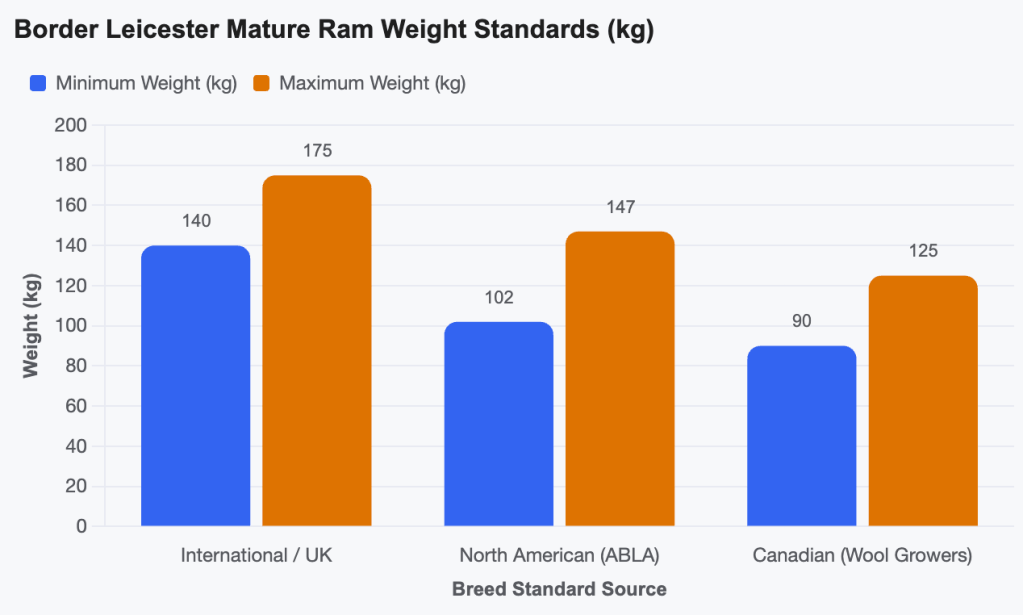
All figures have been sourced from the breed standard provided by each jurisdictions Border Leicester registration body or as otherwise noted.
Those weight discrepancies are significant. And there are real world implications including the biomechanical issues my shifty shepherd mentioned.
Let’s start with the basics — bigger sheep need more fuel. I ran the numbers through ChatGPT (trust me, this is far more reliable than if I gave it a go) using a formula used by the FAO. This is what it came back with —
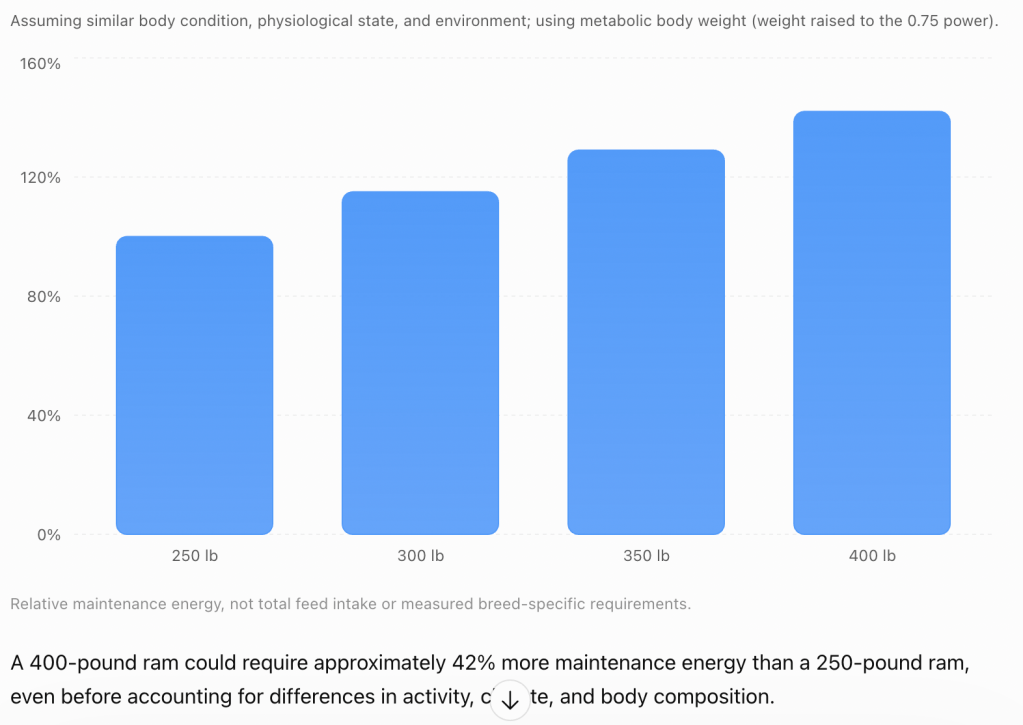
Poor Joe. In a feed scarcity situation, he might find himself in difficulties. And it’s more than just a hypothetical in regions such as the Canadian prairies or the mid-west. Here, drought factors are well-worth considering, particularly if one of the reasons a shepherd decided to forgo cows was to keep feed bills and forage use manageable. If sheep as a critter are getting bigger and heavier, you might be closer to managing heifers than you ever intended.
And it’s worth remembering that for at least some of our historic and endangered breeds, their very reason for existing is because they could make good use of scant forage or thrive in harsh environments. If breeders, chasing size or weight, are rewarded for animals that can no longer perform in those scenarios, or they have to be so carefully managed that their own natural behaviours and tendencies don’t get them into trouble (sigh, my Border Leicesters, a hardy forager, get fat walking past green pasture), the question must be asked: “What are we preserving them for??”
From the Fenceline
When breed standards were first developed, they were intended to provide guidance to shepherds and farmers who wanted to participate in an evolving market that required greater predictability. Nowadays, breed standards are largely confined to the show world and are used to identify animals that conform to an accepted standard of what amounts to aesthetics, or the way a breed should look. There’s a “type.”
And while those standards have regional variations and do evolve over time, they are also subject to short-term, flash-in-the-pan trends. Just as some years hemlines are up and other years hemlines are down, in some years and in some jurisdictions, size may be rewarded while in others, a particularly blocky frame may walk away with the ribbons. In all cases, breed standards and show results must be carefully balanced against the overall health and long-term viability of the breed, particularly for those breeds on the decline.
For Border Leicesters, as for Cotswolds, Lincolns and others of the rare and endangered fraternity, we must be 1000 per cent clear about what we’re saving and why.
At the end of every show, when the wood chips have been cleared away and the temporary pens disassembled, when the sheep are back in their hooded jammies munching cud quietly, ribbons and show standings can only ever be a snapshot from one moment in time.
No show can accurately judge any animal’s resilience, longevity or productivity, those are characteristics that can only be expressed over many years of a happy, healthy and long life.
The show ring is a snapshot, the animal is a lifetime.
For those of us who love our purebred sheep, who are involved in breed conservation and spend our free hours sucking the end of our pencils as we eyeball things like coefficients and tracking down potential outcrosses, keeping an eye not just on what gets rewarded on the day but will bring the greatest pay-off over time is key. Our breeds need our husbanding and care.
Don’t get distracted by the ears, the size, the slick-shear or the showmanship. Take a step back. Take a deep breath.
And then, when you’re sure of what you’re preserving and why, then and only then, make your choice.
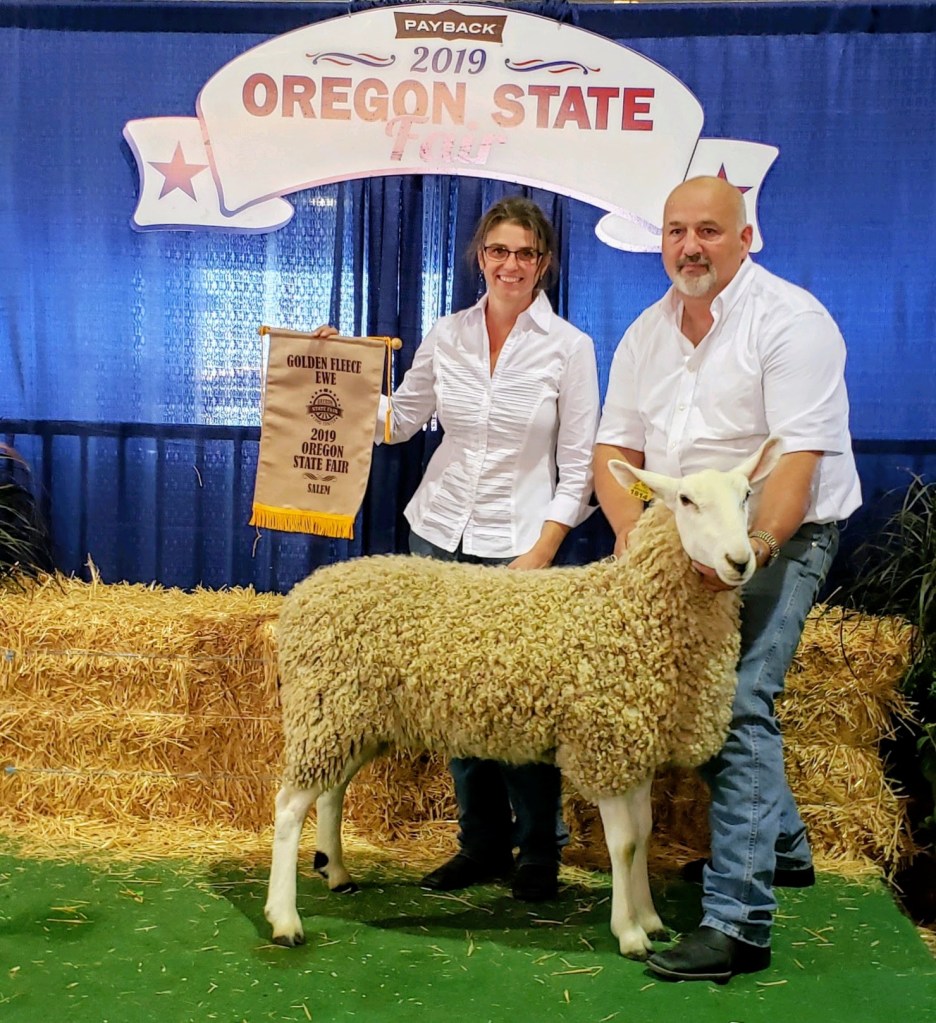
In 2024 I asked all the questions — or as many as I knew at the time — and brought our current breeding ram north from Distracted Acres in Oregon. Our new flock daddy, while not a show winner himself, comes from show winning lines (I think this is either a half-sister or his mom. . . ). Thanks to his shepherds and their hard work, I have been delighted with the contribution he’s made to my small flock.
This is a Tending post — a practical look at our tools, methods, routines, and on-the-ground decision-making. It’s not a one-size-fits-all how-to, and it isn’t meant to substitute for local knowledge or professional guidance. It’s just what we’ve found useful and what we’re doing here on our farm, in our conditions, with our sheep (and alpacas), written down plainly in case it helps. For more about why we do things the way we do them, the philosophy that informs our process, you’ll find those posts in Living.


Leave a Reply