It’s Thanksgiving Monday here in Canada and as many of us roll around the house in various states of repentance, it seems as good a time as any to consider Feeding Sheep. Specifically, heritage breed sheep. What’s the same? What’s different? And when you factor in our Canadian climate, what gives??
I came to sheep after I’d spent several years wading through equine nutrition. My very first horse, Rooster the Indomitable, came loaded with some pretty hefty feet issues — “hefty” being the key word there. Rooster, bless him, was a 14.3hh Quarter Horse who was constitutionally incapable of passing up a meal. “Enough” was not a word my grand old man understood. And after too many years of being passed over for flashier horses in the paddock, Rooster was fast waddling past chunky and headed directly to obese.
When he came to me, Job One was getting some of the weight off him.
Setting The Terms
Now far be it from me — as a lady who knows a thing or two about hauling a little excess baggage around with her — to body shame anyone. This post isn’t about the aesthetics of a curvier figure. This post is what happens to critters, and specifically heritage breed sheep, when they’re allowed to let their appetites run unchecked. Thanks to Rooster, I’d had some very expensive lessons in this department. Unfortunately, they didn’t stick.
Sigh.
Border Leicesters are a heritage breed sheep. What does that mean? The Livestock Conservancy defines a heritage breed as —
“Heritage breeds are traditional livestock breeds . . . Traditional, historic breeds retain essential attributes for survival and self-sufficiency – fertility, foraging ability, longevity, maternal instincts, ability to mate naturally, and resistance to diseases and parasites.
~ The Livestock Conservancy
Many breeds used in large scale agriculture have been specifically selected for intensive production including rapid growth, feed efficiency, continuous milk or egg production, or other targeted production characteristics. Heritage breeds have genetics that are more “well-rounded.” While breeders may select their animals for certain characteristics, they’re not selected so narrowly so as to lose other valuable and biologically important characteristics.“
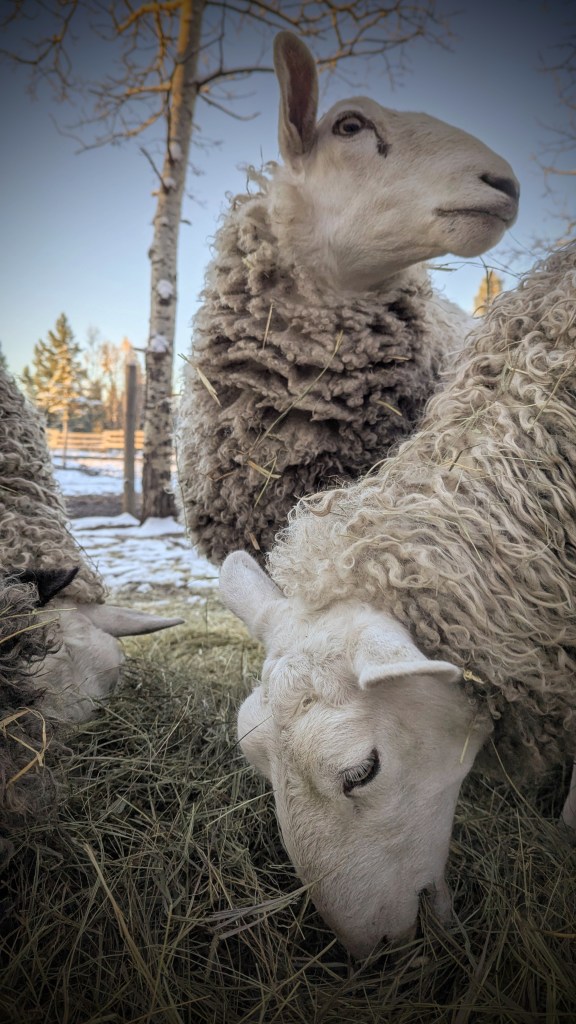
That second paragraph is important. Heritage breeds, like the Border Leicester, Cotswolds, Shropshires, Southdowns and others, are fundamentally different from the commercial breeds — sometimes called terminal breeds though commercial sheep are often crosses of various terminal breed animals — you’ll often see in larger-scale agricultural enterprises. Like many heritage breed species, Border Leicesters have been bred over the centuries to do a lot of things very well. Modern breeds tend to focus on doing one or two things particularly well — put another way, heritage breeds are generalists, modern commercial breeds are specialists.
And no, you can’t really feed them the same way.
Too Much Of A Good Thing
Now let’s go back to my Rubenesque sheep lolling around in my fields and paddocks. Despite the very clear object lesson that was Rooster, in my inexperience, I overfed my sheep when they started arriving. In fairness to me, I was but a baby shepherd and my first two years of sheep included two particularly harsh winters. If you’re gonna make a feed mistake, over-feeding is much better than under in those conditions.
Back in 2019, Claire and co. — you’ll be introduced to Claire in my upcoming book — took to her generous portion like a duck to water and before too long, I had some floofy ladies that were approaching truly formidable proportions. I didn’t really notice it myself — I’m preconditioned not to notice such things — but at shearing day, my strapping shearer gave me a pointy look from under his glowering eyebrows and I took note. Not too much, it must be said, but a little.
Fast forward a few years later and I think I’m now doing a much better job of working out the various tools that help keep my sheep healthy. Things like Body Condition Scoring, hay analysis, lavish use of barley straw and various feeding styles and options. While some of those older girls from the original cohort remain firmly in the zaftig category, my younger ewes, the ones who have the greatest benefit of my ongoing learning, are much more appropriately scaled.
Shapes And Sizes
While sheep come in many different shapes and sizes, one thing is true across the board – fat sheep aren’t as healthy as they might be. The underweight sheep is at risk — something we can all agree on, I’m sure. Unfortunately, the ewe at the other end of the spectrum is too. What kinds of things are we talking about?
- Lameness. Sheep can develop laminitis, just like Rooster did. And just like my grouchy Quarter Horse, laminitis can be life-threatening.
- Dystocia/difficult or obstructed births. An over-conditioned ewe can actually have more difficulty lambing than an appropriately-sized ewe. Fat deposits in the abdomen can compromise the birth canal making birth harder and leading to a higher percentage of stillbirths.
- Decreased fertility. For both ewes and rams, over-conditioning can lead to poorer breeding outcomes — in rams, this can mean a lower-quality semen and just poor biomechanics (breeding is work, my friends) and for ewes, this can mean difficulty with mammary development and nursing.
- Ketosis/Pregnancy Toxaemia. Fat ewes exposed to sudden reductions or changes in their feed ration or to stress can develop preg tox. Their bodies go into a kind of metabolic shock which can lead to liver failure.
- Generalized pain. When you’re too big, the stress on joints and bone structure is higher. Additionally, particularly in winter when conditions get slippery, a fall or slip can lead to injury and slower recovery times.
- Arthritis. Long-term strain on the skeletal system from too much weight can lead to the development of arthritis.
- Heart and blood pressure strain. Just as in humans who’ve been on good pasture, fat sheep will put more stress on the cardiac and circulatory systems, potentially leading to failure. This study also draws connections between maternal obesity and impacts to succeeding generations of offspring.
When it came to my own flock, there was more than one example of “too much of a good thing” wandering around.
Where The Boys Are
There is one other thing to consider when it comes to feeding sheep, and the boys in particular. Thanks to what I can only call a design flaw (sorry Jesus), the male sheep has a weird U-bend in their urinary tract. Under ordinary circumstances, this isn’t a problem. However, when feeding male sheep (also male goats), this kink in the plumbing has to be carefully managed and we do this with our feed and mineral choices.
I learned this the hard way. Clarence was a beautiful little ram lamb born to Claire in 2021. He was her sole lamb that year, her absolute pride-and-joy. He sailed through those early weeks of lamb-hood – frankly he put weight on at a rate I haven’t seen since but his mother was doting and had a bag like a Holstein so not very surprising, really. I was very, very partial to Clarence. He was surgically castrated at 90 days at one of our local vet clinics because I knew about the risks of urinary calculi and the research said that later castration with all the appropriate pain relief could mitigate the risk of that condition developing. I’ve always been someone who particularly enjoys wethers (castrated male sheep) and I believe they have a vital role to play in mixed flocks like mine. I intended to keep Clarence for all his, hopefully, very long life.
Alas, ’twas not to be. At that time, I was using a blend of alfalfa pellets and barley to entice my flock back into the night pen for their evening hours. It was a rich blend that my flock seemed to appreciate but unfortunately, for Clarence at least, it was building a problem in that S-curve, the sigmoid flexure, of his urinary tract. As he piled the weight on, first from his obliging mama and secondly from a diet of good hay and an evening top up of alfalfa/barley, a surplus of phosphorus from an unbalanced and overly-rich diet was collecting and hardening in his urinary tract, leading to a blockage.
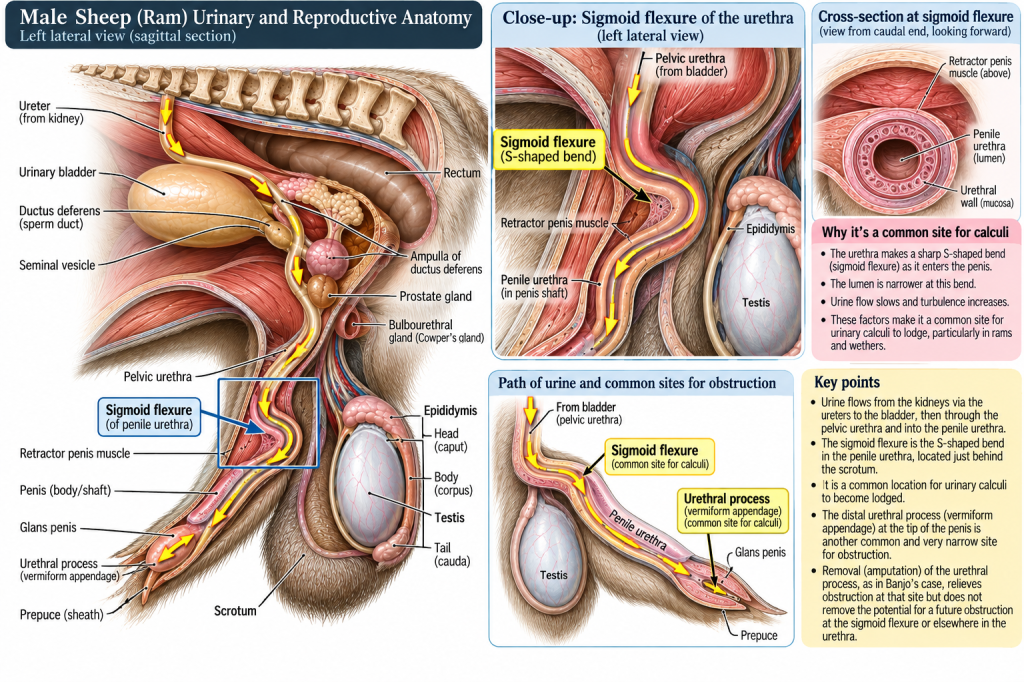
Clarence was my first lesson in just how important diet is to sheep and although urinary calculi has not been clinically linked to obesity — there aren’t any studies that I’m aware of that say fat boys develop the condition any more frequently than leaner boys do — studies have definitively linked better outcomes to males in an appropriate weight range. The more over-weight the big guy is, the poorer the chances of recovery.
Despite very competent veterinary support, I wasn’t able to save Clarence. His loss hurt and I grieved him for quite some time. It was this loss however that sent me in search of nutritional support which I found at Blue Rock Animal Nutrition in Innisfail, AB. For an annual retainer, I have access to some of the best science available.
This became relevant again almost two years ago when a producer of my acquaintance purchased a beauty of a boy from me. A very experienced sheep farmer, for many years he’d raised Rideaus, a commercial, high-production breed. Ewes from this particular made-in-Canada sheep breed are quite capable of having small broods of lambs — as many as four or five at a time. Due to the high nutritional needs these ewes have as their bodies busily grow a mess of lambs, supplementary feeding is required — grains of various kinds including barley, soy and/or corn in addition to rich alfalfa hay are routinely included in their flushing/gestational rations.
The young ram, just a gorgeous boy, was folded into the on-farm procedure and unfortunately, about a month later he was dead — urinary calculi.
Both my own and this producer’s experience are examples of the risks of an unbalanced feeding program. When it comes to heritage breeds, the simple truth can really be distilled to this major point:
Heritage breeds can have nutritional needs that are significantly different from modern commercial breeds, even at the same life stage (ie open/maintenance, gestation or lactation). Many of these historic sheep breeds were developed under conditions where the availability and quality of feed could vary considerably. As a result, it’s critically important that any ration take breed-specific differences into account.
In order to help explain some of what I learned through both experiences, we now include this “Safe Feeding Guide” (see document below) with every breeding animal that leaves the homestead.
Baby, It’s Cold Outside
Now that you know more than you ever thought possible about the male urinary tract in sheep (Hi Bartek!! Also, you’re welcome), let’s move along, shall we?
The final consideration for this particular Tending post has to do with the one thing we Canadians always have top-of-mind. Yes, we’re talking weather.

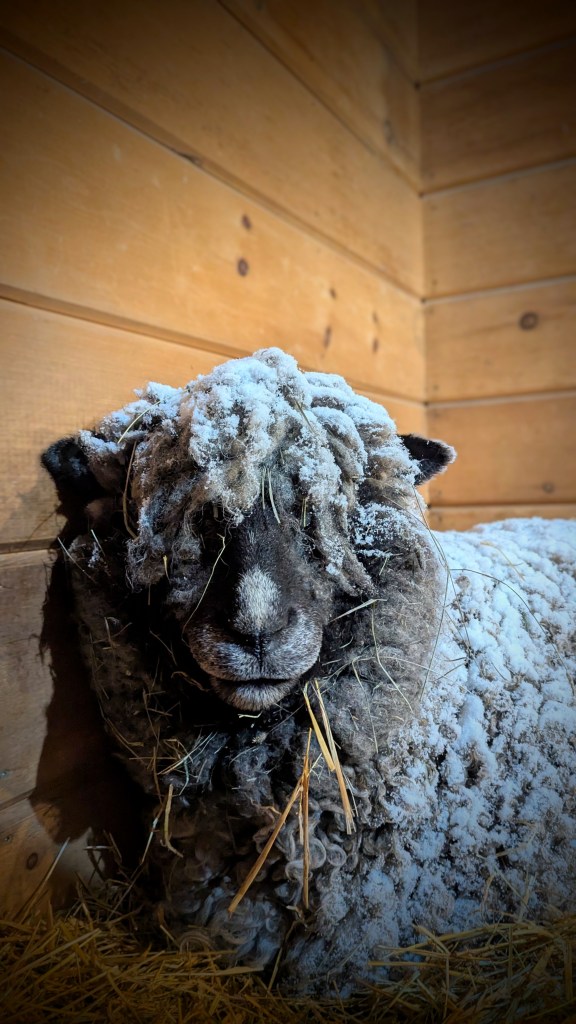
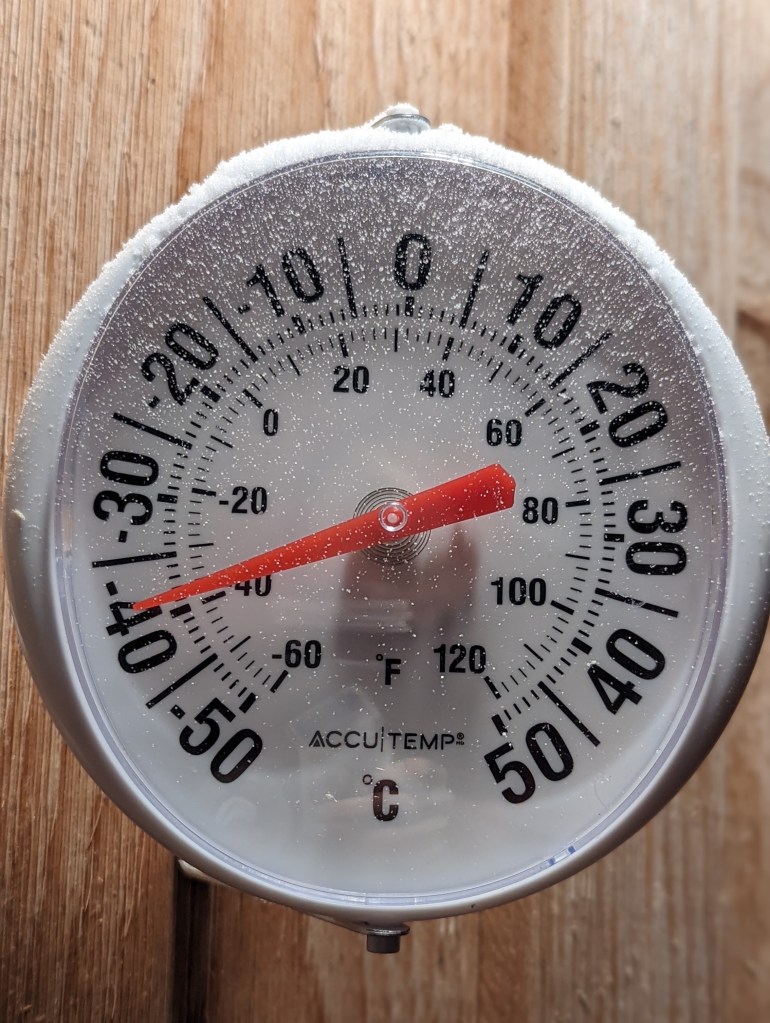
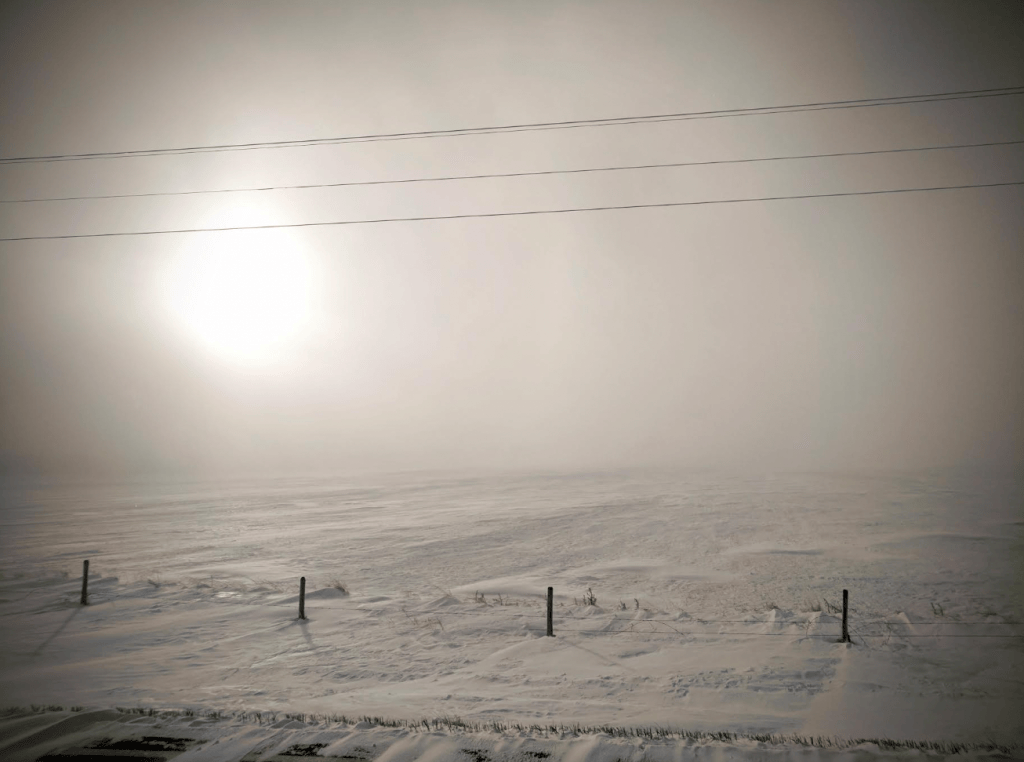
I live in Alberta. Our last frost was July 8th. JULY 8TH. I can barely contain the oceans of rage that sentence sets off in my SW Ontario-Zone 5 brain. Here, our growing season is very much a “blink and you’ll miss it” kinda thing. Further, our lows can crater in the -36C range (and it can stay there, when the polar vortex is feeling particularly unkind, for weeks). Further, my flock has access to out-of-doors in all weather but the most extreme (the number of days any of my sheep are confined to quarters could be counted on one hand) and so I feed for those conditions.
Mercifully, most of the time things tend to be dry as often times, livestock struggle most when temperatures are more moderate but humidity levels are high. Give one of my ladies a -30C day with a blue sky and no wind and she’ll ignore the world and carry on with life. If it’s -10C but blowing and wet, the poor thing will huddle in the barn and grimly question her life choices. In those conditions, feeding along with secure shelter and lots of fresh water, is what keeps all systems go.
There are an abundance of winter feeding guides available for sheep farmers looking for advice. What I have found in my particular circumstances is that my Border Leicesters generally don’t need the same kind of groceries their higher-production cousins may. Hay analysis helps me to gauge portion sizes and, when the temperatures or conditions are particularly difficult, I often will provide extra hay rather than supplement with grain. The flock also has access to unlimited barley straw, particularly in the overnight hours.
Taken together, this approach has given me consistently reliable results, confirmed with a session on the scales when possible and regular BCS evaluations. I am not experienced with commercial sheep or crosses and those results may be very different than my own.
From the Fencepost
If you take one thing — just one!! — from this post, I hope that it’s the need to carefully evaluate your feeding program for the animal that’s in front of you. Feeding regimens are not transferable between flocks — what was bread-and-butter for one farmer may not work for you. Add the wrinkle of heritage breeds to the mix and it’s a wise shepherd who is willing to go back to the beginning and make themselves a student again. The risks of getting it wrong can be a high price to pay for sticking with “This is the way we’ve always done it.”
Whatever you decide to do, taking a deep dive into feed science is inevitable. Minimizing feed waste, managing weight, minimizing systemic and biological issues that can come from inappropriate feeding, improving animal welfare, protecting your feed dollar and the peace of mind that comes from doing the best you can for the animals under your care means that chemistry (gag!) and biology (oof!) are part of the program. No one is an expert at everything — not possible, don’t try — so finding good help is essential.
To the journey, I can only say, “Bon appetit!” Or as Maude and the rest of the ladies are more likely to say, “Bottoms up!”
Safe Feeding Guide
This is a Tending post — a practical look at our tools, methods, routines, and on-the-ground decision-making. It’s not a one-size-fits-all how-to, and it isn’t meant to substitute for local knowledge or professional guidance. It’s just what we’ve found useful and what we’re doing here on our farm, in our conditions, with our sheep (and alpacas), written down plainly in case it helps. For more about why we do things the way we do them, the philosophy that informs our process, you’ll find those posts in Living.


Leave a Reply