I’m preparing to head to the Cultivating Resilience Conference on October 27th. The panel I’m on is called, “Food Security, National Security & Canada’s Agricultural Future” and the description is, “Through diverse perspectives, the conversation will examine how the sector can strengthen food sovereignty and resilience while positioning Canada for long-term growth and impact.”
. . . Right, okay then. No pressure.
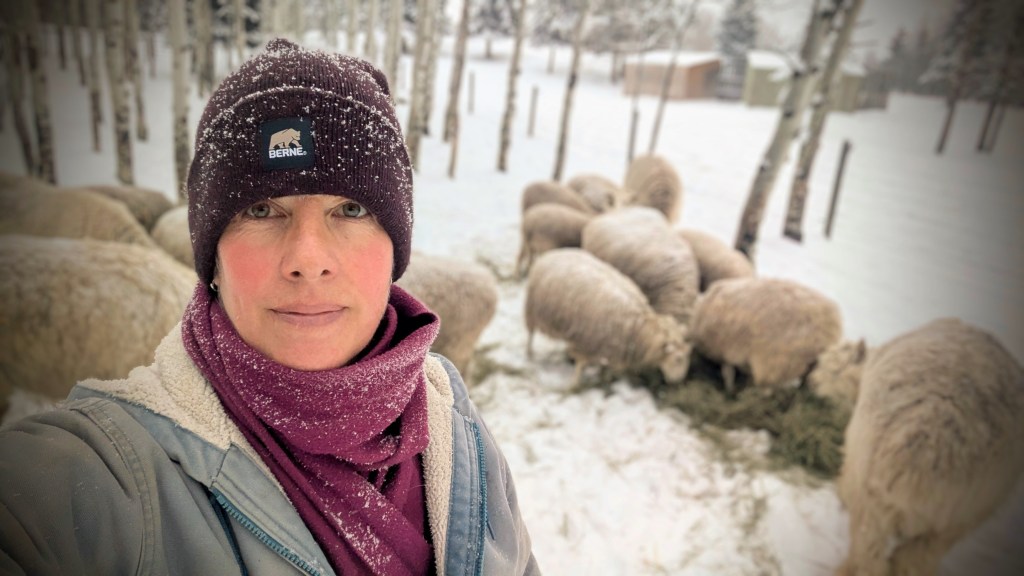
That’s a helluva prospectus for a simple sheep farmer.
On the Friday before the panel, I sat at my kitchen table and eyeballed the other talking heads in their various zoom squares. It was hard not to feel intimidated, particularly as they spoke about their education and accomplishments. MBAs, fellowships, entrepreneurs, millions of dollars in assets . . . yikes. But fortunately, my inferiority complex had kicked in several days ahead of the conference call and I had come prepared. When they made it round to me and the panel moderator asked what I wanted to talk about in context of policy, resilience and security, I was ready. You might say, I was primed.
“If we don’t have young and new entrants into agriculture, none of what we want to talk about is going to matter. If we want agriculture to have a real future in Canada, we need to talk about how to make farming possible for people who aren’t going to inherit the family farm.”
There. Take that.
So, What’s Stopping Them? Introducing Three Barriers To Entry
Barriers to entry are defined as operational, legal, financial or political/functional barriers that make it extremely difficult or impossible for new participants to enter a sector and compete with already-established players. When it comes to farming, I’ve got three in particular I want to tackle over the next several posts —
- The Knowledge Barrier
First-generation farmers often enter agriculture without the inherited knowledge, mentorship, professional relationships or the practical experience that multigenerational farm families have accumulated over decades. This knowledge barrier can manifest itself in ways that have real implications for, among other things, best practices, animal welfare and farmer mental health. Limited or no access to affordable extension services, veterinary expertise or technical support can leave it up to new entrants to acquire this knowledge themselves, often at considerable financial cost and with consequences for animal welfare, productivity and farm viability. - The Financial/Funding Barrier
Agricultural financing and public funding programs often favour established farms with existing revenues (ie “Sales over $25,000 annually”) and assets. Government programs are frequently set up to prefer farms and producers with the capacity to provide matching funds, well outside the reach of most start-ups. Defining agricultural success through production, profitability and growth alone, there is a risk of excluding emerging or alternative farm models whose primary contributions are within conservation, food security, community well-being and/or ecological resilience. - The Land Barrier
Rising land values, agricultural consolidation and competition from established farm businesses make farmland increasingly out-of-reach for first-generation or new entrant farmers. Increasingly, farm assets are being used to finance further purchases — land is being given as collateral to buy more land. As land values increasingly trend upwards, new entrants and first generation would-be farmers are left warming the bench and unable to get on the field.
There are probably many more barriers to entry than these three. But this should give us enough to get started. I hope you’ll stick around to read each following post throughout the next month or so as we dig into each of these three barriers and what they mean for the future of farming in Canada.
From The Fenceline
Here’s the truth in a nutshell: Canada is one of the world’s largest agricultural exporters. Yet more than 60% of our farm operators are over 55, fewer than one in ten are under 35, and we’re heavily dependent on imports for foods Canadians eat every day.
If we want a secure domestic food (or fibre) system, we have to think about how we’re going to make it possible for more people to become farmers, full stop. Over the past 20 years, we have lost approximately seven farms a day. The family farm is dying and with it, so much of the knowledge, resources, values and practices that raised generations of Canadians.
So while discussions around resilience, the future of agriculture and national security must happen, perhaps we need to rethink what agricultural resilience means.
Canadians have had a rude awakening over the past couple of years — we know now that nothing can be taken for granted, there’s no such thing as “business as usual” and “friends” can get very unfriendly very quickly. Policy is shifting to take these new realities into account but clearly, there is still a lot of ground to cover.
If Canadians want a secure domestic food system — from supply to consumption — than we need to build credible pathways that let more people into agriculture; that supports them while they learn, and that provides flexibility to ensure their true value is captured beyond a spreadsheet.
We must recognize that the farms of the future may not all look like the farms of the past, or even the farms of today. Some may be large commodity producers, while others may be small livestock enterprises. . . or urban farms, or community-supported agriculture operations or controlled-environment growers. Or some combination. Or even something no one has thought of yet.
The question isn’t simply how much food Canada can produce — we already have a high-functioning export-oriented agricultural economy, that’s not going to change. What is very much in question is whether or not Canadians have the appetite — what my Dad would call the “intestinal fortitude” — to build an agricultural sector that has enough flexibility to adapt to change on a whole host of fronts, from the environmental to the economic, the generational to the technological. And probably a few more we haven’t thought of yet.
Canadians want to farm. I meet young people all the time who would love to get into farming — they have the vision, they have the drive, they have the passion.
What they don’t have, too often, is a way in.
To read more about Agricultural Policy in Canada:
- A Stool With More Legs
- What Makes A Farm Real?
- Monette Farms — Not Very Sportsmanlike
- Three Small Levers — Or Policy Makes Perfect (Better)
Don’t forget to check back for Part 2 of Barriers To Entry.
This is a Living post, a post to share my thought processes, my experience and the philosophy that underpins our activities here at the homestead. It is not a how-to, “expert advice” or meant to reflect a wider experience than just my own, on my farm, here with my sheep.


Leave a Reply